

Audio By Carbonatix
Ukraine's commander-in-chief has said the situation on the frontline has worsened in the face of multiple Russian attacks.
Oleksandr Syrskyi said Ukrainian forces had withdrawn from positions in the eastern Donetsk region.
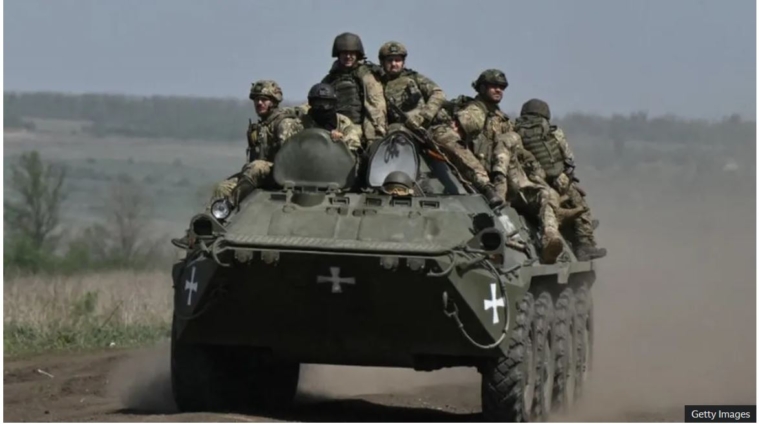
Russia is trying to take advantage of its superiority in manpower and artillery before Ukrainian forces get much-needed supplies of new US weapons.
The US last week agreed a $61bn (£49bn) package of military aid for Ukraine.
But new US weapons are yet to make their way to the frontlines, where Ukrainian troops have been struggling for months with a shortage of ammunition, troops and air defences.
"The situation at the front has worsened," Gen Syrskyi said in a post on the Telegram messaging service on Sunday.
He confirmed Ukrainian forces had withdrawn from some of their positions in an area of Donetsk that had formed part of a defensive line, established after Russia captured Avdiivka in February.
Much of the fighting has been taking place around Chasiv Yar, a Kyiv-controlled stronghold which Russia has been trying to reach after seizing Avdiivka.
New defensive lines had been taken up further to the west in some areas, with Gen Syrskyi conceding the loss of territory to the advancing Russians.
Moscow had secured "tactical successes in some sectors," he said.
Gen Syrskyi added that rested Ukrainian brigades were being rotated in those areas to replace units that had suffered losses.
Russia's defence ministry earlier on Sunday reported its troops had captured the village of Novobakhmutivka, around 10 km (6 miles) north of Avdiivka.
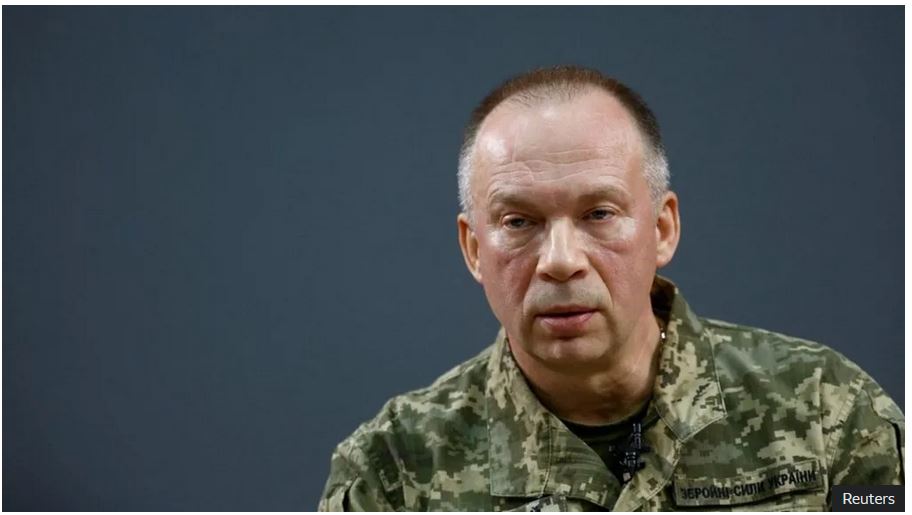
Gen Syrskyi became commander-in-chief of the country's armed forces in February.
It followed speculation about a rift between his predecessor, Valerii Zaluzhnyi, and Ukrainian President Volodymyr Zelensky.
Earlier this month, Gen Syrskyi warned the battlefield situation in the east of the country had "significantly worsened".
The commander of Ukraine's National Guard, Oleksandr Pivnenko, said this week that he was expecting an attempt by Russian forces to advance on Kharkiv, Ukraine's second city, which is near the Russian border.
US President Joe Biden this week signed off on a $95bn (£76bn) package of aid for Ukraine, Israel and Taiwan after months of gridlock amid opposition to the aid from some in Congress.
The Senate passed a similar aid package in February, but a group of conservatives who oppose new Ukraine support had prevented it from coming to a vote in the House of Representatives.
On Friday, the Pentagon said it would "rush" Patriot air defence missiles and artillery ammunition to Ukraine as part of its new military aid package.
Between February 2022 and January 2024, the US gave Ukraine more than $40bn in military aid, according to German research organisation, the Kiel Institute.
Latest Stories
-
CAF annuls Edo Queens victory, orders WAFU B final to resume from extra time
3 minutes -
Interior Minister urges traditional authorities to enforce anti-bushfire bye-laws
5 minutes -
3rd Republic Bank-JoyNews Habitat Fair Clinic ends on a high note after three days of strong patronage
6 minutes -
Ten climbers missing after avalanche hits Himalayan base camp
43 minutes -
NPP had more permanent fuel relief measures than current GH¢2 diesel cut – Amin Adam
1 hour -
Photos from the 3rd Republic Bank-JoyNews Habitat Fair Clinic
1 hour -
Ethiopia’s army promises restraint amid fears of new civil war
1 hour -
Amin Adam calls for review of fuel taxes as diesel prices remain above GH¢18
2 hours -
World Vision Ghana, Ahafo districts sign MoU for universal WASH coverage
2 hours -
When the gold engine stutters: What Ghana’s Cedi and reserves are telling us about the new economic architecture
3 hours -
Two reportedly die after being trapped in mining pit at Juaboso
3 hours -
Petrosol cleans up Wa Municipal Hospital, to donate medical equipment
3 hours -
‘If NPP was ‘insensitive’ over fuel prices, NDC must accept same description now’ — Amin Adam
3 hours -
KiDi brings the hits to London in sold-out UK headline concert
3 hours -
The last goodbye of Ghanaian shot dead in the US
4 hours