


Audio By Carbonatix
Researchers on the "Current and Future Risks of Urban and Rural Flooding in West Africa" (FURIFLOOD) project are developing a guidebook on ecosystem-based flood risk-reduction measures in West Africa.
The book which is at the draft stage details flood risk and its components and gives a comprehensive analysis of how ecosystem-based disaster risk management could reduce flood.
At a research dissemination workshop in Kumasi, a Principal Investigator of the project, Professor Dr. Andreas Fink of the Karlsruhe Institute of Technology, indicated that the book which highlights early warnings and emergency management strategies will come in handy for stakeholders such as the meteorological agencies and National Disaster Management Organization (NADMO).
The FURIFLOOD Project aims to generate scientific knowledge regarding climate drivers of current and future extreme events related to flooding in West Africa and integrate this with case studies to better understand risks and impacts.
The West African Science Service Center on Climate Change and Adapted Land Use (WASCAL) is executing the four-year project, which started in August 2021 and is expected to end in July 2024.
Prof. Dr. Fink further revealed the project has developed a two-dimensional hydrodynamic modelling with a river analysis system to stimulate flood scenarios.
“Large efforts had been undertaken to gain information on parameters such as flood depths recorded by inhabitants to calibrate and validate models.
“These analyses would help identify which magnitudes of hazard were prone to become a severe risk for the population around streams in Kumasi,” he explained.
Through the project, the researchers have successfully replaced obsolete rain gauge instrumentation at 10 stations in the Ashanti Region with KNUST technicians also designing a new logger to relieve challenges in faulty original data loggers.
The College of Science of the Kwame Nkrumah University of Science and Technology (KNUST) is hosting the project in Ghana.
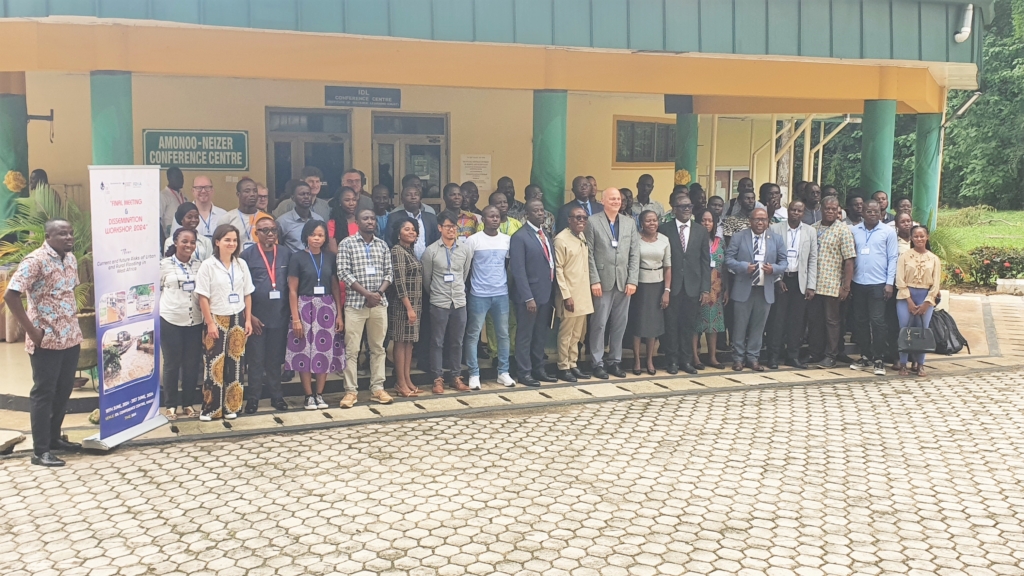
Co-Principal Investigator and Provost of the College of Science, KNUST, Prof. Leonard Amekudzi, lauded the multidisciplinary nature of the project and believed it would be instrumental in lessening flash flooding in the sub-region.
“KNUST was tasked to investigate the extreme rainfall, reducing floods, and begin to think about developing a revised intensive duration curve for not only the Ashanti Region but the entire country and entire West Africa,” he’s optimistic.
The Pro Vice-Chancellor of KNUST, Prof. Ellis Owusu-Dabo was happy the project has proffered solutions to the flood menace in the country.
Latest Stories
-
KNUST partners with government to manufacture locally-made agricultural machines and smart traffic lights
12 minutes -
Government to add constitutional referendum to 2027 District Assembly elections
59 minutes -
Government disburses GH¢23.1 billion to clear road contractors’ arrears – Roads Minister
2 hours -
NPP Ashanti elections: 1,020 delegates to choose 11 regional executives
3 hours -
Galamsey: ‘Challenge is prosecution, not arrest’ — Lands Minister
3 hours -
MTN to build 80 new sites across the five regions of the north as part of a $1.1bn investment
4 hours -
The Polygamist’s creator says women see themselves reflected in her Netflix hit
5 hours -
UEW Hospital suspends OPD services over GAUA strike
6 hours -
Muzic Mensah selected for Boomplay’s inaugural ‘NEXT WAVE’ Programme
6 hours -
Prime Insight to tackle legal vacation controversy and $1million AKSA bribery case
7 hours -
Ghanaian evacuee from South Africa dies on arrival in Accra
7 hours -
Suicide and the fight to stay alive
8 hours -
POS Foundation raises alarm over student cohabitation, sexual harassment on university campuses
8 hours -
Nandom NPP primary heats up as four candidates enter 2028 race
8 hours -
Mangione admits killing healthcare CEO and pleads guilty to federal charges
9 hours