

Audio By Carbonatix
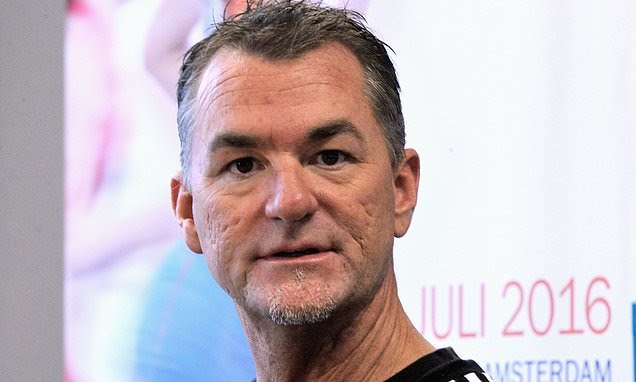
Rana Reider, an American sprint coach, has been expelled from the Olympic Games and had his accreditation revoked following a lawsuit that details serious allegations of sexual and emotional abuse by three female athletes.
One of the claims, brought by an athlete identified as Jane Doe in court documents, alleges Reider raped her during a training camp in Florida shortly after her 18th birthday. Reider, who strongly denies the allegations is then accused by another athlete of touching her inappropriately without her consent.
A third athlete states that he made sexually suggestive comments, engaged in unwanted physical contact, and persisted despite her requests for him to stop, which ultimately led her to leave his training group.
This is not the first time Reider has faced scrutiny; he was previously placed on a one-year probation after admitting to a romantic relationship with an adult athlete, a situation which presented a power imbalance.
At the time, Reider’s lawyer stated he had “credibly and consistently denied all other allegations of sexual misconduct”.
This case is a sobering reminder of other high-profile abuse scandals in sports. In 2021, Olympic gymnast Simone Biles, with a record-setting 37 world and Olympic medals, testified before the U.S. Congress about the sexual abuse she endured at the hands of USA Gymnastics team doctor Larry Nassar.
Biles criticised both the gymnastics organisation and federal law enforcement for "turning a blind eye" to the abuse, which affected hundreds of young athletes.
These cases are representative of a terrible pattern and bring a critical issue into focus: the abuse of power and sexual corruption (or ‘sextortion’) in sports. Sexual corruption often involves a quid pro quo dynamic, where favours or opportunities are exchanged for compliance while sexual harassment does not.
However, both forms of misconduct are rooted in a power imbalance, which serves as a catalyst for these abuses. Coaches and senior sports officials can exploit the power imbalance between themselves and athletes, ultimately abusing their position of authority and potentially jeopardising the victim’s place in a team or even their career.
Just last year, the president of the Spanish soccer federation, Luis Rubiales, sparked an international scandal by kissing a player on the mouth following the team's historic win at the World Cup. The player, Jenni Hermoso, said she “didn’t like it” and Rubiales later apologised for his behaviour.
Rubiales ended up resigning a month later and was banned from football-related activities for three years.
Several factors contribute to this vulnerability, including the high level of autonomy enjoyed by sports organisations, the concentration of male power, the underrepresentation of women in leadership roles, the gender pay gap and the failure of sports organisations to develop adequate internal prevention, detection, and reporting mechanisms.
Sports organisations have historically fostered a culture of silence and impunity, prioritising their own reputation over the rights of victims and making it difficult to challenge and change harmful behaviours. Although this type of corruption is present in various fields, Transparency International's research has found the sports sector is particularly vulnerable.
For female athletes, working with predominantly male coaches, doctors, and managers in often sexist and hyper-masculine environments can create conditions ripe for favouritism and abuse. Coach-athlete relationships can also be characterised by dependency and unclear boundaries, occurring in a context of close physical and emotional contact, which carries specific risks for sexual abuse.
Sadly, sexual corruption and abuse are widespread issues in sport. In October 2021, a FIFA official confirmed that cases of sexual abuse had been discovered across the globe. Last year, The Guardian reported more than 40 cases of sexual abuse and harassment linked to the federation. The actual number of cases is difficult to ascertain as they go unreported due to stigma, shame and fear.
So, how can sports organisations create safer environments? Prevention is key. Stronger frameworks and clearer policies are essential. It's also crucial that independent reporting mechanisms are implemented, which provide safe and trusted avenues to voice concerns, alongside independent investigation and sanctioning processes.
When abuses occur, the safety and dignity of athletes must take precedence over organisational interests, and perpetrators must be held accountable to bring about the systemic change crucial for preventing future incidents.
Latest Stories
-
Final day of Joy FM Back-to-School Fair: Come shop, save and prepare for the new school year
42 minutes -
GSE showed strong performance in August 2026 despite recording more stock losses
3 hours -
If CJ needs ethics law to know SOE comments were wrong, he may not be worthy of office – Arthur Kennedy
4 hours -
Stop touring state agencies and focus on the Judiciary’s problems – Arthur Kennedy to CJ
4 hours -
Apologise and don’t do it again – Arthur Kennedy to Chief Justice over SOE comments
4 hours -
Chief Justice remains committed to judicial independence, justice and equality – Judicial Service
4 hours -
Ghana concludes evacuation of citizens from South Africa; total returnees reach 1,900 – Ablakwa
5 hours -
Africa must define its own green transition path – Prof Fatima Denton
5 hours -
WASSCE 2026: English Language performance falls to 62.4% – WAEC
5 hours -
WASSCE 2026: Social Studies records sharp rebound as Maths, Science also improve
6 hours -
2026 WASSCE entry rises by 11% as 512,862 candidates sit exams
6 hours -
WASSCE 2026: English Language performance falls to 62.4% – WAEC
6 hours -
WAEC cancels 2026 WASSCE results of 8,295 candidates over examination irregularities
6 hours -
WAEC releases provisional 2026 WASSCE results for 512,862 candidates
7 hours -
CJ’s remarks on SOEs were made in good faith, not to undermine judicial independence – Judicial Service
10 hours