

Audio By Carbonatix
The Minority Leader, Dr. Cassiel Ato Forson, has expressed strong disapproval of the nomination of a dual citizen for the position of Supreme Court judge.
According to Dr. Forson, dual citizens are ineligible to hold key government positions, particularly as judges on the Supreme Court.
President Akufo-Addo has nominated Professor Richard Frimpong Oppong, a dual citizen, alongside Justice Sophia Essah, for the Supreme Court.
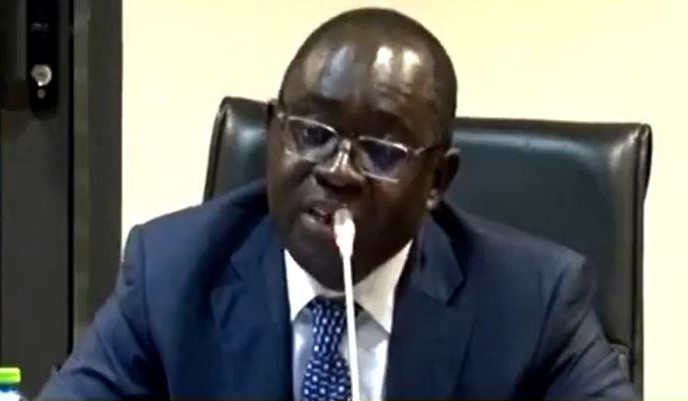
However, during the vetting on Tuesday, August 12, Dr Forson, who serves on the Appointments Committee of Parliament, argued that Prof. Oppong does not qualify to be a Supreme Court judge due to his dual citizenship.
Dr. Forson insisted that Prof. Oppong must renounce his foreign citizenship before his approval can be recommended.
“The Constitution, in Article 156(1), is clear that you would have to take an oath of allegiance, and the same Supreme Court has equated allegiance to nationality,” Dr Forson stated.
“In my view, you do not qualify, and I believe that you would need to renounce your citizenship to be eligible for the role of a Supreme Court judge.”
Adding to the debate, the National Democratic Congress (NDC) Member of Parliament for Ellembelle, Emmanuel Armah-Kofi Buah, argued that it is inconsistent to disqualify the NDC MP for Assin North, Gyakye Quayson, from Parliament even after he had renounced his citizenship.
Background
Prof. Oppong, who holds dual Ghanaian-Canadian citizenship, could become the first dual citizen to sit on Ghana's Supreme Court.
This is possible because the Supreme Court few months back ruled against sections of the Citizenship Act, allowing dual citizens to hold positions such as Chief Justice and Chief Director.
- Read also: Dual citizens eligible for Chief Justice, Chief Director, other positions – Supreme Court rules
The Supreme Court declared certain sections of the Citizenship Act unconstitutional, permitting dual citizens to serve in various high-ranking positions.
The court's decision, delivered by a majority, nullifies the sections that bar dual citizens from roles including Chief Justice, Commissioner of the Value Added Tax Service, and Chief Director of a Ministry.
The ruling effectively amends Article 289(2) of the 1992 Constitution, allowing dual citizens to be appointed to key government positions previously restricted to single citizens.
Latest Stories
-
UN housing expert urges Ghana to strengthen Rent Control Department amid housing affordability concerns
3 minutes -
Delta-BCI partnership reaches 166,000 people with breast cancer education
12 minutes -
Power restoration fault suspected in Kumasi Central Market fire
5 hours -
The 7-foot giant of Ngleshie Amanfro: Seven-foot Ghanaian Ephraim Saawa dreams of joining the national basketball team
6 hours -
Government promises support for Kumasi Central Market fire victims
6 hours -
Vibes The Movie: Big Ghun’s Ghanaian film earns five nominations at 2026 REFFA
7 hours -
‘I’m a fulfilled man’—Justice Korbieh on missing out on Supreme Court despite two nominations
7 hours -
MamaCare CEO warns unresolved conflicts among health workers could undermine maternal and neonatal care
7 hours -
Health professionals urged to translate medical knowledge into practice to save mothers
7 hours -
Retired judge Justice Francis Korbieh charges 1,568 new lawyers to uphold integrity
9 hours -
Conflicts among care providers linked to maternal, neonatal deaths – Expert
9 hours -
GIS marks 10th TIME conference, champions improved teaching practices
9 hours -
BRICS Or Balance? What Ghana’s bid really means
9 hours -
Adamus Resources launches breast cancer awareness campaign in Nzema
9 hours -
GPRTU wants full TRAFFITECH-GH implementation to start in 2027
10 hours