

Audio By Carbonatix
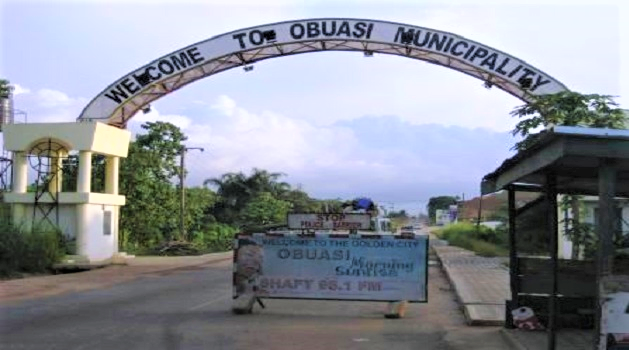
The Ghana Water Company Limited in Ashanti Region has forewarned that residents in Obuasi and adjoining communities face a looming water shortage as illegal mining activities continue to ravage water bodies in the area.
The Odaso treatment plant, the main source of water to the mining communities, is now heavily polluted beyond its permissible limits with about 60% of the water treated from the plant going to waste.
Illegal mining activities along river bodies continue unabated in the region, damaging water sources intended for domestic and agricultural use.
The Odaso treatment plant serves residents in Obuasi and its surrounding communities, but the plant faces an imminent shutdown.
The Oda River running through the plant is now polluted beyond its initial turbidity level.
Chief Manager Ashanti Production region of the Ghana Water Limited, Dr. Hanson Akutteh says the Ghana Water is contemplating a shutdown of the plant over increasing operational cost.
“The Odaso treatment plant was designed to produce about 4 million capacity of water. For every treatment plant, we are suppose to operate 24 hours within a week continuously. But we can’t run this process at Odaso because of galamsey. So, we do what we call the batch system,” he said.
He continued that: “We are unable to treat majority of the 1.5 million gallons of water that run through the plant. The volume has reduced such that we are unable to meet the demands of Obuasi. Where it is possible we may have to transport water from Kumasi to Obuasi”.
A similar situation is encountered by the water treatment plant in Konongo as illegal mining activities threaten the only water source in the area.
“Currently, we are just extracting about one million gallons a day for Konongo. But we are only able to produce 780,000 gallons per day. We are just using 22% of the design capacity of the plant for which we must meet the demands of the people of Konongo. There is an infestation of illegal mining activities along the Owere river in the area,” he said.
The cost of treating the polluted water is impacting heavily on the operational cost of the water company, threatening sustainable production.
“In the past, we were using just about 0.1 pesewas to treat a cubic metre of water but not we are doing about GHS 6.74, almost about 98% increment. We were able to import a generic spectrum coagulant which is very expensive. And this is the last resort to treating water because the cost itself makes it not advisable to use it for treating water in developing countries such as ours,” Dr. Akutteh said.
Latest Stories
-
‘Follow Ghana’s steps’ – IMF Africa Director hails economic gains
21 minutes -
Kwame Nkrumah’s son Gamal dies; burial scheduled for Saturday in Egypt
29 minutes -
Ghana will beat IMF’s upgraded 5.7% growth forecast – Ato Forson
29 minutes -
Middle East tensions, global risks to shape November policy rate decision – BoG Governor
34 minutes -
MTN Ghana to invest $1.1bn over three years, deploy 500 new sites in 2026
40 minutes -
15 arrested over alleged sand-winning activities along new Accra-Kumasi Expressway project
48 minutes -
Agriculture Slows to 3.9% as Ghana’s Economy Grows by 6%
1 hour -
Government launches rCOMSDEP to promote responsible mining in Western Region
2 hours -
Foreign Affairs Ministry procures 20 pickups to improve passport services
2 hours -
Oil prices retreat as investors weigh supply outlook, Middle East tensions
2 hours -
Mahama Ayariga highlights Jimi reclamation project as effort to tackle flooding
2 hours -
Ayine pushes duty-lawyer scheme to protect suspects at police stations
2 hours -
Stephen Amoah criticises 20% digital services tax as excessive
2 hours -
Ghana secures $3.5bn investment commitments to revive oil and gas sector – Jinapor
2 hours -
Court to hear Wontumi’s bail application today
2 hours