

Audio By Carbonatix
The Chief Executive Officer of Kaysens Gas Company Limited and Chairman of PSSTC, E.D.M. Stephens ACP (Rtd) has dismissed the assertion that the Cylinder Recirculation Model (CRM) will stop explosions at the gas filling stations, saying, it is rather safety precautions that will prevent explosions.
According to him, there have been only two explosions - the Trade Fair Site in December 2016, and the Atomic Junction in October 2017- for close to 30 years that the existing plants have been operational,
Reacting to an article by Festus William Ameyaw of Express Gas Ltd, E.D.M. Stephens ACP (Rtd) said it would be necessary to refer to the report of the Private Sector Safety Technical Committee (PSSTC) which investigated the explosion at the Atomic Junction in August 2018, adding, the report concluded that CRM is not a panacea to safety and that manual refilling of cylinders has not caused a single LPG explosion in the country.
“The report noted that discharging LPG from BRVs to station tanks was the primary cause of explosions. It is noteworthy that this conclusion was also confirmed in both the NPA report on the Atomic Junction explosion and its Public Notice of January 2017 on La Trade Fair fire”, he stated.
Explaining further, E.D.M. Stephens ACP (Rtd), said “The truth is that there has not been a single gas explosion at any Existing Plant since 2017. It is equally noteworthy that this feat has been achieved through the active collaboration between the LPG Marketers, NPA, EPA [Environmental Protection Agency], GSA [Ghana Standards Authority], Atomic Energy, Energy, Fire Service and Factories Inspection Directorate whose very hard working and knowledgeable staff regularly conduct a physical inspection of Existing Plants to ensure that safety is never compromised before issuing out Licenses which also come at a great cost”.
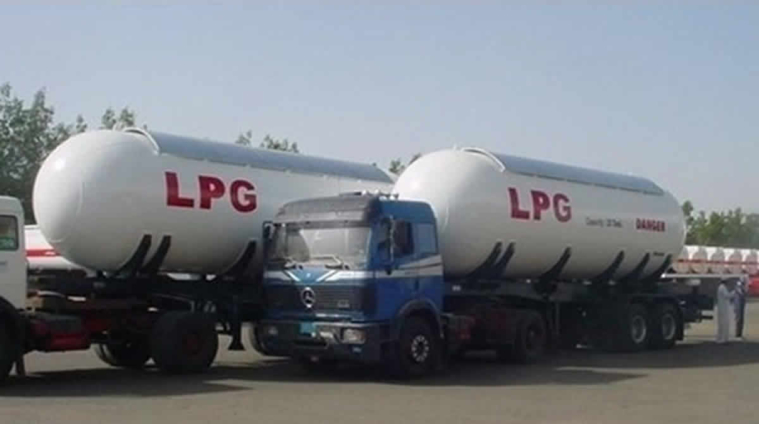
Another factor, he said, contributing to this explosion-free environment is the fact that the LPG Marketers Association has made it compulsory that BRV’s discharge gas at LPG stations using only electric discharge pumps and not the old practice of using BRV Engines which, invariably, are over-heated after long journeys thereby causing explosions even in any remote contact with the discharging gas.
“So, what is the basis or why to call for a change to CRM when a solution has long been found to the explosion problem?”, he questioned.
“On the contrary, accidents at Bottling plants causing more horrendous damages to life and property are very common in the LPG Industry. Even in developed countries. The same may be said of accidents involving cylinders being transported inter and intra-countries. At our local scene, one cannot but sadly, and even morbidly recall the ghastly and costly incident at Apiatse in the western region about four years ago where a whole village was burnt to ashes not excluding heavy human casualties. To date, the ravages still haunt the community as promises made by the Authorities are yet to be fully kept”, he added.
Latest Stories
-
Power restoration fault suspected in Kumasi Central Market fire
4 hours -
The 7-foot giant of Ngleshie Amanfro: Seven-foot Ghanaian Ephraim Saawa dreams of joining the national basketball team
5 hours -
Government promises support for Kumasi Central Market fire victims
5 hours -
Vibes The Movie: Big Ghun’s Ghanaian film earns five nominations at 2026 REFFA
5 hours -
MamaCare CEO warns unresolved conflicts among health workers could undermine maternal and neonatal care
6 hours -
Health professionals urged to translate medical knowledge into practice to save mothers
6 hours -
Conflicts among care providers linked to maternal, neonatal deaths – Expert
7 hours -
GIS marks 10th TIME conference, champions improved teaching practices
7 hours -
BRICS Or Balance? What Ghana’s bid really means
8 hours -
GPRTU wants full TRAFFITECH-GH implementation to start in 2027
8 hours -
Mahama announces plans to import electric wheelchairs for PWDs
8 hours -
KGL U17 Colts 2026: Western beat Prempeh Elite Academy to set up final final with Greater Accra Region
8 hours -
Late Solanke strike salvages 10-man Spurs draw at Man United
9 hours -
Gender Ministry to monitor welfare of Nana Akua Addo’s children amid domestic violence case
9 hours -
Benedict Okyere Yeboah: Ghana’s football problem goes beyond sacking a coach
9 hours