

Audio By Carbonatix
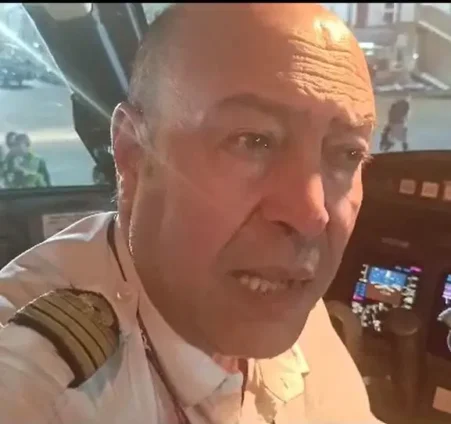
The Tunisian pilot who flew the Nigerian national football team Super Eagles to Libya has provided an account of the events that led to their unexpected diversion to Al-Abraq, a remote airport, instead of their intended destination, Benghazi.
Controversy erupted after the Nigerian delegation, en route to Benghazi for Tuesday’s crucial 2025 Africa Cup of Nations qualifier against Libya, found themselves stranded for over 16 hours on Sunday following the diversion.
The plane was redirected to Al-Abraq, a small airport typically used for Hajj operations, located nearly 300 kilometers east of Benghazi.
In a video interview shared by Sports Journalist Pooja Media on X (formerly Twitter), the pilot clarified that the diversion was not his decision but was mandated by Libyan authorities.
“The flight plan was to land at Benghazi, Benina, and we had approval from the Libyan Civil Aviation Authority,” the pilot explained. “However, as we began our descent, we were instructed to divert to Al-Abraq, which wasn’t even listed as our alternate airport. This decision came from the highest Libyan authorities, not me.”
He expressed concern over the safety risks posed by the sudden change, noting that the fuel on board was calculated for the original destination.
“In aviation, we calculate fuel based on our destination. Diverting unexpectedly can compromise safety. I repeatedly questioned the directive and warned them about fuel limitations, but they insisted that we land at Al-Abraq, citing orders from the highest authority,” he said.
The pilot refuted media claims that the diversion was his decision, stressing that all aviation communications are recorded and could be provided as evidence. “Everything is documented. I asked to land in Benghazi as per my flight plan, but they denied it, instructing me to divert immediately,” he added.
The conditions at Al-Abraq posed further challenges. The pilot described the small airport as poorly equipped, lacking essential navigation systems like an Instrument Landing System (ILS) and VHF Omnidirectional Range (VOR), making a night landing in marginal weather conditions particularly difficult.
“I had to make a visual landing, which is risky, especially in those conditions. It was not easy, but fortunately, we landed safely,” he said, crediting his familiarity with the region from previous work for helping manage the situation.
In light of the ordeal, the Nigeria Football Federation (NFF) has decided to pull the Super Eagles out of the qualifier match against Libya.
Latest Stories
-
The Luckiest launches 4th edition of annual promotion with nationwide activations
24 minutes -
Ecobank calls for wider access and stronger collaboration on agricultural finance
48 minutes -
Agribusinesses need more than loans to reach their full potential – Ecobank
49 minutes -
Green finance must deliver measurable benefits to Ghanaian farmers – Ecobank
54 minutes -
Today’s front pages: Wednesday, September 23, 2026
2 hours -
Ghanaian pastor, Rev Emmanuel Boakye-Danquah on the run over alleged counterfeit currency syndicate
2 hours -
Give Teshie Desalination to Kasapreko or Accra Brewery
2 hours -
Absa Bank Ghana and IFC announce $50m facility to expand cocoa financing
2 hours -
Ghana’s economic revival: Turning financial stability into economic prosperity
2 hours -
AFCON 2027Q: Black Stars to depart Accra for Bouaké ahead of Ivory Coast clash
2 hours -
Who to allow into your home, who should come into your cyberspace? Trust is becoming unbecoming
2 hours -
At least 11 dead in mass shooting at house party in South Africa
3 hours -
MoMo Fintech Lab attracts close to 1K entries from innovators across, applications end on Sept 30
3 hours -
Black Stars face Ivorian test as injuries force major squad changes
3 hours -
Save Nations Foundation donates learning materials to Nooria Islamic Basic School, calls for more support
3 hours