

Audio By Carbonatix
The New Patriotic Party's (NPP) running mate, Dr Matthew Opoku Prempeh, has highlighted the significant achievements of Ghana’s Free Senior High School (SHS) policy, stressing its positive impact on educational outcomes and equity.
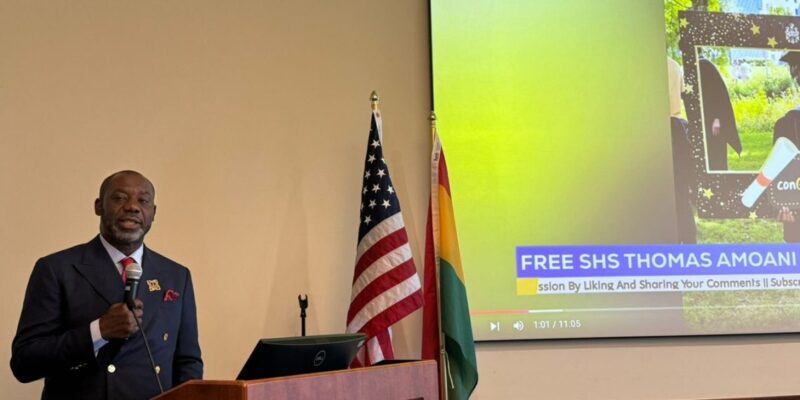
Speaking at the University of Memphis on Saturday, October 19, Dr Prempeh, widely known as NAPO, affirmed that the Free SHS programme has expanded access to education, particularly for disadvantaged students, while refuting claims that it has compromised the quality of education.
As the former Minister of Education during the policy’s implementation in 2017, NAPO emphasized that the initiative has strengthened academic performance and helped reduce educational inequality nationwide.
He noted that the programme has allowed more students to pursue secondary education without the financial obstacles that once hindered many Ghanaian families.
Dr Prempeh also highlighted the long-term benefits of the Free SHS policy, describing it as a vital investment in Ghana’s future.
He underscored that the programme is shaping a more educated and skilled workforce, which is essential for driving national development and improving the country's global competitiveness.
In addressing criticisms, NAPO reiterated that the Free SHS initiative has maintained educational standards and continues to foster greater opportunities for all students, regardless of their financial background.
“It is important to state that a cursory analysis of core subject performance from 2015 to 2023 points to a significant improvement in the past 5 years. For the 2022- and 2023-year groups, for example, more than 60% of candidates obtained A1-C6 in all core subjects, which are the qualification grades required for admission into a tertiary institution in Ghana."
“In fact, the 2023 results in this context are the best in 9 years. This, clearly, further refutes the argument by some naysayers that the Free Senior High School Policy was to compromise quality education."
“The equity component of the Free SHS programme has been crucial. Beyond removing financial barriers, we actively ensured that children from disadvantaged backgrounds could access our top schools. This led to the introduction of the 30% equity policy, reserving 30% of spaces in top schools for children from public basic schools, who often come from deprived backgrounds but had performed well in their final junior high school exams the BECE considering their backgrounds and other challenges within their study environment," he stated.
Latest Stories
-
Government pledges support for fashion industry through skills, technology and market access
2 minutes -
Gender Minister joins First Lady at OAFLAD summit as Ghana pushes stronger support for women, children
2 minutes -
Black Queens defender Susan Ama Duah signs for Mexican side Tigres
4 minutes -
Carlos Queiroz’s real test begins as Ghana face Côte d’Ivoire in Bouaké
4 minutes -
Social Audit Committee monitoring helping improve development projects in Tano North – Mehoso CEO
6 minutes -
IFC, LMI Holdings expand partnership to power Ghana’s industrial growth
18 minutes -
Ashanti Regional Police arrest two foreign nationals over alleged kidnapping and murder of Senegalese goalkeeper Cheikh Toure
19 minutes -
Rein in NIB over attempted arrest of Baffour Awuah – Kyei-Mensah-Bonsu
21 minutes -
Black Queens captain Portia Boakye joins Mexico’s UNAM Pumas
30 minutes -
Attempted arrest of Baffour Awuah was unjustified and dangerous – Kyei-Mensah-Bonsu
31 minutes -
La Shikitele Nii Adjei Koofeh IV denies responsibility for Laboma Beach Resort demolition
37 minutes -
Sentuo Oil Refinery urges government to price Ghana’s local crude oil in cedis
44 minutes -
GNFS honours two officers for rescue efforts during Sogakope floods
45 minutes -
Government pauses Agbogbloshie 24-Hour Economy Market redevelopment for consultations
47 minutes -
Dr Kwabena Bempah Tandoh engages Mim market traders as Parliamentary campaign gathers momentum
51 minutes