

Audio By Carbonatix
Global health experts have highlighted the need for clinical research that better represents populations worldwide.
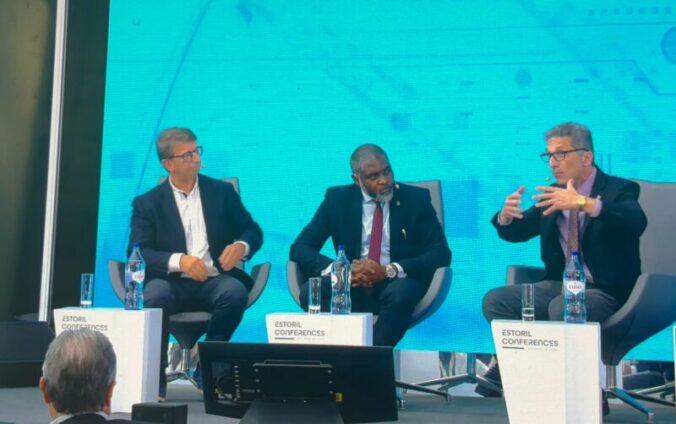
Dr John Amuasi, Executive Director of the African Research Network for Neglected Tropical Diseases (ARNTD) and Co-Lead of the Lancet One Health Commission, and Prof. Andre Kalil, from the University of Nebraska Medical Center’s Infectious Diseases Division, believe in making clinical trials more inclusive for populations which are often underrepresented in global health research.
This discussion was one of the many striking conversations at the Estoril Conferences – A Future of Hope 2024 in Portugal.
This year’s conference, themed “Time to ReThink,” brought together experts to address critical issues in health, technology, policy, and sustainability, promoting innovative solutions for the world’s most pressing challenges.
Clinical research today is moving beyond the stereotypical image of lab-based studies to a broader, community-oriented approach.
This change requires engaging with people directly in their environments, whether in urban hospitals or rural villages, to gain meaningful insights and trust.
Dr. John Amuasi describes this as “an art,” emphasizing the complexity required in the field.
“Sometimes it means going into people’s homes and saying, ‘Please, can I have some blood for this study?’” he explained. “It’s about understanding and connecting.”
Ethics of Inclusive Clinical Trials
An often overlooked aspect of clinical research ethics is the need for equitable access not only to treatments and vaccines but also to participation in trials themselves.
Prof. Andre Kalil, from the University of Nebraska Medical Center’s Infectious Diseases Division, highlights the critical gaps in representation, saying, “There is no excuse—not in any way, shape, or form—to not have randomized controlled trials done in every part of the globe. The lack of access to these trials is one of the biggest inequities we face today. It is unjustifiable.”
Dr. Amuasi, advocated for the involvement of low and middle-income countries (LMIC) in clinical trials to ensure that treatments are relevant and effective for diverse populations.
“The lack of diversity in clinical trials often skews data, potentially limiting the efficacy of treatments for underrepresented communities,” he said.
A Step Toward Equitable Clinical Trials
To address these inequities, the World Health Organisation (WHO) recently introduced guidelines aimed at making clinical trials more accessible and inclusive.
It addressed the logistical and financial challenges of conducting trials in remote regions while maintaining rigorous standards for safety and efficacy.
“These guidelines are a step in the right direction,” Dr. Amuasi states, “but they must be backed by proper financing and a commitment to doing things differently.”
Reflecting on the evolution of HIV treatment, he points out, “What was once an expensive, unaffordable treatment is now accessible to nearly everyone. We know how to do this, and we have the resources. It’s just a matter of directing those resources effectively.”
Prof. Kalil urged local governments to collaborate with pharmaceutical companies on clinical trials to ensure investigational products whether drugs or vaccines are accessible to the population at subsidized prices.
He emphasized that these partnerships should be established before the trials commence.
Clinical Research future
For both Dr. Amuasi and Prof. Kalil, the future of clinical research lies in a commitment to inclusion, ethics, and global representation. Expanding clinical trial access in LMICs is not only a logistical challenge but an ethical imperative.
“If drug companies are developing products for the world, then their trials must include people of the world,” Dr. Amuasi emphasizes.
“These questions must be asked from the ground up, and when that happens, companies will listen. Then we can make better decisions, have better information, and care for our patients in a way that’s truly reflective of the world.”
Latest Stories
-
Power restoration fault suspected in Kumasi Central Market fire
4 hours -
The 7-foot giant of Ngleshie Amanfro: Seven-foot Ghanaian Ephraim Saawa dreams of joining the national basketball team
5 hours -
Government promises support for Kumasi Central Market fire victims
5 hours -
Vibes The Movie: Big Ghun’s Ghanaian film earns five nominations at 2026 REFFA
5 hours -
MamaCare CEO warns unresolved conflicts among health workers could undermine maternal and neonatal care
6 hours -
Health professionals urged to translate medical knowledge into practice to save mothers
6 hours -
Conflicts among care providers linked to maternal, neonatal deaths – Expert
7 hours -
GIS marks 10th TIME conference, champions improved teaching practices
7 hours -
BRICS Or Balance? What Ghana’s bid really means
8 hours -
GPRTU wants full TRAFFITECH-GH implementation to start in 2027
8 hours -
How 10-mile walks for basic education birthed a 50-year legal career for Justice Korbieh
8 hours -
Mahama announces plans to import electric wheelchairs for PWDs
8 hours -
KGL U17 Colts 2026: Western beat Prempeh Elite Academy to set up final final with Greater Accra Region
9 hours -
Late Solanke strike salvages 10-man Spurs draw at Man United
9 hours -
Gender Ministry to monitor welfare of Nana Akua Addo’s children amid domestic violence case
9 hours