

Audio By Carbonatix
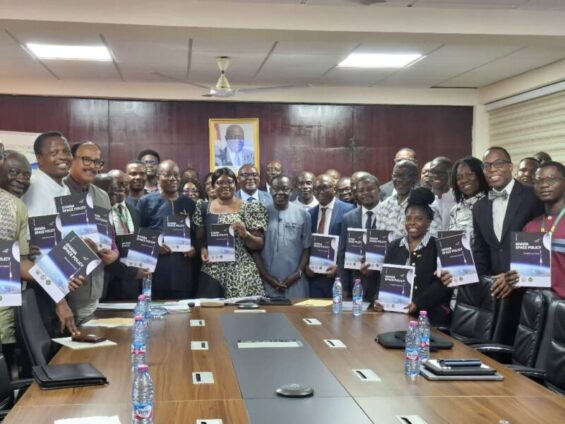
Ghana has launched a comprehensive policy for the utilisation of space science technology to drive national development.
The Ghana Space Policy would pave way for the establishment of the Ghana Space Agency to coordinate the development of human capital, infrastructure, and the overall growth of the space science sector.
Mrs. Ophelia Hayford, Minister of Environment, Science, Technology and Innovation (MESTI) launched the Policy at a ceremony in Accra on Tuesday.
Cabinet approved the Ghana Space Policy in March 2022.
Ghana has been employing space technologies in critical areas such as environmental monitoring, security, precision agriculture, navigation, weather forecasting, disaster management, and telecommunications.

Mrs. Hayford said the Policy would ensure that the deployment and usage of space technology were coordinated, regulated, standardised, and sustainably managed.
She said the Ministry would collaborate with relevant ministries and the private sector to ensure the successful implementation of the Policy.
“Let us leverage it (policy) to promote sustainable practices, drive technological advancement, foster international cooperation, and contribute significantly to the growth of space science in Ghana and across Africa,” the Minister said.
In 2011, Ghana signed the African Square Kilometre Array (SKA) partnership agreement with South Africa and seven other African countries to develop the world’s largest radio telescope network to explore the universe and conduct leading-edge research.
Dr. Joseph Bremang Tandoh, Director, Ghana Space Science and Technology Institute, said investments in Ghana’s space programme were necessary to support agriculture, infrastructure, and economic growth.
“Space technology can help us manage resources, track agricultural health, and mitigate climate change,” he said.
“With this policy, we are not just joining the space race but creating opportunities for economic growth, job creation, and technological advancement,” Dr Tandoh added.
Dr Kofi Asare, Manager, Remote Sensing and Climate Sector, said the country could utilise space technology to effectively manage her land and water resources to reduce destruction.
Under agriculture, he said satellite technology could help to monitor crop health, soil conditions, weather patterns and crop yield prediction and estimation.
Professor Elvis Asare-Bediako, Vice-Chancellor, University of Energy and Natural Resources (UENR), said the University was working towards undergraduate and postgraduate programmes to train students in space technology.
“We are ready and equipped with expertise to partner with the Government to push the exploration of space technology to its appropriate height,” he said.
Latest Stories
-
Algeria claim first-ever podium finish after penalty shootout win over hosts Morocco
1 hour -
NPP struggled even in traditional strongholds in 2024 – Annoh-Dompreh
1 hour -
NPP must elect strong parliamentary candidates to reclaim Greater Accra seats – Patrick Boamah
1 hour -
Abdul-Aziz Abdu-Rahaman elected NPP Upper West Regional Chairman
1 hour -
Iddrisu Sulemana edges Clifford Braimah to become NPP Savannah Regional Chairman
2 hours -
‘Arrogance of power’ is driving voters back to NPP in Ashanti Region – Paul Adom-Otchere
2 hours -
They demolish buildings and tell us they’re building 24-hour markets – Paul Adom-Otchere
2 hours -
NPP’s 2024 Bolgatanga Central Parliamentary Candidate elected Upper East Regional Chairman
2 hours -
Incumbent Northern NPP Chair wins as new faces break through in party executive elections
2 hours -
Former Health Minister Okoe Boye elected NPP Greater Accra Regional Chair
2 hours -
Joseph Kobinah Esibu elected NPP Central Regional Chairman
3 hours -
Fernandez booed by Chelsea fans as Alonso offers glimpse of blueprint
3 hours -
PSG sign World Cup winner Torres from Barcelona
3 hours -
Odeneho Kwaku Appiah beats former EPA boss Kokofu, to emerge NPP Ashanti chair
3 hours -
TDC defends statutory mandate, says its authority to develop Tema predates TMA
3 hours