

Audio By Carbonatix
Ten persons have died with over 72 others infected, following a cholera outbreak in the Greater Accra and Central regions over the past three weeks.
The Ghana Health Service (GHS) confirmed that the cases were recorded in Ada East and West, Kpone Katamanso, Korle Klottey, Ashaiman, Ga South, Accra Metro, all in the Greater Accra Region and Awutu Senya West and East, Gomoa East and Efutu Districts in the Central Region.
Four out of the six deaths were recorded in the Awutu Senya district while the remaining six deaths were recorded in Ada and other districts.
Dr Franklin Asiedu-Bokoe, Director for Public Health, GHS, told the Ghana News Agency that most of the infections recorded were not severe but fatalities are being recorded due to the delay in reporting cases to the health facilities.
“Deaths are occurring, because most of the patients who had cholera tried to self-medicate, some report to the hospital three days after the cholera infection,” he said.
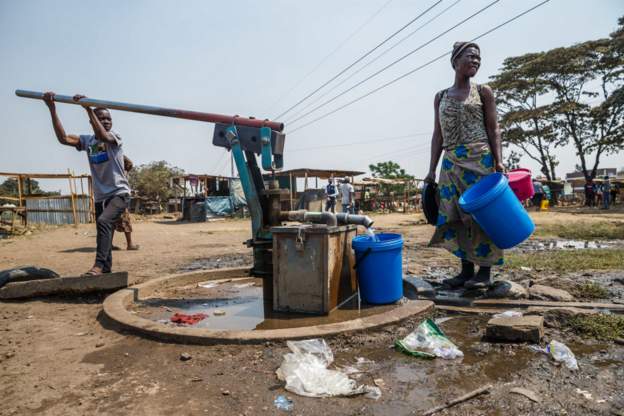
The Director said the lack of clean water in some of the affected districts, the practice of open defecation and poor hand hygiene had contributed to the cholera outbreak.
He urged the public to practice frequent hand washing with soap under running water and the use of hand sanitisers in cases where there was no access to clean water.
Between 2017 and 2023, Ghana did not record a cholera outbreak although a few indigenous cases were reported.
Dr Asiedu-Bekoe said regular handwashing with soap under running water among the public during the COVID-19 outbreak was an effective measure to the control of infectious diseases.
Cholera is an acute diarrheal infection caused by ingesting food or water contaminated with the bacterium Vibrio cholerae.
According to the World Health Organisation (WHO), cholera remains a global threat to public health and serves as an indicator of inequity and a lack of social development.
Symptoms of cholera include frequent diarrhoea, vomiting, and dehydration, along with abdominal cramps, fever, headache, fatigue, dry mouth and throat, and decreased urine output.
Medical experts warn that severe cases of the disease can be fatal within hours if left untreated.
Most individuals infected with cholera may not exhibit symptoms, but the bacteria can still be present in their faeces for 1 to 10 days post-infection, potentially contaminating the environment and infecting others.
A minority of patients develop acute watery diarrhoea with severe dehydration. This can lead to death if left untreated.
Cholera transmission is closely linked to inadequate access to clean water and sanitation facilities. Typical at-risk areas include peri-urban slums, as well as camps for internally displaced persons.
Early detection and treatment are crucial to preventing complications and reducing mortality.
The Ghana Health Service has advised the public to drink safe treated water, eat well-cooked or properly handled food, avoid close contact with infected individuals, practice good hygiene; wash hands with soap under running water, ensure a proper disposal of faeces and report to the nearest health facility if experiencing profuse diarrhoea and vomiting.
Latest Stories
-
Don’t let speed of information become your judgement – CJ tells new lawyers
30 minutes -
World Cup visa scandal: People have leveraged public office to facilitate fraud – Senyo Hosi
35 minutes -
Glut! Farmers count losses as prices crash, customers happy
1 hour -
GSA postpones auction of unserviceable vehicles
1 hour -
Man charged with attempted murder after stabbing
1 hour -
World Cup visa scandal: Senyo Hosi says issue goes beyond calls for Sports Minister’s resignation
1 hour -
Yaw Ampofo Ankrah hasn’t taken or received any money to facilitate visas – Lawyer insists
2 hours -
World Cup visa scandal: Senyo Hosi urges focus on constitutional accountability
2 hours -
La Beach demolition: Senyo Hosi condemns lack of consultation
2 hours -
Russian glide bomb attack on Zaporizhzhia kills at least 15 people
2 hours -
Jinapor warns underperforming energy sector CEOs of consequences, says no protection for failure
2 hours -
Fire destroys head of tipper truck on Lower Volta Bridge
2 hours -
Palmer signs new Chelsea contract until 2034
2 hours -
World Cup visa scandal: Mahama will act on corruption allegations – Abass Nurudeen
2 hours -
Abass Nurudeen accuses Minority of ‘scandal scavenging’ over World Cup visa controversy
2 hours