

Audio By Carbonatix
Only one percent of households in Ghana can afford decent homes.
This is according to the 2024 Revised Ghana Housing Profile launched by the Ministry of Works and Housing in collaboration with UN Habitat and the United Nations Office for Project Services (UNOPS).
A decent home, as defined by the Ministry of Works and Housing, must have sufficient space for all inhabitants, be secure against forced eviction, be free from hazards, and provide access to basic needs such as water, electricity, and sanitation facilities.
Additionally, it must be situated in a safe environment.
The housing profile, compiled using data from reputable institutions such as the Ghana Statistical Service (GSS), highlights key issues affecting housing in Ghana and offers potential solutions to address these challenges.
The Minister for Works and Housing, Kojo Oppong Nkrumah, expressed hope that the report would shape the country’s development agenda and drive meaningful policy reforms in the housing sector.
“They are contributions of the body of knowledge in the area of housing which should then influence the interventions that we roll out. Let this document serve as a blueprint for coordinated action guiding us towards a housing sector that meets the aspirations of every Ghanaian,” he said on Wednesday, November 27, 2024.
During the launch event at the Alisa Hotel in Accra, the lead author and consultant of the revised profile, Professor of urban planning and current head of the Department of Planning at the Kwame Nkrumah University of Science & Technology, Clifford Amoako, expanded key issues from the report among which are:
- 1% Ghanaian households can afford decent homes that are provided by the formal sector, that is, real estate developers
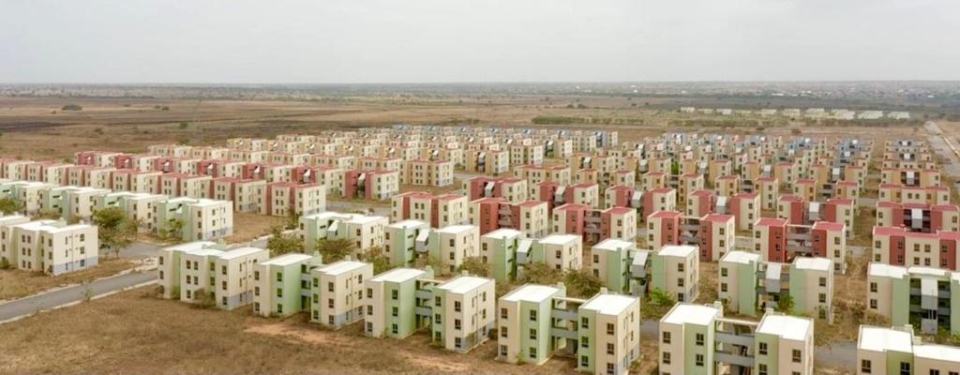
- 11% of expensive houses procured by people have been left largely empty
- The housing deficit decreased from 2.8 million to 1.8 million over a period of 10 years, reflecting a reduction of 1 million units.
The Works and Housing Minister also urged that the revised housing profile is a diagnosis of the housing sector in Ghana and only recommends solutions.
The active involvement of the private sector and other stakeholders will be crucial in improving on all highlighted defaults.
Latest Stories
-
Government procures over 2,000 transformers as Ghana’s electricity access hits 89.13% – Energy Minister
18 minutes -
UTAG-UG threatens strike on October 19 over unpaid allowance
27 minutes -
Let The Constitution direct Chieftaincy to deliver “All Development Is Local”
2 hours -
John Jinapor outlines renewable energy, nuclear power priorities for 2027
2 hours -
Ghana explores centre of excellence for hearing, communication and cochlear implant care
3 hours -
Schizophrenia-related disorders lead mental health cases recorded in Ghana
3 hours -
Dutch authorities enlist Ghana in hunt for fugitive drug lord Bolle Jos
4 hours -
Ghana housing finance conference adopts communiqué to improve affordable housing access
8 hours -
Special Initiatives Minister urges Wa Technical Institute to enrol more girls as EU-backed solar training lab opens
9 hours -
In the matter of my first year at the Bar
9 hours -
ActionAid Ghana calls for an end to child marriage, greater investment in girls’ rights
9 hours -
Newsfile to tackle World Cup visa scandal, beach demolitions, education strikes, BRICS bid
9 hours -
UK-Ghana Trade & Investment Summit: Trade Resource Centre to help businesses maximise UK-Ghana trade opportunities
10 hours -
Embassy of Denmark celebrates World Maritime Day
10 hours -
Linking LEAP to productive inclusion could cut extreme poverty by 2030 – UNICEF
11 hours