

Audio By Carbonatix
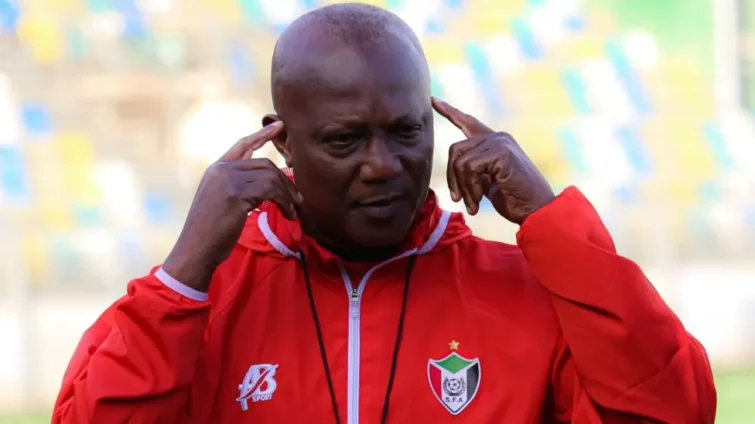
When Sudan secured qualification for the 2025 Africa Cup of Nations (Afcon), all eyes turned to the job done by their head coach Kwesi Appiah.
Just how did the Ghanaian defy the odds with a nation which has been engulfed in a 20-month civil war?
"Qualifying for the Afcon was one of the targets I set for myself before I signed the contract, so achieving it was something that was on my heart," Appiah told BBC Sport Africa as he reflected on an extraordinary campaign.
"Another reason I signed was for the people in Sudan, because of the war back home. The players have shown a lot of dedication.
"Who knows, maybe through football the war might even come to an end. And that was something that made me happy."
Since the conflict began in April last year, Sudan's players - many of them personally affected - have had no permanent base.
The domestic league has been suspended and home qualifiers have been played in Libya and neighbouring South Sudan.
Amid such challenging circumstances, Appiah, 64, says psychology is key.
"I believe it's a matter of psyching your players to let them feel they are (Lionel) Messi or (Cristiano) Ronaldo [so that] any game they go in they don't feel limited," he explained.
"Wherever you go, that place is our home. Whether we have supporters or not, go out and play for your family, yourself and the country.
"This is something the guys can do to help change the war - or stop the war - in Sudan, by trying to qualify for the Afcon or World Cup.
"At least I've given them something to look at and then fight for."
Football 'a key to unlocking war'
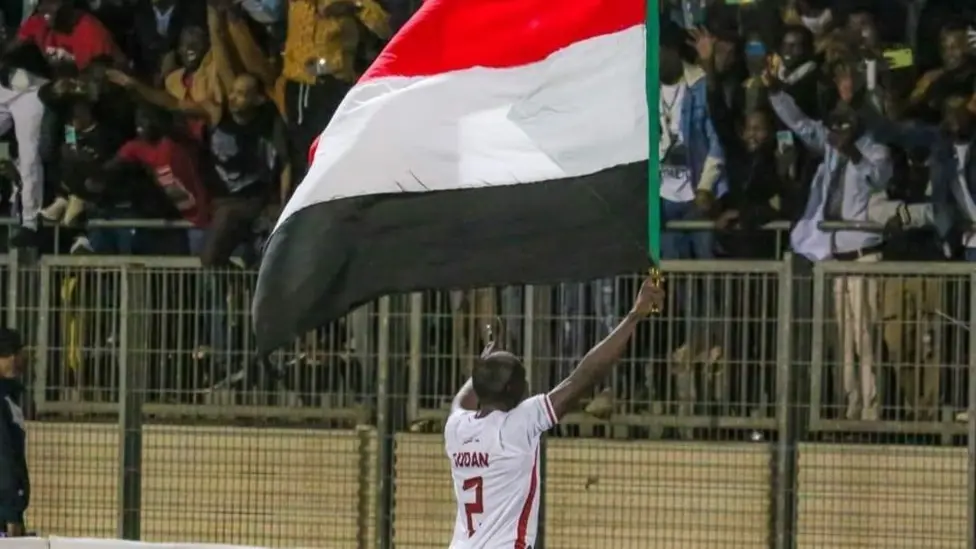
The conflict between the Sudanese army and the Rapid Support Forces militia has forced over 11 million people from their homes.
Aid workers say it has created the world's worst humanitarian crisis - and Appiah has had to watch some of his own players suffer personal tragedies.
"I know how loving the Sudanese are. Four players lost their close families whilst in camp," he said.
"It's a really sad situation, but they try to cope. All the players will comfort them and encourage them. It's not been easy.
"We face all these traumas, but you try to cope."
Needing just a point from their last two qualifiers to reach next year's Afcon finals, Sudan faced Niger in their penultimate match, only to lose 4-0.
"It was actually a situation that we never, ever expected," said Appiah.
"Anytime such situations happen, what you need to do is put the game behind you.
"I've never spoken about it because it's passed. You learn from it, and then you forge ahead."
Appiah's men made no mistake in Benghazi at the final hurdle, holding group winners Angola to a 0-0 draw and achieving what many thought was an impossible feat.
"After the qualification we went to the Sudanese embassy, and the ambassador said 'Everybody [in Sudan] had their guns down, and they were all jubilating on the streets', which is not normal because once you get on the streets, you are looking around [to see] whether the gun is coming," Appiah said.
"That's something I always tell the players before any match.
"Look at your relatives, those back home, what they're going through, and let's put some smiles on their faces.
"Football is one of the keys that can unlock such wars."
World Cup dreams
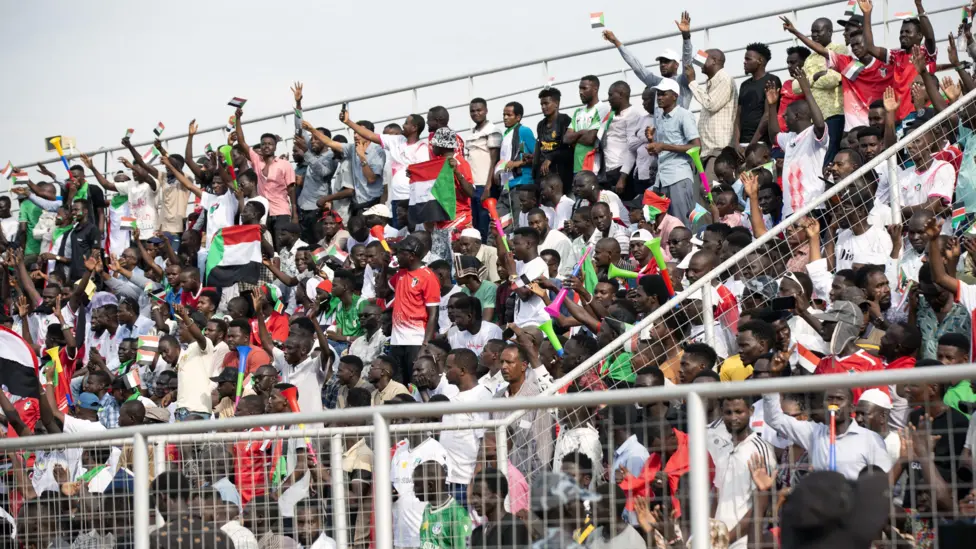
For the Sudanese players, an historic first qualification for the Fifa World Cup is also a possibility.
After four rounds of preliminaries for the 2026 tournament, the Falcons of Jediane sit top of a six-team group which also includes Senegal and DR Congo.
The campaign will resume in March, and Appiah believes self-belief is their key weapon.
"Look at the best teams in the world - Spain, England, Germany or Brazil," he said.
"I tell [the players]: 'How can you aim to go to the World Cup if you don't put yourself at their level?'"
One of the most heart-warming moments of their World Cup qualifying campaign so far came in June when they played neighbouring South Sudan - a country which it was once at war with.
Large sections of the Juba crowd joined in with Sudan's national anthem ahead of the match, which Sudan won 3-0.
Appiah says it brought "a lot of unity" to both countries.
'Ghana is like England'
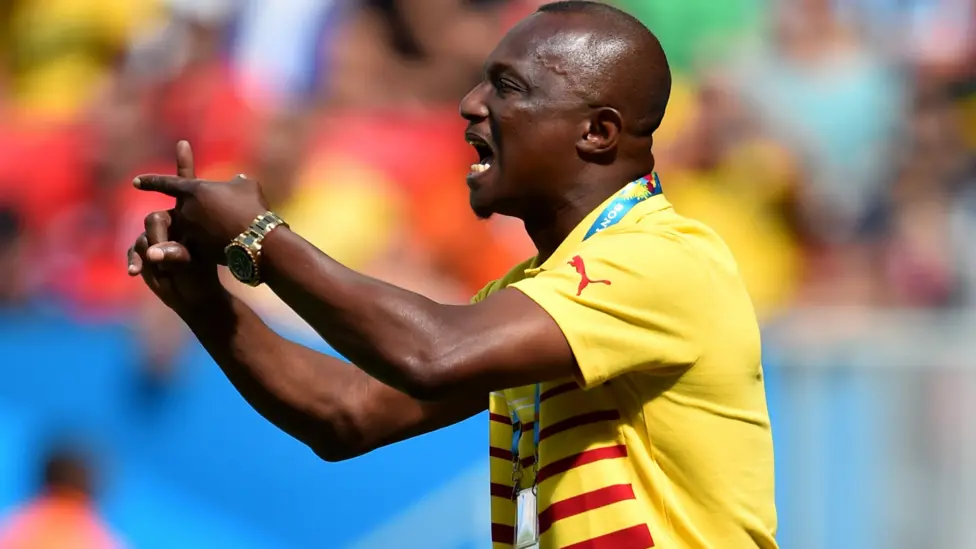
Whilst the war back home has been the backdrop to Sudan's Afcon 2025 qualification, Appiah's results against his native Ghana have also drawn headlines.
Sudan held the Black Stars to a 0-0 draw in Accra and then beat the West Africans 2-0 in Benghazi - a result which contributed to Ghana's shock failure to qualify for a Nations Cup for the first time in 20 years.
"It's really unfortunate because everybody thought Ghana will have qualified," Appiah reflected.
"In 2014, I was taking Ghana to the World Cup in Brazil, and I made a statement that football is coming of age.
"The whole FA needs to sit down and analyse and check what is really going on."
Appiah says he wanted both Sudan and Ghana to reach the tournament in Morocco, but his focus was completely on Sudan.
"I was executive member of the Ghana FA and while Ghana was involved with our group, I was told to step aside because of a conflict of interest, and I did.
"Once you are a professional, you look at where you're working. If Ghana is not rising up to the occasion, there's nothing I can do.
"I need to be 100% professional and make sure the country I'm coaching qualify [for] either the Afcon or the World Cup."
Appiah also has some sympathy for current Ghana head coach Otto Addo.
"Ghana is like England. If England does not qualify for Europe or the World Cup, it's a big, big issue," he said.
"Once you take that job, you need to add that pressure on top of it. Ghana not going to Afcon is a big, big, big deal."
Latest Stories
-
UCC-IEPA, CEGRAD launches free digital skills programme to empower 1,000 women in education
54 seconds -
NPP dismisses extortion allegation against Afenyo-Markin, says focus remains on GoldBod losses
19 minutes -
Guinness Ghana DJ Awards 2026 set for December 4 as ‘All Out’ era begins
22 minutes -
GhIE inducts 183 engineers, calls for stronger action on galamsey and infrastructure
28 minutes -
Thousands of children receive free specialist care at Asafo-Boakye Specialist hospital fair
32 minutes -
Independent voices must be part of gold programme probe – Dr Rasheed Draman
42 minutes -
ACEPA backs full probe of Domestic Gold Purchase Programme from inception
47 minutes -
KNUST Statutes update sparks fresh debate as staff challenge official narrative
1 hour -
NUTE must strengthen 49 colleges, not become another public university – Eduwatch
1 hour -
Awal Mohammed files for Nasara Organiser, vows to rebuild NPP Nasara structures ahead of 2028
2 hours -
IERPP demands answers as GoldBod reports disappear from website
2 hours -
Country music legend Dolly Parton dies
2 hours -
Kwaku Antwi-Boasiako writes: UK’s £39bn social housebuilding programme – Any lessons for Ghana?
2 hours -
Ghana targets 1,200MW new thermal power capacity by 2029 – Jinapor
2 hours -
Ghana targets universal electricity access by 2030 as coverage nears 90%
2 hours