

Audio By Carbonatix
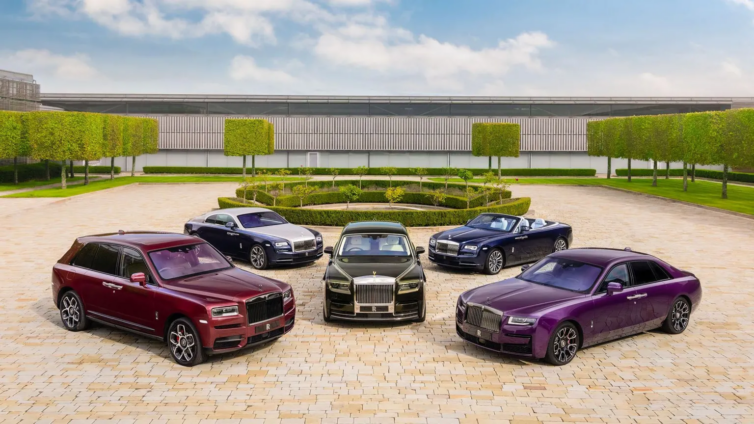
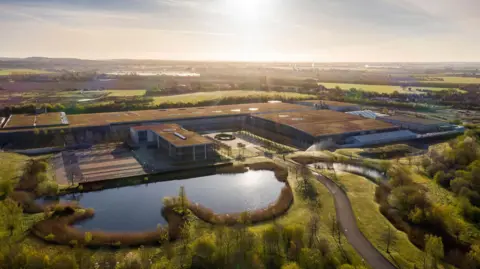
Luxury carmaker Rolls-Royce will expand its Goodwood factory and global headquarters to meet the growing demand for bespoke models.
It will invest more than £300 million so it can build more highly-customised versions of its cars for its super-rich clientele.
The 120-year-old British brand came under full control of German carmaker BMW in 2003 and officially opened the site in West Sussex the same year. Rolls Royce says this expansion secures its future in the UK.
Rolls-Royce sold 5,712 cars in 2024, the third-highest total in its history.
While that number may seem tiny compared with the millions of cars delivered each year by mainstream manufacturers, Rolls-Royce operates in a highly rarefied market.
The brand said it "does not disclose prices" but it is understood its cheapest model, the Ghost saloon, sells from about £250,000 upwards. Its Cullinan sports utility vehicle and electric Spectre models are thought to start at around £340,000.
In comparison, the average UK house price was £297,000 last year, according to Halifax.
The price of bespoke models can vary widely. When it comes to the most elaborate creations, the final product can cost several times the base price of the car.
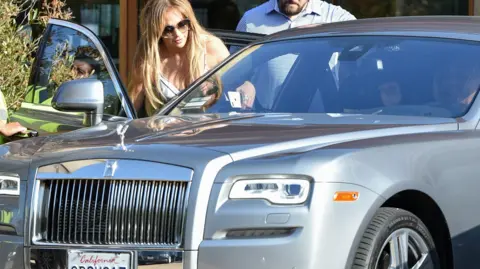
There are relatively few buyers who can afford to pay so much for a car. Among those who can are celebrities, who often do not mind flaunting their wealth.
Among them are US stars Kim Kardashian and Nicki Minaj, as well as British rapper Stormzy who was banned from driving after being caught using a mobile phone behind the wheel of his Wraith in London.
'Holographic paint and one-off artworks'
For some customers, simply owning a Rolls-Royce isn't exclusive enough. In recent years, the company has increasingly focused on building highly customised versions of its cars, which can then be sold at even higher prices.
Rolls-Royce describes this strategy as "creating value for clients through individualised products and experiences and providing opportunities for meaningful personal expression".
In practice, this has included cars with holographic paint, containing one-off artworks, or featuring intricate hand-stitched embroidery. One model, designed as a homage to the 1964 James Bond film Goldfinger, includes features made out of solid 18-carat gold.
Rolls-Royce is not alone in this. Other high-end manufacturers such as Bentley, McLaren and Ferrari also offer detailed customisation.
But making individually tailored cars, while profitable, is a labour-intensive process that requires time and space. At the same time, like other manufacturers, the company is preparing for a future in which conventional cars will be phased out and replaced by electric models.
Rolls-Royce said the extension of its factory would "create additional space for the increasingly complex and high value bespoke and coachbuilder projects sought by clients who define luxury as something deeply personal to them".
It added that the plan would "also ready the manufacturing facility for the marque's transition to an all-battery electric vehicle future".
The carmaker has already been granted planning permission for the expansion of the Goodwood plant, which was built in 2003 and initially housed 300 workers. There are currently more than 2,500 people working on the site.
"This represents our most substantial financial commitment to Goodwood since its opening," said the Rolls Royce chief executive, Chris Brownridge.
"It is a significant vote of confidence in the Rolls-Royce marque, securing our future in the UK," he added.
As a luxury carmaker focused on export markets, Rolls-Royce is insulated from many of the challenges currently facing the wider European motor industry. However, it has been affected by a fall in demand in China, one of its most important markets.
Earlier this year, Mr Brownridge said rising demand for personalised vehicles was helping to offset that decline.
The announcement comes weeks after another famous British brand generated controversy while setting out its own plans for the future.
Jaguar – a part of Jaguar Land Rover – is to be relaunched as an all-electric marque and moved sharply upmarket as part of a major restructuring at the company.
In December, it unveiled a dramatically styled concept car, which together with a new logo and a divisive online advert sparked a social media storm – and generated plenty of column inches.
Latest Stories
-
Zambia closes courts on last day to file election challenge
3 hours -
Nearly three million Teslas recalled in China over hidden door handles
3 hours -
China probes use of formaldehyde to keep cabbages fresh
3 hours -
Veteran Nollywood actor Taiwo Hassan ‘Ogogo’ dies at 65
3 hours -
SYPALA 2026 opens at UPSA, puts Africa’s economic future under the spotlight
4 hours -
Man City agree deal for Palmeiras winger Allan
4 hours -
New Zealand to introduce bill for under-16s social media ban
4 hours -
GoldBod rejects funding crisis claims, says gold purchases remain on course
4 hours -
I await courage from accusers to report ‘extortion’ claims – Afenyo-Markin
4 hours -
Prince Harry steps down from African wildlife charity board
4 hours -
I’ll submit myself to any investigation to clear my name – Afenyo-Markin on ‘extortion’ allegation
4 hours -
NAIMOS arrests 3, destroys 86 Chanfang machines in Ablebo galamsey sweep
4 hours -
Galamsey: Ghana’s rivers cannot afford another failed experiment – Akwasi Konadu
4 hours -
Blue Water Guards programme failing in fight against galamsey – Manhyia North MP
4 hours -
Policy indiscipline, incompetence stifling Africa’s growth — IMANI boss
5 hours