

Audio By Carbonatix
Women scientists are calling for more support for scientific research on the African continent to help improve food systems and livelihoods.
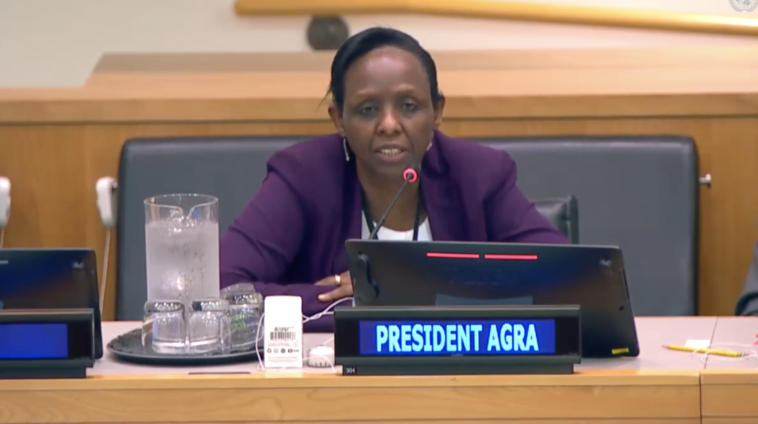
Speaking during an event to mark International Day of Women and Girls in Science, AGRA president Dr Agnes Kalibata observed that the application of science to life is one of the most important transformations that have benefitted society greatly.
“Science is how you increase yields for farmers. Science is how you change people's lives and livelihoods… You can get a good crop variety through science. This would make a difference between a good yield, or sometimes even a failed crop… or even good nutrition… So for me, science is about changing lives,” she said.
“Science is extremely critical. Probably the most critical part of how we move forward because it's able to move things that are not moving. It's able to help make decisions in areas where people are struggling to make decisions.
"So the role of science in generating evidence for the kind of decisions we need to make is extremely important in policy,” Dr. Kalibata added.
The International Day of Women and Girls in Science is an annual observance adopted by the United Nations General Assembly to promote the full and equal access and participation of women in Science, Technology, Engineering and Mathematics fields.
The webinar event celebrated AGRA scientists who are leading various efforts to help transform food systems across Africa.
Dr. Jane Ininda who is the head of seed research and systems development at AGRA's Center of Excellence for Seed Systems in Africa (CESSA), said although scientific works take time before results are seen, continuous support is needed.
“Research, and especially in plant breeding, takes long to see results. By the way, there is no way you can develop a crop variety in less than 10 years if you are doing a good job.
"However, there are methods these days of hastening the process, so you may get it in less than maybe seven years,” she observed.
“But you can see the patience which is required. And sometimes, we are told, okay, these varieties, you are not getting anything. So we are cutting the resources….And so these are some of the frustrations,” she added.
Recounting her journey at AGRA, Dr Ininda disclosed that she and her team of breeders from different countries across Africa have developed 685 improved crop varieties over the last decade and a half.
“65% of those varieties were commercialised, meaning that, they got into the hands of seed companies. The seed companies produced seed, and they sold the seed to the farmers. And this contribution to me is really big. Those farmers would get higher yields,” she said.
“They could get climate, smart varieties. They could get disease-resistant varieties. I am very happy about that contribution, and it has been a journey because I've been in AGRA for 15 years. But we are seeing those crops are still creating change. That is what seed companies are producing even up to today,” Dr Ininda added.
Director of Gender, Youth, and Inclusiveness at AGRA, Nana Amoah who is a social scientist, told the event that curiosity is what drew her to science.
“I've always wanted to find out; why do we have food insecurity? And I'm speaking specifically about Africa. Why are we on a continent that is ripe with natural resources, fertile soils, and opportunities to grow pretty much anything we want to grow, but aren't we able to feed ourselves? Why do we still have hungry people?” she noted.
“And so that, coupled with my love for food as well, but also innovation, I'll say, drove me to that space around agri-food systems, combining that with the behavioural economics background that I have,” she said during the webinar.
Dr. Asseta Diallo, Senior Program Officer, Soil Fertility and Fertilizer Systems at AGRA said beyond investments in the development of technologies, efforts should be made to extend such innovations to farmers.
“One thing is having the technologies, but the other thing is helping smaller farmers get access to them. Taking these technologies at scale and showcasing how it works, this is also very critical,” she said.
Dr. Diallo’s work involves supporting governments in creating the appropriate policy environment for the scaling up of technologies like fertilizers for the benefit of farmers.
“I supported almost 13 governments across the continent in Africa to develop sound policies, to ensure fertilizer quality control, and also to enable policy for the private sector to operate to take these technologies to smaller farmers,” she explained.
The year 2025 marks the 10th anniversary of the International Day of Women and Girls in Science. The theme for this year’s celebration was “Unpacking STEM Careers: Her Voice in Science.”
Latest Stories
-
Tinubu files case in US court to block release of alleged drug trafficking record – Lawyer
2 hours -
‘Powder Guy’ denies $32,000 visa fraud charges
2 hours -
Two suspects arrested over lynching at Daboya
2 hours -
Mobile phones contributing to Christians’ spiritual decline – Bishop Patu
2 hours -
Government to develop 150-acre air cargo hub at Tamale Airport – Goosie Tanoh
2 hours -
Stronger GRA digital systems needed at ports – IEAG
2 hours -
24-Hour Economy Secretariat brokers $270m poultry project to cut chicken imports
3 hours -
Ghana attaches particular importance to sustainable African-owned financing of peace – Mahama
3 hours -
Ho to establish first public college of education – MCE announces
3 hours -
“We are one house – let’s settle this at home” – Atomaase Royal family calls for unity, rallies behind Twafohene
3 hours -
The Missing Middle and the Overlooked Small: Why Ghana Must Serve Both the ‘S’ and ‘M’ in MSME’s
3 hours -
Mahama returns from Angola after AU extraordinary summit
4 hours -
Ghana qualifies for quarterfinals of Africa Volleyball Nations Cup after beating Zambia
4 hours -
WAFU B WCLQ: Ampem Darkoa Ladies come from behind to beat Edo Queens
4 hours -
Photos: National Youth Authority Festival
4 hours