

Audio By Carbonatix
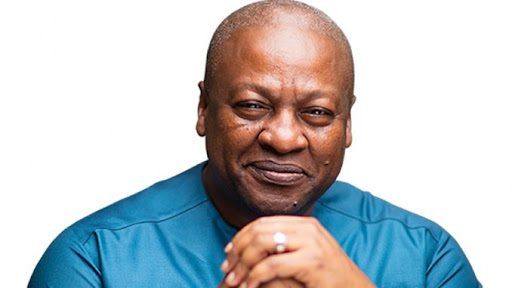
On Thursday, February 27, 2025, President John Dramani Mahama delivered his first State of the Nation Address (SONA) before the 9th Parliament, as mandated by Article 67 of the 1992 Constitution of the Republic of Ghana. His speech touched on the country’s economic, social, and financial conditions of the populace. This article examines the president’s statements and compares them with economic and financial data sources.
The Institute of Economic Research and Public Policy (IERPP), a policy think tank dedicated to social reform, sound economic management, and responsible governance, acknowledges the contributions made by various governments toward strengthening Ghana’s national power grid. However, IERPP finds that the president’s assertion in paragraph 6 of the SONA—where he claims to have resolved dumsor (erratic power supply) by 2016, stating that from January 2016 to January 7, 2017, there was no power rationing or load management—is inaccurate.
Evidence contradicting this claim can be found in an article published by Citi FM Online on April 19, 2016, in which the president himself stated;
"We are not able to get enough gas to feed the power plants."
He further explained;
"If you take the eastern generating area, which is Tema, we have almost 600MW of gas-based generation but are not getting gas through the West African Gas Pipeline to be able to run them."
Additionally, in a GhanaWeb article published on July 15, 2016, the president is on record acknowledging that dumsor was not yet over while addressing party supporters and traders at Aboabo Market in Tamale, Northern Region. Given these documented statements, the president’s claim in his 2025 SONA does not align with historical records from 2016.
Claim on Cedi Depreciation
In paragraph 14, the president highlights the continued depreciation of the Ghanaian cedi, reporting a 19% loss in value against the U.S. dollar in 2024, following a 27.8% depreciation in 2023. While IERPP acknowledges that the NPP government may not have achieved all of its economic targets and that challenges remain, a broader analysis of data from the Ministry of Finance and the Bank of Ghana from 2013 to 2024 reveals significant efforts in stabilizing the local currency, particularly between 2017 and 2024.
Despite periods of volatility, the cumulative exchange rate depreciation showed a decline from 73.8% during the NDC administration (2009–2016) to 71.4% under the NPP government (2017–2023). This suggests that while currency depreciation remains a concern, policy measures implemented in recent years have contributed to a relatively slower rate of decline. We believe that factors such as improved fiscal discipline, monetary policy adjustments, and the gold-for-oil policy have played a role in gauging the exchange rate trajectory. However, sustaining long-term stability will require further structural reforms, increased foreign exchange reserves, and diversified economic growth strategies.
Claim on the Financial Sector
Furthermore, the president asserted that Ghana’s financial sector continues to struggle despite the previous government’s reportedly expenditure of GHS 29.9 billion on the financial sector clean-up exercise to date. However, IERPP considers this claim misleading and seeks to clarify the reality of the sector’s recovery. According to the World Bank’s 8th Ghana Economic Update, more than half of the 23 banks operating in Ghana are in a strong position, eliminating the need for further recapitalization. The report highlights that, within just one year, most banks successfully achieved over two-thirds of the required recapitalization target, despite the initial three-year timeline set for completion.
In addition to improved capital adequacy, Ghana’s banking sector has witnessed a remarkable recovery in profitability. The return-on-equity (ROE) after tax surged from a negative -34.4% in December 2022 to a positive 34.2% in December 2023, demonstrating a strong turnaround in financial performance. Similarly, return-on-assets (ROA) improved significantly, rising from -3.8% to 5.4% over the same period.
The Institute of Economic Research and Public Policy, IERPP, believes that these indicators suggest that while challenges remain, the financial sector has made significant strides in resilience and recovery. The implementation of regulatory measures, improved asset quality, and enhanced risk management strategies have contributed to the sector's stability. Going forward, continued fiscal discipline, efficient monetary policies, and investor confidence will be crucial in ensuring sustained growth in Ghana’s financial sector.
Claim on Reserves
The President also stated that the previous administration left minimal reserves for debt servicing, despite implementing what he described as one of the most severe and distressing economic policies in the history of the Fourth Republic—the Domestic Debt Exchange Programme. However, it remains unclear whether the President was referring specifically to Gross International Reserves (GIR).
To set the record straight, the Institute for Economic Research and Policy Perspectives (IERPP) emphasizes that, as of now, Ghana’s gross international reserves stand at approximately $8.9 billion, which translates to four (4) months of import cover. This figure is among the highest reserve levels recorded under the Fourth Republic, offering a robust buffer against external economic shocks. For historical context, when His Excellency the President handed over power on January 7, 2017, the gross international reserves stood at approximately $5.78 billion (2013-2016), providing around 3.4 months of import cover.
Furthermore, if the President’s assertion was specifically referencing the sinking fund, IERPP’s assessment indicates that, as of January 2025, the previous NPP administration had left an auction excess of over GH¢700 million, which remained unspent. Additionally, an extra GH¢3 billion in end-of-year revenue was available as a financial cushion, supplemented by other unutilized funds across various accounts. Given these facts, the President’s claim that inadequate reserves were left for debt servicing does not align with the available data and financial records.
Latest Stories
-
Citizens Platform rejects five-year presidential term, demands legal framework for constitutional reforms
7 minutes -
Over GH¢600m COVID audit gap frightening – PAC Vice Chairman
8 minutes -
Coronation Insurance appoints Bridget Puorideme as acting Head of Sales and Distribution
11 minutes -
Manyhia South MP raises alarm over alleged detention of woman whose whereabouts are unknown
13 minutes -
Police officer charged with murder over death of 20-year-old law student
15 minutes -
GRA to roll out Fiscal and Accounting devices in Q4 to improve VAT compliance
16 minutes -
PAC to demand answers on COVID GH¢624m fumigation gap from Audit Service – Davis Ansah Opoku
20 minutes -
NDC youth organiser aspirant calls for stronger grassroots mobilisation ahead of 2028
24 minutes -
6 out of 10 businesses not complying with tax obligations – GRA
35 minutes -
Chamber of Cocoa Marketers warns Cocobod’s GH¢4bn debt could disrupt cocoa purchases in new season
38 minutes -
Gov’t to unveil 1.5GW renewable energy pipeline to cut power costs for industries
40 minutes -
Bullet TV, Atinka journalists allegedly assaulted while covering Laboma Beach demolition
41 minutes -
COVID-19 fumigation gap raises questions about Auditor-General’s work – Senanu
50 minutes -
How TRAFFITECH-GH will detect traffic offences, issue fines and penalise defaulters
52 minutes -
Mahama cuts sod for Sentuo Group’s Airport Garden City project, over 3,000 jobs anticipated
56 minutes