

Audio By Carbonatix
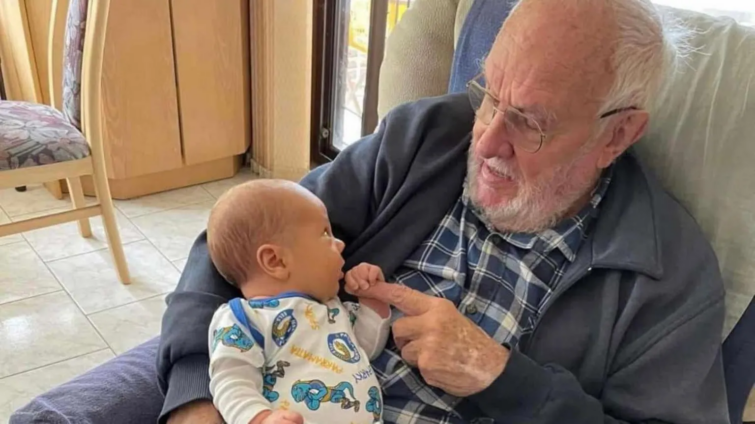
One of the world's most prolific blood donors - whose plasma saved the lives of more than 2 million babies - has died.
James Harrison died in his sleep at a nursing home in New South Wales, Australia on 17 February, his family said on Monday. He was 88.
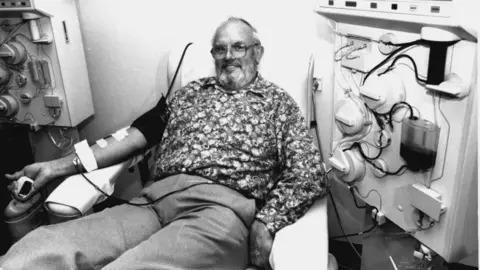
Known in Australia as the man with the golden arm, Harrison's blood contained a rare antibody, Anti-D, which is used to make medication given to pregnant mothers whose blood is at risk of attacking their unborn babies.
The Australian Red Cross Blood Service who paid tribute to Harrison, said he had pledged to become a donor after receiving transfusions while undergoing a major chest surgery when he was 14.
He started donating his blood plasma when he was 18 and continued doing so every two weeks until he was 81.
In 2005, he had the world record for most blood plasma donated - a title he held until 2022 when he was overtaken by a man in the US.
Harrison's daughter, Tracey Mellowship, said her father was "very proud to have saved so many lives, without any cost or pain".
"He always said it does not hurt, and the life you save could be your own," she said.
Mellowship and two of Harrison's grandchildren are also recipients of anti-D immunisations.
"It made [James] happy to hear about the many families like ours, who existed because of his kindness," she said.
Anti-D jabs protect unborn babies from a deadly blood disorder called haemolytic disease of the foetus and newborn, or HDFN.
The condition occurs at pregnancy when the mother's red blood cells are incompatible with that of their growing baby.
The mother's immune system then sees the baby's blood cells as a threat and produces antibodies to attack them. This can seriously harm the baby, causing severe anaemia, heart failure, or even death.
Before anti-D interventions were developed in the mid-1960s, one in two babies diagnosed with HDFN died.
It is unclear how Harrison's blood came to be so rich in anti-D, but some reports said it had to do with the massive blood transfusion he received at 14.
There are fewer than 200 anti-D donors in Australia, but they help an estimated 45,000 mothers and their babies every year, according to the Australian Red Cross Blood Service, also known as Lifeblood.
Lifeblood has been working with Australia's Walter and Eliza Hall Institute of Medical Research to grow anti-D antibodies in the lab by replicating blood and immune cells from Harrison and other donors.
Researchers involved hope lab-made anti-D can one day be used to help pregnant women worldwide.
"Creating a new therapy has long been a 'holy grail'," Lifeblood's research director David Irving said.
He noted the scarcity of donors committed to regular donation, who are able to produce antibodies in sufficient quality and quantity.
Latest Stories
-
Valencia sack Corberan and chief executive
30 minutes -
Ronaldo demands lifetime bans over Jota chants
39 minutes -
Arsenal to contact Pro Ref over Konsa penalty
48 minutes -
No weekend game for Manchester derby VAR officials
58 minutes -
AI ‘kill switch’ may need to be mandatory, Anthropic co-founder says
1 hour -
‘Culture shift’ needed in how UK does business, PM urges
1 hour -
SHS placement crisis? GES says 95% of students are already placed
1 hour -
ITF World Tennis Tour Juniors: J60 stage begins in Accra
2 hours -
Absa Bank named winner of Bancassurance Leadership Award at 2026 Ghana Insurance Awards
2 hours -
Mr. Aloysius Kwesi Acquah Snr aka Kwesi Anfo
2 hours -
NACOC’s cocaine suspects arrest commendable, but it cannot run on ‘charity’ to fight drug cartels
2 hours -
Gov’t cannot deny what it has already set in motion – Former NaCCA boss challenges Mahama on Arabic, Chinese policy
2 hours -
Telecel Foundation marks Fetu Afahye with HealthFest
3 hours -
IEAG calls for urgent intervention to decongest ports
3 hours -
Strong financial, technical capacity non-negotiable for Accra-Kumasi Expressway – Agbodza
3 hours