

Audio By Carbonatix
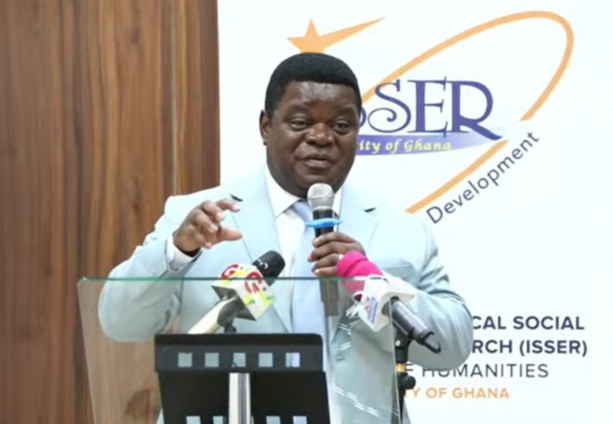
Prof. Petr Quartey of the Institute of Statistical, Social and Economic Research, (ISSER), has urged the government to revisit its decision to bear the fees of first-year students in public universities.
He acknowledged that while the decision is in fulfilment of a campaign promise made by the present administration, it may not be the most pressing challenge facing Ghana’s education.
The government is allocating GHȼ499,915 to fulfil the key campaign promise, but Prof. Quartey says the decision requires a review.
"What about students in private universities?" he asked. "Many of such private university students are from less privileged homes but are forced into private universities due to grades or limited public slots. Shouldn’t support be extended to such needy students in private institutions too?"
He also pointed to poor conditions in basic schools, citing instances of pupils sitting on blocks or lying on floors to write.
"Before paying fees for everyone, shouldn’t we invest in improving basic education infrastructure?" he questioned.
Accommodation challenges in universities were also cited as a concern. "Every year, only about 20% of students secure accommodation on campus. Is it efficient to pay fees for students who have no place to stay?"
The analyst called for a review of the free Senior High School (SHS) policy and other social interventions, stressing the need for sustainability and proper targeting.
"We’re struggling to sustain free SHS. Let’s revisit these policies to ensure value for money," he added.
On school feeding, he noted that the 33% increase in funding is good news but called for decentralised procurement to eliminate partisanship, saying there is too much politicisation in the programme.
He described disturbing reports of students being fed with little to no protein, urging reforms to ensure children receive proper nutrition.
Prof. Peter Quartey stressed the importance of leveraging ICT to enhance revenue mobilisation and welcomed the reintroduction of road tolls, saying "It’s a laudable idea, but let’s invest in infrastructure first to avoid congestion."
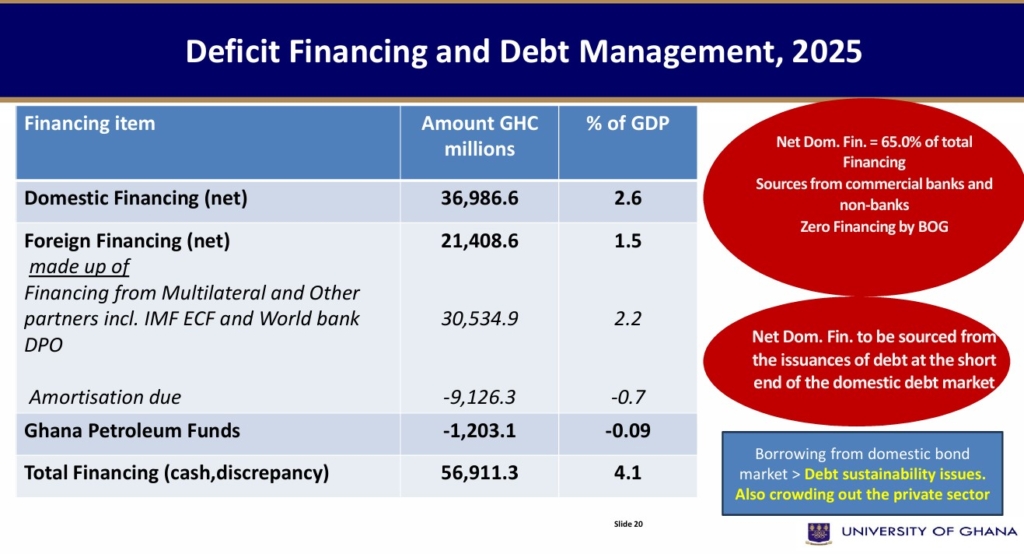
Ghana’s economic growth is projected to slow to 3.8% in 2025, down from earlier forecasts of 4%, raising fresh concerns about the country’s recovery prospects.
Industrial growth is also expected to fall sharply from 7.1% to 3.3%, despite the five tax reliefs and policy interventions aimed at stabilising the exchange rate and stimulating the economy.
Latest Stories
-
Tano North chiefs petition Mahama over galamsey destruction in River Tano
16 minutes -
Kalpohin SHS, NOBISCO qualify to represent Northern Region at National Public Speaking Competition
23 minutes -
Missing records of illegal gold purchases in Ghana raise concern – Duncan-Williams
45 minutes -
Duncan-Williams warns of powerful interests targeting GoldBod
1 hour -
We need to pray for GoldBod – Duncan-Williams
2 hours -
Strong favourites or tougher task – will Arsenal defend their title?
2 hours -
Passengers escape death as VIP travelling from Kumasi to Sunyani catches fire
2 hours -
Ariana Grande leaves problems at home as her tour hits the UK
2 hours -
Multiple suspects at large after five shot at Virginia State University, police say
2 hours -
Three killed as Russia launches fresh aerial attacks across Ukraine
3 hours -
Boxing: John Laryea disqualified in WBA Featherweight title eliminator
3 hours -
Hawaii battles strong winds and rain as Hurricane Lala threat looms
3 hours -
Twelve killed as Polish bus veers off Hungarian motorway
4 hours -
Building Ghana better: Why architects must be at the heart of national development
7 hours -
GMet warns of severe rainstorm across northern Ghana
7 hours