

Audio By Carbonatix
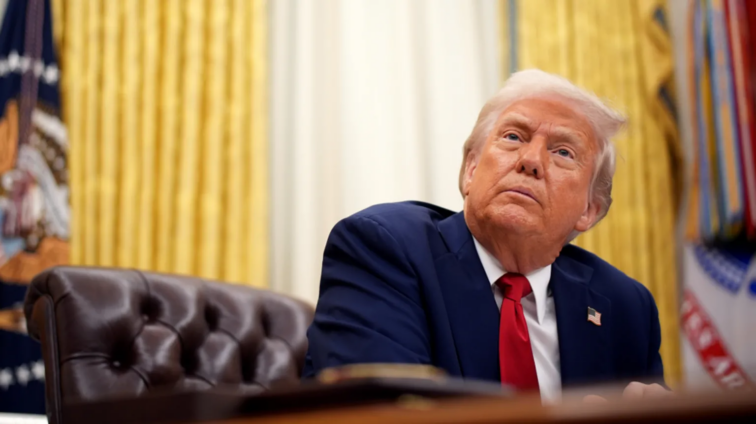
For days, Donald Trump and his White House team had insisted they were fully committed to their decision to impose sweeping "reciprocal" tariffs on dozens of countries.
They even derided a report on Tuesday that said the president was considering a 90-day pause – news that triggered a brief stock market surge.
But now that pause on higher tariff rates, with a few notable exceptions, is a reality. The reordering of the global economic order is on hold, and Trump's promise of a golden age of American manufacturing will have to wait.
The White House has said that going big on tariffs and then hitting the pause button, before entering negotiations with individual countries, was the plan all along.
"We've had more than 75 countries contact us, and I imagine, after today, there will be more," Treasury Secretary Scott Bessent told reporters shortly after the announcement.
That framing from the White House is not surprising, of course. And it is difficult to ignore the investor panic, tumbling bond market and growing chorus of Republican criticism and public disapproval that preceded the announcement.
So was it a strategic retreat in the face of unexpected resistance, or yet another example of Trump's "art of the deal" negotiating strategy at work?
It didn't take long for Trump's aides – many of the same people who said he would never back down – to fan out and celebrate the president's move.
Trade adviser Peter Navarro said Trump's tariff situation "unfolded exactly the way it should".
"You clearly failed to see what President Trump is doing here," press secretary Karoline Leavitt told a crowd of gathered reporters. "The entire world is calling the United States of America."
They were less clear about the details of Trump's tariff suspension, announced via a post on his Truth Social website. Did the reprieve in higher tariffs apply to the EU? Were Mexico and Canada, which had avoided the original 10% baseline tariffs, somehow now get included? Were tariffs targeting specific sectors affected?
Ultimately, the White House provided some clarity on these questions – but for hours US trading partners were left to scrutinise Trump's Truth Social post and glean details from answers to questions shouted by reporters at press gaggles.
On Wednesday afternoon, Trump acknowledged that the markets had looked "pretty glum" and that "people were getting a little queasy" – a reflection that undercut some of the bravado he expressed over the past week and could hint at the real reason for his tariff change of course.
Earlier in the day, he was on Truth Social, urging people to "BE COOL!" and promising that "everything is going to work out". And on Monday he lashed out at what he called "panicans" - a party based on "weak and stupid people" who weren't patient with his efforts.
In the end, however, it was Trump who made an abrupt change of course.
He insisted, however, that his tariff announcement was one that had to be made, and that any economic disruptions reflected a sickness that had been allowed to fester in the American economy.
Democrats, meanwhile, painted a less rosy picture. Senate Minority Leader Chuck Schumer accused Trump of "governing by chaos".
"He is reeling, he is retreating, and that is a good thing," he said.
In the end, the thought process behind Trump's decision may not really matter.
The reality is that the US is now making nice – or at least nicer - with nations that had faced their retaliatory trade fire, even though Trump is still imposing a 10% across the board tariff that by itself would have been huge news just a few weeks ago.
It is enough of a step down for the stock market to bounce back, however, and Trump is now leaning into a trade war with China which he hit with 125% tariffs.
That will have global economic repercussions of its own, but it is more in line with recent American foreign policy - including that of Democratic President Joe Biden - as it seeks to constrain Chinese ambitions.
The big unknown, however, is whether Trump's actions over the past week – setting allies scrambling and threatening the established global order – will have made such a strategy more difficult to pursue.
And in 90 days, when Trump's pause expires, this week's economic drama and uncertainty could begin all over again.
Latest Stories
-
GoldBod is the best we’ve done with our gold resources yet – Kofi Bentil
4 minutes -
‘I never insulted Afenyo-Markin, he got the response he deserved’ – Sammy Gyamfi
17 minutes -
We’ve moved gold purchases to Interbank rate – GoldBod CEO
40 minutes -
‘We’re not milking the state like a parasite’ – Sammy Gyamfi defends GoldBod fees
46 minutes -
‘You can’t call it losses today after defending it’ – Sammy Gyamfi to NPP on Gold-for-Oil Programme
49 minutes -
Unclaimed car? Efua Abban’s experience with shipping a car to Ghana from the United States
59 minutes -
GoldBod revenue comes from legally approved fees – Sammy Gyamfi
1 hour -
Ghana cautions Tijjaniya Muslim pilgrims over road travel to Senegal
1 hour -
Mfantsiman old girls rally support for ICT library as school marks 66th Speech Day
1 hour -
We won’t stay silent on deliberate smear campaigns – GoldBod CEO
2 hours -
Ghana’s grid not the strongest – Jinapor admits as gov’t eyes critical power investments
2 hours -
I support calls for Energy Minister to appear before Parliament – Sagnarigu MP
2 hours -
Frequent power trips alarming; urgent measures needed to prevent nationwide blackouts – Ben Boakye
2 hours -
Blackout: Akosombo control station works to be completed next month – Energy Minister insists
2 hours -
ACEP warns frequent power trips expose weaknesses in Ghana’s transmission system
2 hours