

Audio By Carbonatix
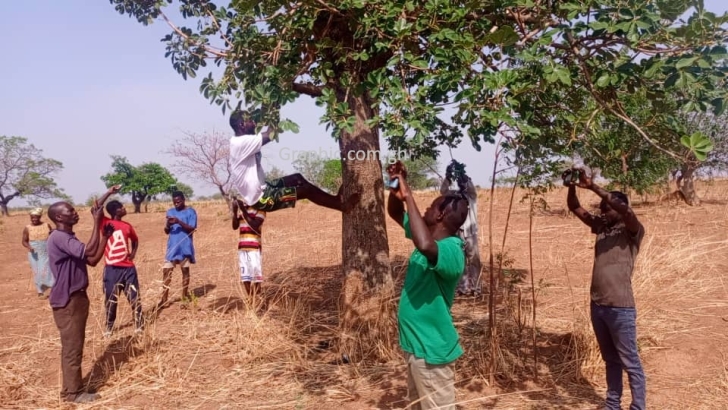
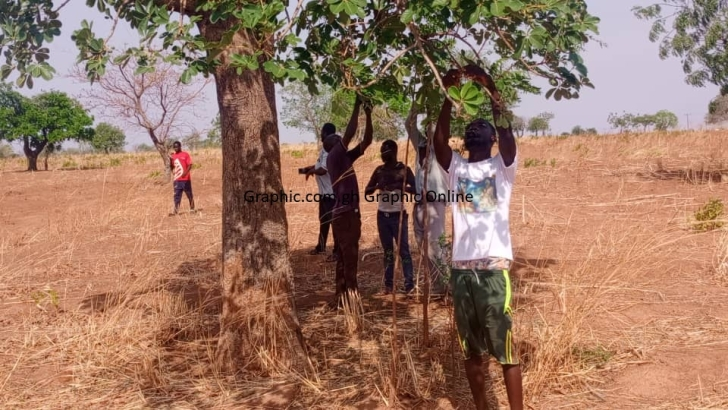
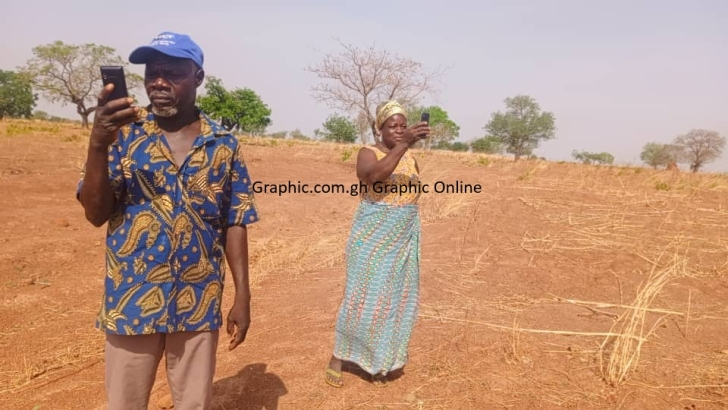
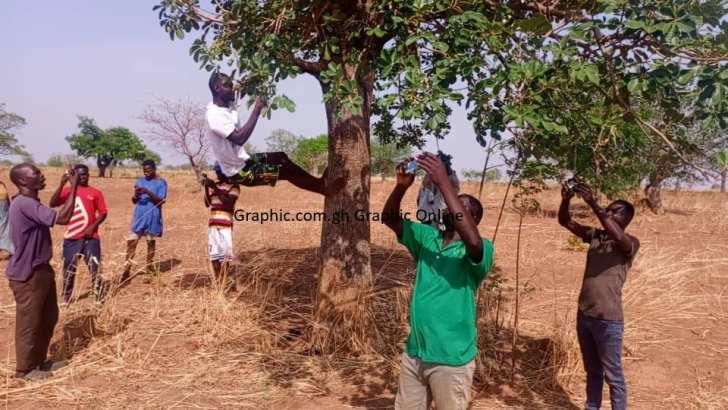
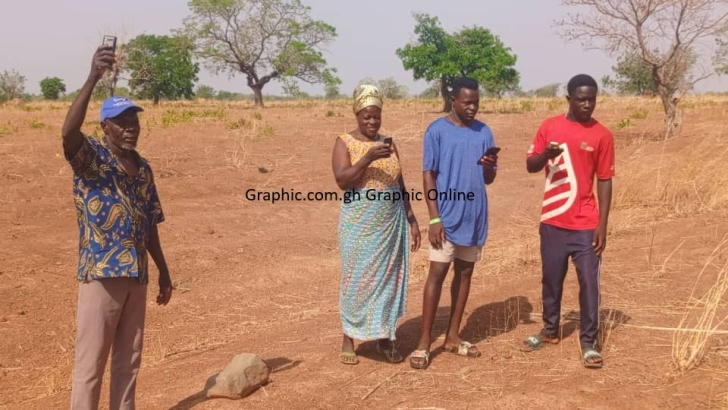
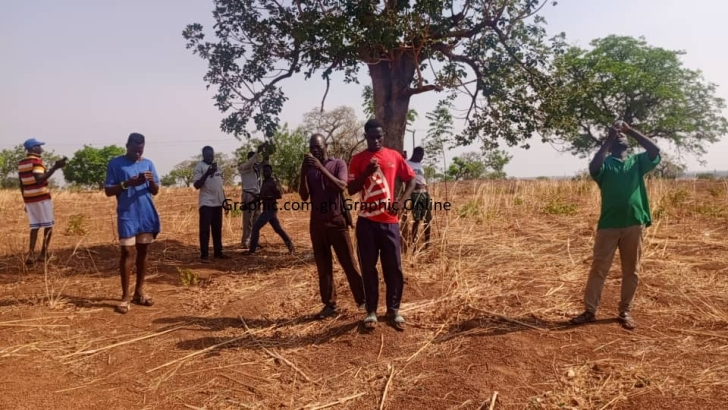
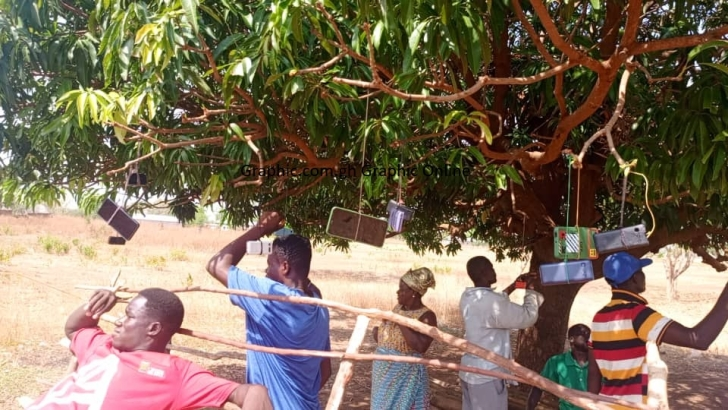
On a bright Sunday afternoon in Sanguli, a farming community in the Saboba District of the Northern Region, residents gather beneath a tree they ironically call “MTN.” Not for shade or leisure, but because the tree has become their only hope of catching a faint mobile signal.
In an increasingly digital world, this spot is a lifeline for a community desperate to stay connected.
Esther (not her real name), a resident shared her ordeal with Graphic Online’s Simon Unyan.
She frequently paddled several kilometers to Saboba town just to send mobile money to her brother in Tamale.
When her aging bicycle fails, she spends GH¢30 on transport anytime she goes to do mobile money transactions.
“Even to receive a MoMo alert, we must travel to a nearby village with a signal,” she stated.
These frequent, risky journeys on rocky, stony roads are not just inconvenient; they are dangerous.
An opinion leader in the community Nkunkpakikpe Dalafu, recalled a tragic case involving a pregnant woman who lost her baby because she couldn’t call for medical help.
“We’ve witnessed heartbreaking incidents women losing pregnancies, others suffering complications, and even deaths all because we couldn’t make emergency calls,” he said.
He also recounted at least 15 cases of snakebites among residents who ventured into the bush at night in search of a signal.
The poor network coverage also affects education. Teachers often reject postings to Sanguli due to the lack of connectivity, disrupting academic progress and limiting students’ futures.
A university graduate from the community Gmajinbo Daniel, revealed how he missed a job opportunity because recruiters couldn’t reach him.
“After that, I had no choice but to rent a room in Saboba just to stay connected while job hunting,” he said.
For the youth, the digital gap means missing out on mobile banking, online learning, and mobile money vending businesses.
It stifles economic growth, limits access to agricultural innovation, and deepens the cycle of poverty.
The social consequences are equally severe. A distressed mother, Mabefam Konja, shared that her son’s relationship is on the verge of collapse due to poor communication between the two.
“His girlfriend lives in Saboba. They only talk on market days when he travels there. Now, she’s seeing someone else,” she said.
Marital tensions are on the rise. Hours spent in the bush searching for signals often lead to misunderstandings and suspicion of infidelity.
“Some spouses get suspicious when they see their partners talking to someone of the opposite sex while waiting for a signal. It’s tearing families apart,” another resident shared.
Dalafu Emmanuel, another resident, highlighted the absence of a modern network tower between Saboba and Chereponi in the North East Region. This gap not only disrupts communication but also hampers emergency response and farming.
“Accidents happen frequently along this stretch, and getting emergency help is a major challenge. We’re mostly farmers. During the farming and harvest seasons, without reliable network access, we are unable to contact buyers, suppliers, tractor operators, or agricultural officers.
As a result, much of our produce rots on the farm,” he lamented.
The Sanguli Electoral Area, which consists of about 17 communities, continues to struggle with weak or non-existent mobile coverage. This affects not only communication but also access to healthcare, education, emergency services, commerce, and family life.
Despite the government’s rural telephony project, Sanguli’s proximity to Togo worsens the problem. Phones frequently switch to Togocel Togo’s mobile network making calls and data more difficult and expensive.
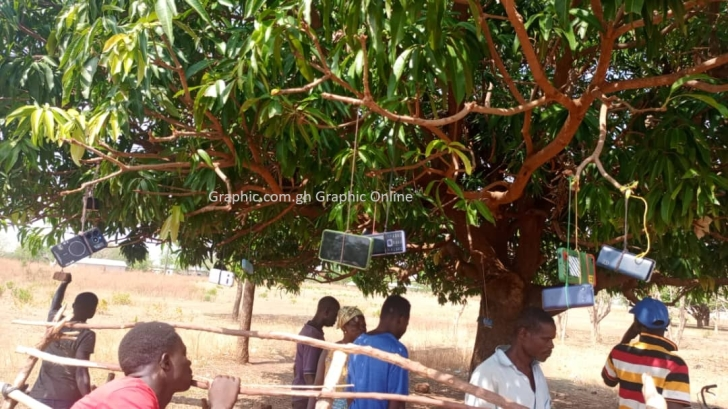
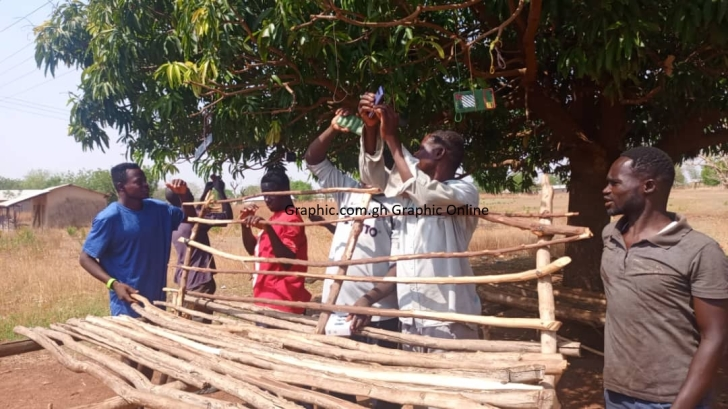
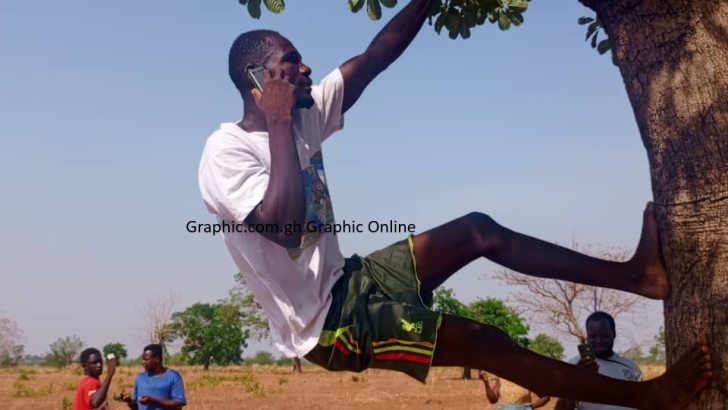
In desperation, residents tie phones to tree branches, climb trees, or wander deep into the bush at odd hours. When they do catch a signal, calls are often made on speaker mode due to poor reception sacrificing privacy just to communicate.
Assemblyman for the Sanguli Electoral Area Tilako Timugnee Francis, said repeated appeals to the district assembly have yielded little change. A temporary rural network booster provided by the assembly remains uninstalled.
“Even with that planned intervention, connectivity remains uncertain. We’re still waiting for a permanent solution,” he said.
“One day, some materials were brought in, but it turned out to be only a temporary fix. Our concern is sustainability especially for such a large electoral area so close to Togo. At night, you can even see lights from Togo, and sometimes our phones connect to Togocel instead of local networks.”
He appealed to the government and telecom operators to establish a permanent, modern telecom tower to stabilize the signal and prevent foreign network interference.
Under its mandate, the Ghana Investment Fund for Electronic Communications (GIFEC) is responsible for expanding telecom access to underserved areas. Yet, communities like Sanguli remain disconnected.
Residents are pleading for urgent action. For them, connectivity is not a luxury ,it’s a matter of safety, opportunity, and dignity.
In an era where digital access is a key driver of the Sustainable Development Goals (SDGs), Sanguli’s story is a powerful reminder that for many rural communities, connectivity is still out of reach.
As Ghana continues its digital transformation drive, Sanguli remains excluded—unable to fully participate in mobile banking, e-learning, telemedicine, or e-commerce. The people of Sanguli are simply asking for what many take for granted: the right to connect.

Latest Stories
-
Lidl banned from selling copycat Birkenstock sandals, Dutch court rules
60 minutes -
I’ve never come across a woman that strong – Baffour Awuah recounts botched EOCO arrest
1 hour -
Netherlands to return to Eurovision after 2026 boycott
1 hour -
Alan Kyerematen calls for more leaner government
2 hours -
I will go when EOCO is ready to do the right thing – Baffour Awuah on disputed invitation
2 hours -
Uproar in France over award-winning author accused of using AI
2 hours -
Mauritius backs Moroccan sovereignty as most credible solution to regional dispute over Moroccan Sahara
2 hours -
Trump’s Board of Peace unveils $2.45bn plan to begin Gaza’s reconstruction
2 hours -
I thought it was a kidnapping – Baffour Awuah explains dramatic escape from EOCO officers
2 hours -
Cedi depreciates by 9.5% in nine months of 2026 – BoG
3 hours -
Harvey Weinstein sentenced to 15 years in prison for sexual assault
3 hours -
Ghana’s public debt hit GH¢733.9 billion in July 2026
3 hours -
Dolly Parton’s manager accuses her nephew of ‘threats and intimidation’
3 hours -
“I don’t see any rational basis” – Inusah Fuseini rejects proposed five-year term
3 hours -
Constitution shouldn’t be amended simply because years have passed – IEA
3 hours