

Audio By Carbonatix
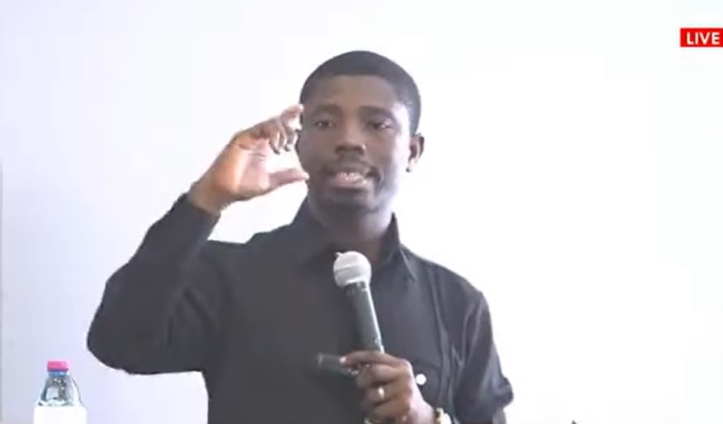
A Senior Lecturer and Projects Coordinator at the University of Professional Studies, Accra (UPSA), Dr Eric Boachie Yiadom, has called for the strengthening of national institutions and the embrace of technology to plug persistent tax revenue leakages in Ghana.
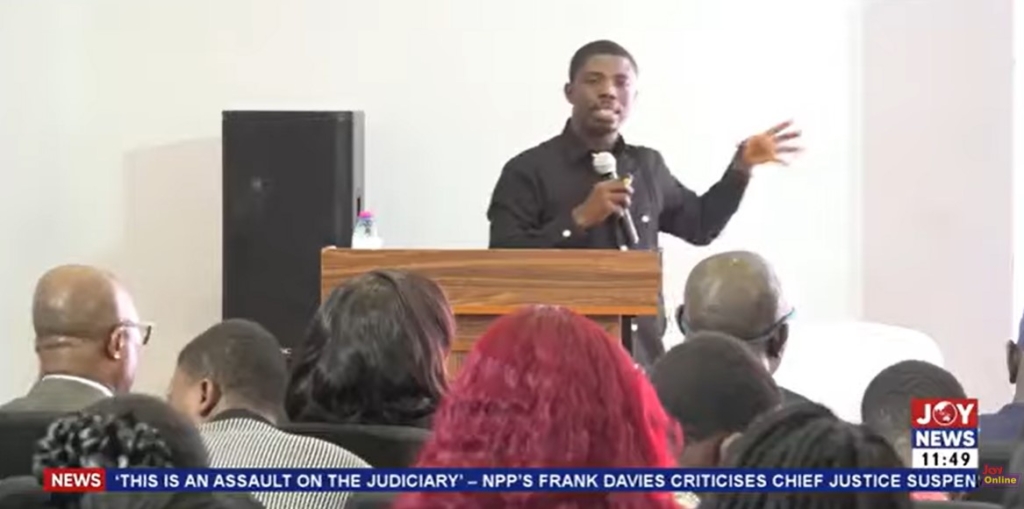
Speaking at a forum on "Tackling Tax Revenue Leakages in Ghana" hosted by the Faculty of Accounting and Finance at UPSA, Dr Yiadom presented findings from an independent study on the effectiveness of technological solutions in revenue assurance, highlighting Strategic Mobilisation Ghana Ltd (SML) as a case study.
“We cannot build a nation based on trust. Strong nations are built on strong institutions,” Dr Yiadom said. “Whether someone is trustworthy or not, a robust system ensures compliance.”
Referencing former US President Barack Obama’s historic address to Ghana’s Parliament in 2009, he quoted the famous admonition of the then US President, saying, “Africa doesn't need strong men. It needs strong institutions.”
Dr Yiadom argued that while public discourse, including media exposés and a KPMG audit, has spotlighted gaps in SML’s contract and value claims, a deeper, more empirical look is needed.
“In academic research, it is not enough to rely on secondary reporting. We must interrogate the primary data ourselves.”
Dr Yiadom revealed that after formally engaging SML, he was granted access to their facilities, allowing for firsthand verification of their technology systems, including ultrasonic flow meters, AI-powered surveillance, and automatic reconciliation tools used in the downstream petroleum sector.
Technology vs. Revenue Leakages
Quoting data from regulatory bodies and policy think tanks, including the National Petroleum Authority (NPA), Ghana Revenue Authority (GRA), and Africa Centre for Energy Policy (ACEP), Dr Yiadom noted that discrepancies between reported petroleum lifting volumes and actual taxable volumes had previously reached 3.2 billion litres in a year. However, following SML’s engagement in mid-2020, this figure dropped by over 91%, to 260 million litres annually.
“Let’s assume, without admitting, that SML was not the sole reason for this drastic improvement,” Dr Yiadom posited. “Even then, the timing of the reduction aligns directly with the introduction of SML’s monitoring technology.”
He acknowledged legitimate concerns raised by the KPMG report, including the appropriateness of SML’s variable fee structure and procurement processes. However, he argued that risk-reward-based contracts—where payment is tied to performance—should be better integrated into Ghana’s Public Procurement framework to accommodate innovation.
“There is nowhere in the Public Procurement Act that expressly forbids risk-reward models. If anything, this is a call to modernise our procurement laws to meet evolving technological solutions.”
Redundancy or Reinforcement?
Dr Yiadom conceded that SML’s work appeared to duplicate systems already in place, such as the NPA’s ERDMS and GRA’s ICUMS. However, he likened it to internal and external audits within companies—where overlapping controls are necessary to detect inefficiencies and irregularities.
“The presence of multiple layers is not a flaw but a safeguard. It’s no different from having internal audits before an external one and still facing the Public Accounts Committee,” he said.
He also questioned resistance to such technological reinforcement when similar arrangements at the ports—such as with West Blue and ICUMS—had improved customs classification and blocked leakages.
A call for transparency and independent research
Dr Yiadom concluded his presentation by urging fellow academics and professionals to engage directly with institutions like SML rather than rely solely on third-party reports or public commentary.
“If you want to know what’s truly happening, write to them, visit the site, ask the questions, see the data. That is how we strengthen our democracy—with facts, not assumptions.”
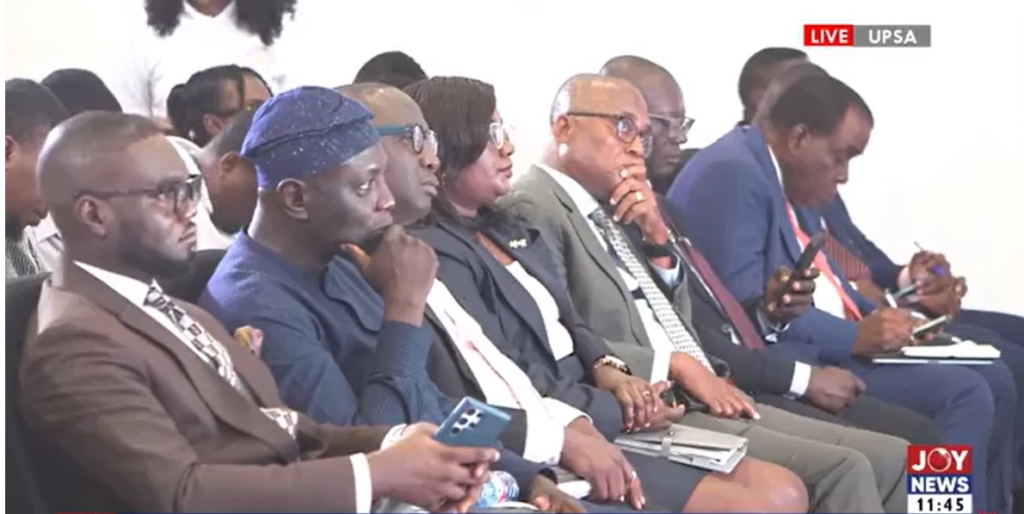
The forum, attended by students, academics, policy makers, and industry stakeholders, continues UPSA’s commitment to providing research-led insight into Ghana’s public finance management challenges.
Latest Stories
-
Edem Agbana outlines development gains, future projects at Ketu North accountability forum
12 minutes -
Let’s develop a culture of reading – Tourism Minister
20 minutes -
Kpone Kokompe records four confirmed measles cases
29 minutes -
Non-interest banking not religious doctrine – Governor Asiama
37 minutes -
Internet banking transactions hit GH¢383.82bn in 2025
43 minutes -
State-Owned Enterprises’ revenue reach GH¢176.43bn in 2025 – SIGA report
44 minutes -
NAIMOS arrest 10 illegal miners, seize equipment
49 minutes -
Total value of payment transactions increased to GH¢9.45trn in 2025, but cheque transactions fall
53 minutes -
Misinformation, deepfakes pose serious threat to Ghana’s democratic stability – NCCE
55 minutes -
Mahama congratulates Hichilema on his re-election as President of Zambia
60 minutes -
Media freedom is a security strategy, not a security threat – Kwakye Ofosu
1 hour -
Interior Minister inspires schoolchildren to persevere to pursue academic laurels
1 hour -
Nigeria’s economy expands by 4.4% in Q2, lifted by oil and non-oil sectors
2 hours -
UN committee says countries must consider reparations for slave trade
2 hours -
Oil prices rise as latest fighting resurrects Middle East supply disruption risks
2 hours