

Audio By Carbonatix
In a recent address, President John Dramani Mahama announced an ambitious plan to construct a new city in Ghana, aimed at decongesting the national capital, Accra.
The proposal has since sparked widespread public interest and debate. As someone who has served in both executive and legislative arms of government—and as a student of planning and local governance—I feel compelled to offer a constructive perspective on this timely issue.
The Problem is Real
Accra is undoubtedly overstretched. The city bears the heavy burden of being the political, commercial, administrative, and cultural hub of Ghana. What we see today are the consequences of decades of uncoordinated urban growth, underinvestment in infrastructure, and the absence of strong spatial planning.
From traffic gridlock to overcrowded schools and hospitals, unplanned settlements to inadequate sanitation systems, the symptoms of urban stress are clear. In this context, the idea of creating a new, planned city to redistribute economic activity and population pressure is not only reasonable, but also necessary.
Global Precedent Exists
History offers us useful examples. Nigeria moved its capital from Lagos to Abuja to deal with congestion and spatial inequality. Tanzania recently shifted many government functions from Dar es Salaam to Dodoma. Even here in Ghana, plans were once made for a new administrative capital outside Accra. In many advanced countries, the biggest cities are not necessarily the capital cities. There is a good reason for that. The concept is not new—but execution is everything.
Is it Feasible?
This is where caution is warranted. Building a city is not a four-year political project. It is a multi-generational national undertaking. It requires strong political will, bipartisan support, massive financial resources, and—above all—strategic clarity.
Before breaking ground, Ghanaians deserve answers to key questions:
• Where will this city be located—and why there?
• What industries or services will anchor its economy?
• Who will build and fund it—government, private sector, or through public-private partnership (PPP)?
• How will land acquisition be handled, especially with regard to traditional authority and community rights?
• What legal and governance frameworks will guide the development?
Without these answers, the new city risks becoming just another vanity project, mired in delays, speculation, or abandonment.
Planning Must Be at the Centre
As a development planner and legislator, I cannot overemphasize the importance of good planning. A new city must not simply be an extension of existing dysfunction in concrete. It must be a model of urban resilience—incorporating green spaces, integrated transport, inclusive housing, digital infrastructure, and climate-smart design.
We must also avoid the centralization of authority. Local government systems should be built into the DNA of the new city, with functioning assemblies and empowered communities. Institutions matter. People matter.
A Call for a Thoughtful, National Dialogue
Let me be clear: I do not oppose the idea of a new city. On the contrary, I believe such a vision, if properly executed, could be transformative. But it must be backed by a clear, costed blueprint, subject to public and parliamentary scrutiny, and anchored in law.
We must also guard against politicization. Cities are not built with slogans; they are built with discipline, long-term commitment, and collaboration. A new city must be a national project, not a partisan one.
Conclusion
Ghana stands at a crossroads. We can either seize this moment to plan boldly and responsibly for the future—or repeat the mistakes of the past with grand announcements that fade into forgotten headlines.
As Ranking Member for Local Government and a firm believer in sustainable development, I urge the government, planners, traditional leaders, and civil society to treat this proposal with the seriousness it deserves. It’s good to dream big—but let’s also plan smart.
⸻
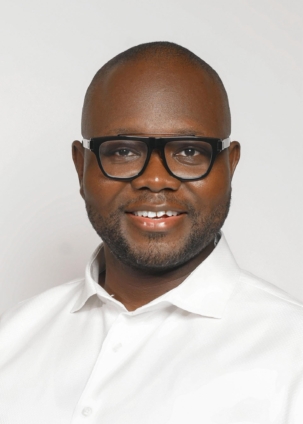
Hon. Francis Asenso-Boakye is the Member of Parliament for Bantama and a former Minister for Roads and Highways, and Works and Housing. He currently serves as Ranking Member on the Parliamentary Committee for Local Government and Rural Development.
Latest Stories
-
Government has improved sanitation in one-and-a-half years — Salaga South MP
33 minutes -
Nkwanta North Assembly to appear before Parliament over DACF sanitation spending
45 minutes -
Mourinho prints out ‘red card’ incidents after Real lose derby
1 hour -
Atletico beat 10-man Real in feisty Madrid derby
1 hour -
Twelve Tribes of Israel Ghana to mark 40 years with anniversary celebration
2 hours -
GPL 2026/27: Hearts held by Bechem as Kotoko, Samartex share spoils
2 hours -
My Story (Kwaku Antwi-Boasiako)
2 hours -
We expect growth rate to re-accelerate in second-half of 2026 – IC Insights
2 hours -
The ungodliness and unrighteousness underlying the National Cathedral mess!
2 hours -
T-bills auction: Government fails to achieve target; yield on 91-day-bill remains unchanged
3 hours -
It’s Ghana’s shame to denigrate Nkrumah when the whole world honours him as African of the Century – Asiedu Nketiah
3 hours -
No other nationalist can compare to Nkrumah – Asiedu Nketiah
3 hours -
Collateral Registry: Foreign banks accounted for GH¢19.9bn of secured credit in quarter 2, 2026
3 hours -
This government should expect scrutiny – Asiedu Nketiah
3 hours -
Two-year-old girl dies in domestic fire at Cantonments
4 hours