

Audio By Carbonatix
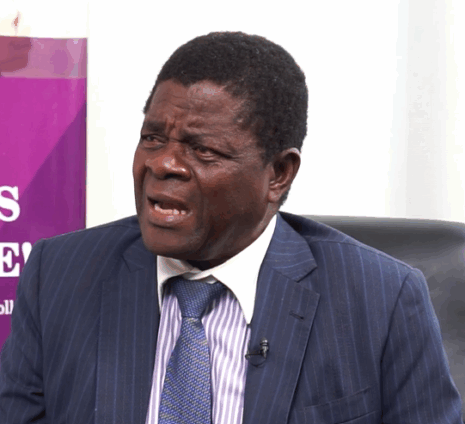
A former Director of the Ghana School of Law, Kwaku Ansa-Asare, has stated that the ongoing probe into the potential removal of the suspended Chief Justice, Gertrude Torkornoo, cannot be telecast live, as doing so would contravene provisions in the 1992 Constitution.
Speaking on JoyNews’ The Pulse on Thursday, May 22, Mr Ansa-Asare stated that Article 146, which outlines the procedure for the removal of a Chief Justice or a superior court judge, is explicit about the nature of the proceedings.
Read also: Suspended CJ Torkornoo is merely barking – Ansa-Asare on injunction to stop removal probe
“The probe may be telecast live, but as a lawyer, my take is that Article 146 of the 1992 constitution has provided a format; it says that the proceedings shall be held in-camera, it is not opened to the public, and therefore it cannot be telecast live,” he said.
His comments come after the suspended Chief Justice, Gertrude Torkornoo, as part of her legal challenge, has called for the proceedings to be broadcast live.
Prof Ansa-Asare argues that the framers of the Constitution clearly intended such hearings to remain private, and that any deviation would amount to an unlawful breach of due process.
“If the Constitution had contemplated that it could be done, they would have provided for it,” he noted.
"..By our public policy, certain matters are to be held in-camera, and where they are held in-camera, no one would be above the law."
Mr Ansa-Asare added that in judicial practice, where rules are established to govern court proceedings, they also determine whether hearings should be public or private.
In this case, he believes the law is clear.
"The law is no respecter of persons. There is only one law of equality. We are all equal before the law, so don’t let us try to bend the rules to favour," he said.
Mr Ansa-Asare added that Article 146 was crafted to uphold the dignity and independence of the judiciary, particularly the office of the Chief Justice.
"Article 146 has been designed to protect the Chief Justice because the office of the Chief Justice is one of the three pillars of the state, and therefore if there are certain matters that should not be in the public domain, in the wisdom of the framers of the 1992 constitution, don’t let the chief justice be marred in the full glare of the public," he said.
Latest Stories
-
NACOC needs more personnel to tackle drug trafficking – Toobu
4 minutes -
Railway workers resist KMA eviction order, demand consultation
5 minutes -
Legacy Leadership Africa Institute to host boardroom women’s leadership programme
17 minutes -
Ghana needs a law to sustain constitutional reforms – CDD-Ghana
4 hours -
COVID fumigation audit: Auditor-General has a lot of questions to answer – Akwatia MP
4 hours -
Stranded Ghanaian medical graduates in Cuba appeal to Mahama for immediate return
4 hours -
GNFS contains fire outbreak at Teshie Lekma Road near Lekma Hospital
10 hours -
Samia Nkrumah rejects the narrative that Ghanaians were happy after Nkrumah’s overthrow
11 hours -
A Mother’s pain: Tribute by Ivan Baidoo’s mother
11 hours -
‘Forgive us for staying away’ — Samia Nkrumah leads family back to Nkroful, pledges to preserve Nkrumah’s legacy
11 hours -
Ernest Nuamah scores twice as Lyon beat Rennes
12 hours -
‘My dear Ivan’ – A father’s tribute to a son tragically killed
12 hours -
GNPC Explorco advances Voltaian Basin drilling preparations with 13.5km access road
12 hours -
Cabinet approves facility manager for Borteyman Sports Complex – Kofi Adams
13 hours -
Sanitation is improving; critics may be ‘living in another world’ – Salaga South MP replies Bekwai MP
13 hours