

Audio By Carbonatix
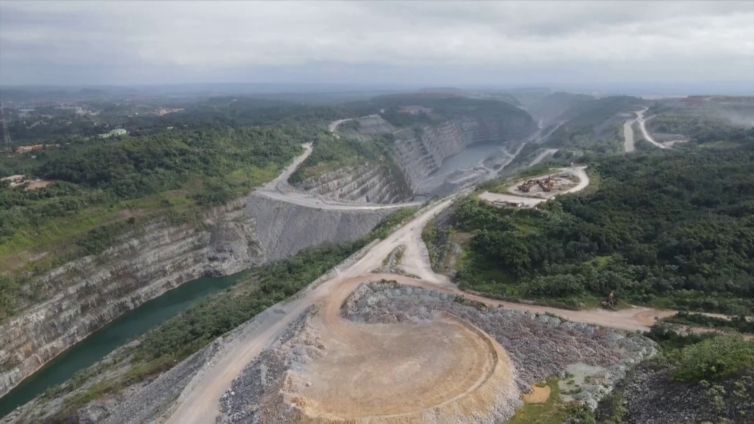
Restoring lands degraded by mining activities in Ghana could be far-reaching, as illegal miners continue to lay siege on abandoned concessions of large-scale companies.
Some scientists suggest it could take a minimum of 300 years to restore such lands, even as the government and large-scale mining companies push to end the environmental menace.
They are proposing an inclusive approach along with finding alternative purposes, other than reclamation, for proper and environmentally-friendly land use.
Traveling along forest reserves and water resources in Ghana, a sight never missed is the environmental damage perpetrated through illegal mining operations.
Vast forest covers and arable farmlands have been heavily degraded with threats to the ecosystem and food security.
Efforts by large-scale mining companies to reclaim mined concessions are fraught with challenges.
Researchers and other interest groups in mining argue that without a proper consultation and assessment of the needs of host communities, efforts to reclaim degraded lands would go down the drain.
Speaking at a stakeholder conference on Mining and Phytoremediation, Strategic Mine Consultant, Dr. Jones Mantey, highlighted the predicaments in reclamation.

“Some community folks opposed a plan by a mining company to convert an abandoned site into aquaculture. They argued that they are miners, not fishermen and wouldn’t want a fishing hub. It created challenges. If security isn’t tight at abandoned sites, it creates problems,” he noted.
Dr. Mantey is proposing a critical look at transforming and repurposing abandoned mining concessions to energy hubs and other recreational uses.
“Sometimes it is difficult to backfill the dug pits. So, you can only convert them into water resources, hydro dams, and other purposeful facilities that is economically, socially and environmentally friendly,” he said.
The first DAAD-Alumni Conference on Mineral Mining in Ghana and Phytoremediation assembled local and foreign researchers and stakeholders in the extractive sector.
It sought to highlight the impacts of both large-scale, small-scale, and artisanal gold mining on the environment while proffering pragmatic solutions for sustainable mining.

Programs Coordinator and Senior Research Scientist at the Soil Research Institute of the Council for Scientific and Industrial Research (CSIR), Dr. Albert Mensah, noted that phytoremediation could take longer in restoring the land.
“Phytoremediation is difficult. Since these mining companies are businesses, they are not ready to wait for these plants to suck up the poisonous chemicals because it takes a long time,” he noted.
Director at the Soil Research Institute, Dr. Collins Tay, says the government must commit to restoring natural resources adversely impacted by illegal mining.

“Once the miners are being licensed to do so, they must set money aside for these purposes right from the initial stages of production,” he said.
Latest Stories
-
He entered at eight. He is now 16: Ghana’s children growing up in prayer camps
2 hours -
‘Development must not always begin from Accra’ — Anwelle Foundation launched in Jirapa
2 hours -
PKO trio eye victories at Odwira Festival
4 hours -
346 Ghana Navy recruits pass out after 26 weeks of intensive training
4 hours -
Newsfile to discuss EOCO-MP arrest, drug trafficking, speech arrests and $235m water debt
5 hours -
JoyNews gets results as listeners raise GH¢40,000 to help 17-year-old student with cerebral palsy attend SHS
5 hours -
Vice President calls for stronger local pharmaceutical production to reduce medicine imports
6 hours -
The brewing tension at KNUST; Beware the Ides of October….
6 hours -
Health Ministry moves to integrate traditional medicine into mainstream healthcare
6 hours -
550 pupils in Kintampo South get educational lifeline as ‘Seeds of Hope’ reaches farming communities
7 hours -
Opoku Mensah urges Christian Council, House of Chiefs to speak up on democratic freedoms
7 hours -
Teacher unions’ strike: Minority demands immediate payment of teacher arrears, 20% deprived area allowance
7 hours -
The Accra-Kumasi Expressway: Building it right
7 hours -
Beyond gold exports: Building value and economic resilience from Ghana’s gold
7 hours -
2027 AFCONQ: Ghana under pressure as Gambia beat Somalia 2-1
8 hours