


Audio By Carbonatix
US inflation jumped last month as President Donald Trump's tariffs took hold, pushing up prices for items from clothing to coffee.
Consumer prices rose 2.7% in the year to June, up from 2.4% the previous month, with prices rising at the fastest pace since February, the Labour Department said.
Higher energy and housing costs, such as rents, were the major drivers of the increase.
But the data also suggested that consumers are starting to feel the impact of tariffs, as some firms begin to pass along the costs of Trump's new taxes on imports.
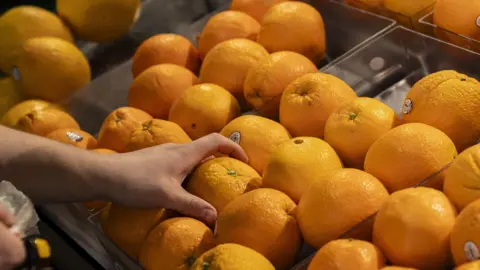
Coffee prices jumped 2.2% from May to June, while prices for citrus fruits climbed 2.3%. Toy prices rose 1.8%, appliance prices increased 1.9%, while clothing prices gained 0.4% - the first increase to hit the sector in months.
But the overall increase remained contained and came in largely within expectations, offset by declines in prices for new and used cars, airfare and hotel bookings.
"There is a trickle of what is likely tariff-induced inflation in some categories, particularly household appliances and furnishings," said Olu Sonola, head of US economic research at Fitch Ratings.
"This trickle is likely to gain momentum in the coming months."
The average effective tariff rate in the US has surged this year, as Trump imposed a 10% tax on most goods entering the country, hitting key items, such as steel and cars, with even higher levies.
Though he suspended some more aggressive plans, in recent weeks, he has revived tariff threats, warning of plans to raise duties on goods from most countries from 1 August. Ongoing talks have raised hopes that deals will avert punishing duties.
Trump said on Tuesday he had struck a "great deal" with Indonesia, without offering details. So far, his tariff talks with other countries have concluded with tariff levels for goods from those countries far higher than the US had at the start of the year.
The president says the taxes will protect American businesses from foreign competition, boost domestic manufacturing and jobs, and bring in revenue for the government.
The White House has dismissed forecasts that the measures will lead to higher prices for Americans, arguing that companies and foreign exporters will absorb the costs.
That view is at odds with most economic forecasters, who have argued the US economy has been shielded so far because firms stocked up on many goods in advance.
Despite pressure from Trump to cut interest rates, the US central bank has resisted making any changes, saying it wants more time to understand the effect of the tariffs.
Analysts on Tuesday said they were not expecting any cuts at the Fed's meeting this month and were divided about September, given the new inflation figures.
Latest Stories
-
NAFCO ramps up storage expansion drive to strengthen National Food Reserve Programme
2 minutes -
Urban Roads, not MMDCEs, responsible for desilting major drains – Local Gov’t minister
17 minutes -
ADB deepens Ghana’s trade ambitions with business seminar in Kumasi
17 minutes -
World Bank downgrades Ghana’s energy recovery programme to ‘Unsatisfactory’, cites Finance Ministry fiscal controls and election-related delays
27 minutes -
Commuters demand urgent repairs to deteriorating SCC–Old Barrier road
28 minutes -
Multimedia condemns assault on reporter by soldiers in Nkwanta South, demands probe
1 hour -
Technology alone can’t protect careless digital finance users – Ghana Association of Banks
1 hour -
Cyberattacks now an existential risk for digital businesses – e-Crime Bureau founder
2 hours -
Fraud thrives where there is no ‘capable guardian’ – e-Crime Bureau founder
2 hours -
Youth demand greater share of food systems investments at National Agribusiness Dialogue
2 hours -
Court places injunction on NPP Bibiani-Anhwiaso-Bekwai constituency elections
2 hours -
Government intensifies maternal deaths campaign, emergency care training
2 hours -
Adu-Boahene Trial: Defence challenges investigator over national security probe
2 hours -
Dambai traditional authorities perform rites to officially open new yam trading season
2 hours -
Yellow Card’s compliance excellence recognised with GRC awards nomination
2 hours