

Audio By Carbonatix
Government plans to shorten mining licence durations and mandate direct revenue-sharing with local communities in its most sweeping mining law reforms in nearly two decades, details of which were announced by the Lands Minister on Wednesday.
The planned overhaul reflects a broader trend across West Africa, where governments are rewriting mining codes to capture more value from rising commodity prices.
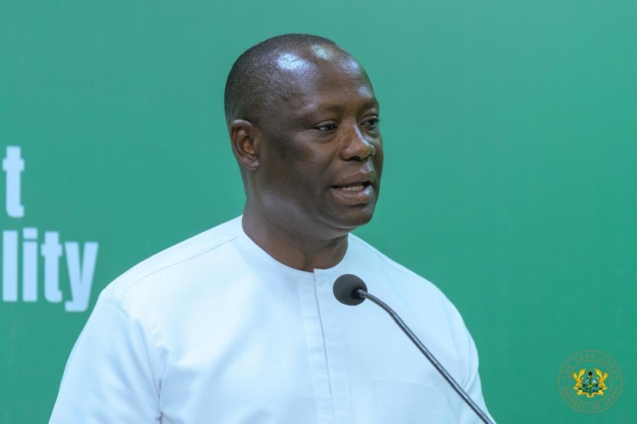
Lands and Natural Resources Minister Emmanuel Armah Kofi Buah said the changes, which include scrapping automatic renewal of some licences, will apply only to future contracts, a departure from the stance in Mali and Burkina Faso, where military-led governments have applied reforms retroactively.
“In Ghana, we don't do retrospective laws,” Buah said at a presentation in the capital, Accra. “Existing agreements are sanctified and will be respected.”
He added that the overhaul of the Minerals and Mining Act and mining policy was 85% complete following extensive stakeholder consultations.
DEVELOPMENT REQUIREMENT
Ghana, Africa's top gold producer, expects output to rise to 5.1 million ounces this year. Major miners in the country include Newmont, Gold Fields, AngloGold Ashanti, Zijin, Asante Gold, and Perseus.
It also exports bauxite and manganese with plans to start lithium production.
Under the proposed law changes, prospecting licences would no longer be held indefinitely, and the maximum term for mining leases would be reduced from 30 years to a shorter period agreed by the government and firms. Companies failing to meet environmental, social or production obligations would lose the right to automatic licence renewal.
In a major shift, the government plans to abolish development agreements, in which companies send money to the central government.
Instead, companies will be required to sign agreements committing a fixed percentage of gross mineral sales revenue to fund local development projects as the government seeks to address long-standing grievances from communities that they have seen little benefit from mining operations.
The reforms also propose a three-tier mineral rights regime, introducing a new medium-scale licence category to bridge the gap between large multinational operators and small-scale artisanal miners.
Another key change under consideration is the reduction or abolition of stability agreements, which currently offer up to 15 years of tax and regulatory protection to large investors.
Future agreements would be limited to capital recovery periods for major investments.
Latest Stories
-
BSIFF 2026 puts local language cinema at the centre of African film conversation
5 minutes -
MMFL makes strong showing at 2026 JoySports Invitational
7 minutes -
NPP vetting was candid and went beyond routine questions – Afoko
7 minutes -
CIIG 6th Insurance Excellence Awards highlights need to protect professional standards
13 minutes -
GEXIM Bank’s interest income surges 90% to GH¢153.9m – SIGA report
14 minutes -
GNFS rescues man trapped beneath loaded truck after it overturns at Kibi
15 minutes -
African Union backs Sudanese-led dialogue to end conflict
16 minutes -
VRA reverses GH¢106m loss to record GH¢88m profit in 2025
18 minutes -
University of Memphis has not terminated scholarship deal with GSA – Director-General
25 minutes -
Ken Blege announces global release of ‘He Found Me’ album
32 minutes -
The transfers to watch before window closes
41 minutes -
Nana Kwadwo Osei Bonsu I installed as Odikro of Tepa Ankaase in Ashanti Region
51 minutes -
FDA, National Security arrest suspect over sale of cigarette-shaped sweets
53 minutes -
Sammy Awuku challenges GMA over MV Sankofa’s seaworthiness and clearance
55 minutes -
ECG can move from losses to profit with prudent management, stable economy – SIGA DG
58 minutes