

Audio By Carbonatix
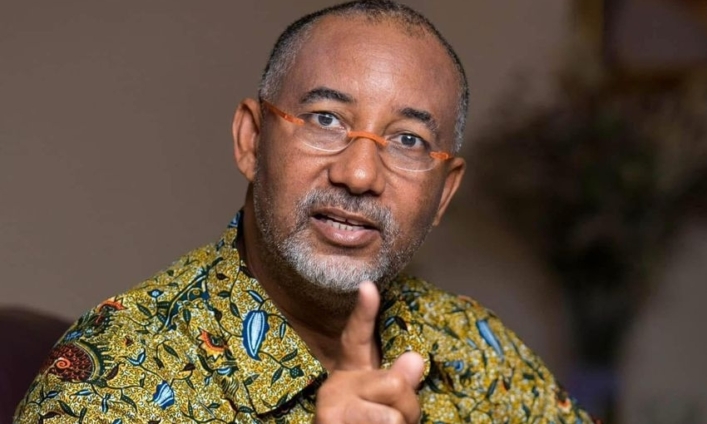
Former Executive Director of Standard Chartered Bank, Alex Mould, is raising critical questions about Ghana’s persistently high interest rates, despite visible improvements in key economic indicators such as inflation and liquidity.
In a detailed critique of the current monetary policy stance, Mr. Mould queried why the Bank of Ghana (BoG) has kept the Monetary Policy Rate (MPR) at a steep 25%, when market trends suggest ample liquidity and declining short-term borrowing costs.
Disconnect Between Policy and Market Reality
The MPR, set by the BoG, serves as a signal to investors, businesses, and consumers about the central bank’s economic outlook. In theory, it should help manage inflation, influence lending behavior, and stabilize growth.
However, Mr. Mould argues that the current policy is misaligned with actual market conditions.
Recent market data supports this view. The 91-day Treasury bill rate has dropped to 10.29%, and short-term government borrowing is similarly priced. The interbank rate—used by banks to lend to each other overnight—is reportedly under 15%, significantly below the MPR.
Additionally, a recent treasury bill auction saw an 85% oversubscription, indicating that banks are awash with liquidity.
“Banks are sitting on excess cash, and some are even turning away fixed-term deposits because it's costly money,” Mould noted. “Yet we’re not seeing a corresponding drop in lending rates to businesses or consumers.”
The Role of the Ghana Reference Rate
According to Mr. Mould, the high interest rates can largely be attributed to the way the Ghana Reference Rate (GRR) is calculated.
The GRR—a benchmark for setting lending rates—derives 40% of its weight from the MPR, 40% from the 91-day Treasury bill rate, and 20% from the interbank rate.
Despite falling Treasury and interbank rates, the heavy weighting of the 25% MPR keeps the GRR elevated at approximately 23%. This, in turn, continues to suppress affordable lending.
A Call for Policy Action
With inflation trending downward—recorded at 13.7% in June—Mr. Mould is urging the BoG’s Monetary Policy Committee (MPC) to reduce the MPR to below 20% at its next meeting.
“Lowering interest rates reduces the cost of production, brings down prices, and helps control inflation,” he explained. “A stable cedi and falling inflation would allow for positive real interest rates without stifling economic growth.”
He also acknowledged the broader efforts being made to reset Ghana’s economy. “The RESET President John Dramani Mahama promised is clearly underway,” Mould stated, commending Finance Minister Dr. Ato Forson and BoG Governor Dr. Johnson Asiama for their leadership.
“Ghana doesn’t lack liquidity,” Mould emphasized. “What we lack is policy alignment. It’s time to harmonize the MPR with market realities. Our businesses—and the future of our economy—depend on it.”
Latest Stories
-
Zanetor Agyeman-Rawlings pledges decisive action on climate change, galamsey and environmental degradation
23 seconds -
Bawumia was brainchild behind Domestic Gold Purchase Programme – Samuel Jinapor
2 minutes -
Fuel prices set to go up from September 1, Petrol to sell at GHC 16.69 and Diesel, GHC 17.90 – COMAC
4 minutes -
Our World Our People withdrawn due to curriculum duplication, not politics – Adutwum’s spokesperson
7 minutes -
GANRAP is essentially a rebranding of Domestic Gold Purchase Programme – Abu Jinapor
13 minutes -
I am tired of being in opposition, my goal is to win in 2028 – Boakye Agyarko
24 minutes -
Ghana’s road maintenance funding gap deepens as only 37% of needs met – World Bank
24 minutes -
Roland Europe Group appoints Opoku Sanaa as Head of Sales, Middle East & Africa
26 minutes -
Sammyflex TV’s Roland Amartey girds up for 2026 Ghana Music Awards UK coverage
38 minutes -
U.S. bank queried payments for Ghana ambassador’s residence renovated by company owned by embassy’s IT officer
56 minutes -
GoldBod to generate US$1.4bn in FX in September
1 hour -
GAF 2026/2027 enlistment opens September 3 for degree holders
1 hour -
Reparatory justice: Mahama announces high-level UN side event in September
2 hours -
Bosome Freho Assembly invests first tranche Common Fund in water and education projects for 19 rural communities
2 hours -
YIPs Ghana honours 5 outstanding students at 2026 Tertiary Achievers Awards
2 hours