

Audio By Carbonatix
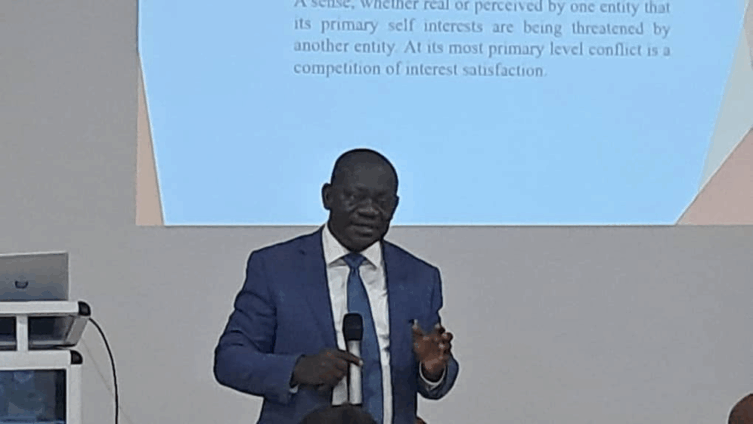
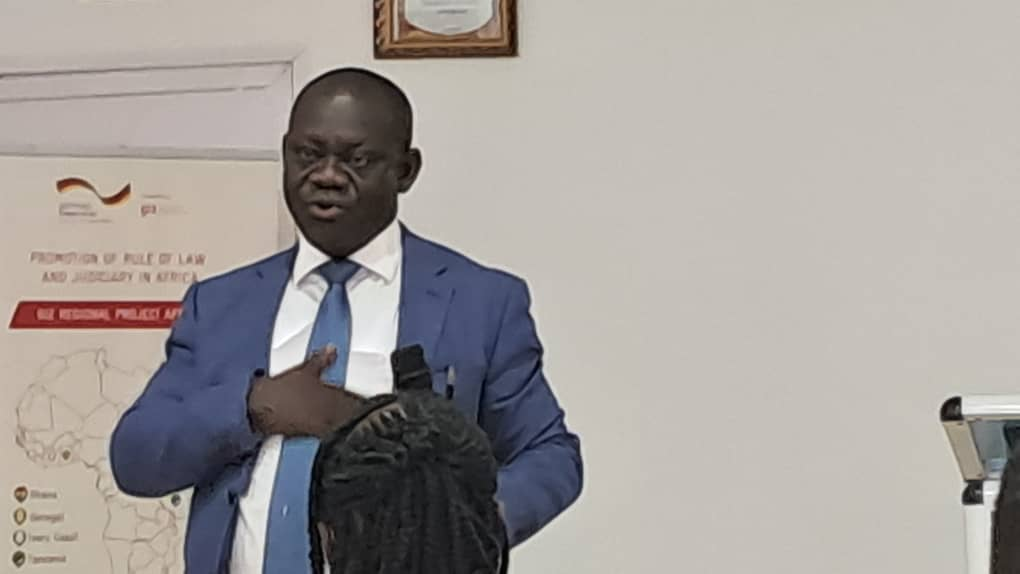
A conflict resolution consultant and President of the Centre for Citizen Empowerment (CCE), Alex Nartey, has expressed deep concern over recent comments made by the Bono Regional Minister, Joseph Addae Akwaboah, in which he threatened to order the arrest of chiefs allegedly fueling confusion in chieftaincy disputes.
In a strongly worded statement, Mr. Nartey described the minister’s remarks as “troubling and inappropriate,” warning that such an approach undermines Ghana’s traditional governance systems and risks escalating tensions in affected communities.
“While the concern for peace and security is legitimate and commendable, I find the approach and tone of the statement deeply troubling and inappropriate in the context of modern conflict resolution practices,” he noted.
According to him, chiefs occupy constitutionally recognized positions in Ghana’s governance and cultural framework, and treating them as potential criminals rather than partners in peacebuilding could have long-lasting negative consequences.
“The contemporary and globally approved approach to conflict resolution emphasizes dialogue, mediation, negotiation, and consensus-building, rather than coercion or punitive threats. Especially in matters involving traditional authorities, the path to sustainable peace requires inclusive engagement and respect for customary processes alongside state mechanisms,” Mr. Nartey stressed.
He cited the Chieftaincy Act, 2008 (Act 759), and provisions of the 1992 Constitution, which clearly outline institutional mechanisms for the resolution of chieftaincy disputes through the Judicial Committees of the Traditional, Regional, and National Houses of Chiefs. These, he said, must be strengthened and utilized instead of resorting to arrests.
Mr. Nartey further warned that public condemnation of chiefs could deepen mistrust and delegitimize both government authority and traditional leadership in the eyes of the people. “It sends the wrong signal that the state prioritizes coercion over dialogue,” he added.
He called on the Bono Regional Minister and other state officials to adopt conflict-sensitive, dialogue-driven, and respectful approaches in dealing with traditional leaders. “Chiefs must be seen as partners in peace and development, not as potential criminals,” he emphasized.
Mr. Nartey urged the Ministry of Chieftaincy and Religious Affairs, the National House of Chiefs, and the National Peace Council to provide leadership and guidance to regional authorities on best practices in conflict resolution.
Latest Stories
-
Ghana should withdraw from 2027 AFCON – Kojo Addae Mensah
9 minutes -
Team Ghana departs Accra for Angola ahead of Karting Africa Trophy
15 minutes -
AIT President Prof Clement Dzidonu urges lifelong learning as AI reshapes work and education
18 minutes -
FWSC to meet striking teacher unions on Tuesday
19 minutes -
NPP won’t force candidates to step down – Miracles Aboagye
32 minutes -
Black Stars: Building in the sinking sands
34 minutes -
Low inflation on paper, high cost of living: How Presidents Mahama and Trump are facing stark economic reality
42 minutes -
NPP will negotiate with popular non-politicians to secure winnable candidates – Miracles Aboagye
46 minutes -
Only 5% of Ghanaians can afford housing without support – Gov’t
47 minutes -
Nigeria launches rescue after military plane crashes with 32 aboard
53 minutes -
GES digitalisation already exists; restore discontinued platforms – Adutwum spokesperson
53 minutes -
Police launch manhunt for 7 after deadly Bunkprugu violence
56 minutes -
GTEC directs UDS to immediately cease unauthorised mode of delivering accredited LLB programme
59 minutes -
We must address the role of boys in impregnating young girls, not just blame girls – Kobby Kyei
1 hour -
Mahama grants presidential pardon to 863 convicted persons
1 hour