

Audio By Carbonatix
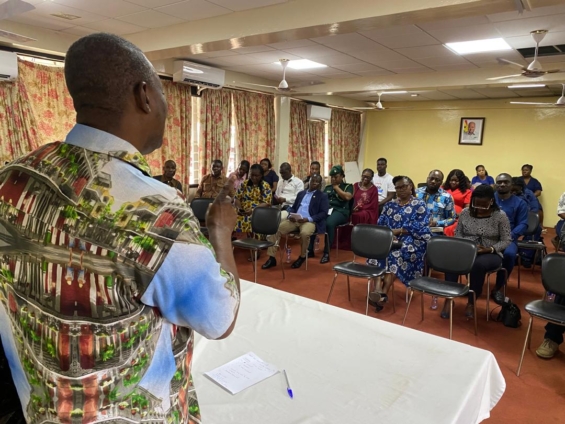
The SOS Children’s Villages Ghana has engaged the Volta Regional Child Protection Committee (RCPC) to share information about its NORAD-funded project and explore areas of collaboration.
The Project aims at protecting children who have lost or are at risk of losing parental care in the Adaklu District.
The engagement, which was held in Ho, forms part of a broader stakeholder strategy at the national, regional, district, and community levels, seeking to strengthen child protection systems and support the implementation of Ghana’s National Plan of Action on the Elimination of all forms of Child Labour.
During the meeting, the National Programme Director of SOS CV, Anthony Owusu Gyamfi, explained that the project, funded by the Norwegian Government through the Norwegian Agency for Development Cooperation (NORAD) is being implemented in five districts across the Volta, Greater Accra, Bono East, and Central Regions.
He noted that the Adaklu District was selected following a survey that revealed about 85% of children in the district experience physical abuse under the guise of punishment.
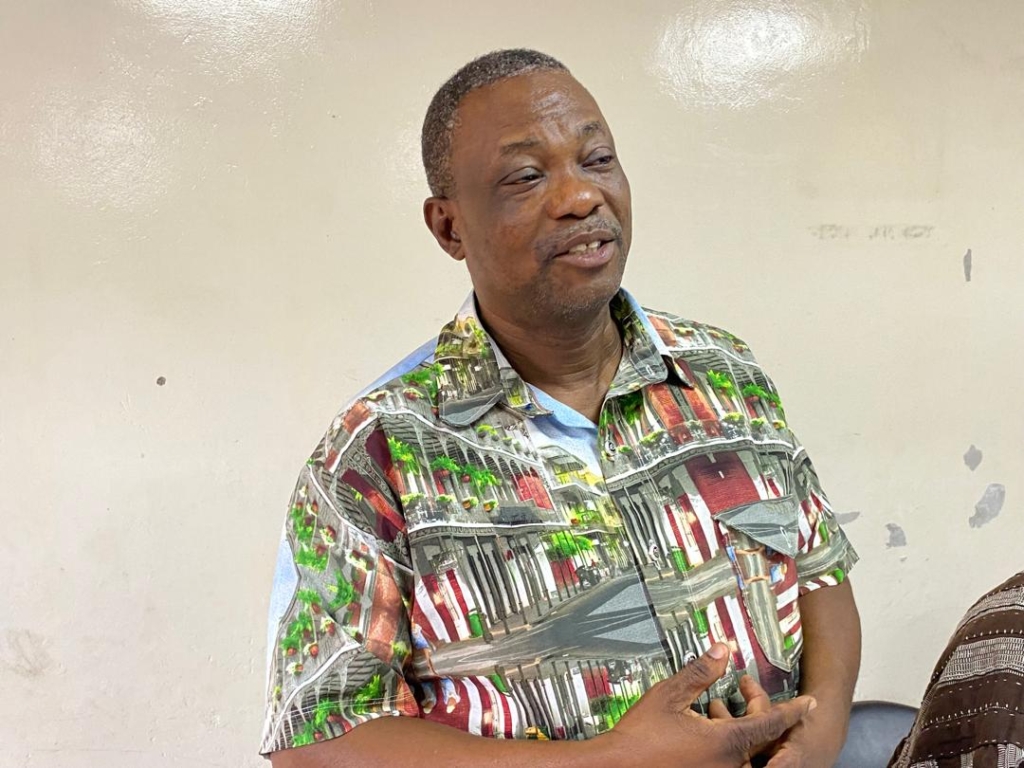
He outlined that the five-year initiative targets 2,000 caregivers and 16,000 children, with four main components: access to quality education, health and nutrition, household economic strengthening, and rights protection.
“We are supporting children living in extreme poverty, those living alone, or with grandparents. This includes scholarships, NHIS registration, and direct support to caregivers to engage in sustainable livelihoods”, he added.
On the child protection component, the National Advocacy Advisor for SOS CV, Ms. Gloria Emeka, emphasised that effective advocacy requires strong partnerships.
“This engagement with the Regional Child Protection Committee is to ensure collaboration, information-sharing, and equipping actors with the tools they need to address child protection effectively.
"Our focus is particularly on ending the use of physical punishment against children, which is often normalised but has lasting negative impacts,” she explained.
The Volta Regional Director of the Department of Children, Mr. Israel Akrobotu, welcomed the initiative and proposed stronger referral and response systems, joint monitoring, and capacity building for RCPC members.
He stressed the importance of quarterly committee meetings as platforms to discuss emerging issues and coordinate responses.
The Volta Regional Coordinating Council also pledged support, stressing that collaboration between SOS CV and the RCPC would enhance sustainability and create a safer environment for children in the region.
This engagement underscores SOS Children’s Villages Ghana’s commitment to working hand-in-hand with government structures and civil society to strengthen protection systems and reduce reliance on physical punishment to pave the way for a better future for children in Ghana.
Latest Stories
-
“We will not borrow simply because financing is available” – Ato Forson
23 minutes -
Morgan International Community School marks 13th anniversary, celebrates 10th graduating class
23 minutes -
Passport application website temporarily unavailable due to technical challenges
29 minutes -
Bond market: Activity weakens as turnover fell by 58%
32 minutes -
Ghanaian defender Oscar Naasei to join Real Madrid
36 minutes -
Interior Ministry introduces TraffiTech to track and penalise road traffic offenders
47 minutes -
Rising demand for T-bills to be sustained, yields to compress further
49 minutes -
Palmer and Rodgers star in Chelsea win over Fulham
1 hour -
Mahama to headline 7th Africa Sustainability Report Summit
1 hour -
UN peacekeepers killed in an ambush in South Sudan
2 hours -
AmCham Ghana, GRA hold U.S.-Ghana dialogue on tax transparency and business confidence
2 hours -
Today’s Front pages: Tuesday, August 25, 2026
2 hours -
Mahama Ayariga to face Appointments Committee vetting on Thursday
2 hours -
Mahama’s announcement of Agalga as Majority Leader did not follow procedure – Bagbin
2 hours -
Zoomlion begins eight-day disinfection exercise across 22 assemblies in Central Region
3 hours