

Audio By Carbonatix
The man tipped to be the next prime minister of Bangladesh has ended months of speculation by saying he will return from two decades overseas to fight landmark elections.
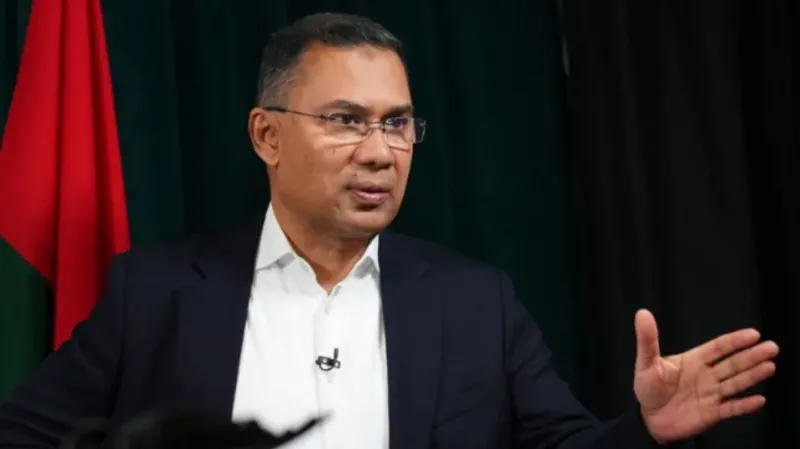
"The time has come, God willing, I will return soon," Tarique Rahman, the Bangladesh Nationalist Party's acting chairman, told BBC Bangla in his first face-to-face interview for nearly 20 years.
The BNP is the frontrunner in the vote due in February and Rahman, the son of its ailing leader, is expected to lead the country if it wins.
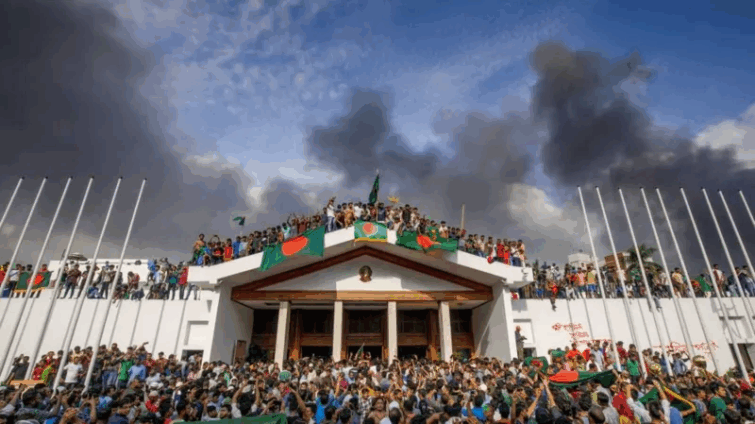
Many view it as one of the most consequential in Bangladesh's history after mass protests ousted three-time PM Sheikh Hasina in 2024. Her Awami League party is unlikely to be allowed to take part.
According to UN investigators, up to 1,400 people died in the 2024 unrest, which included a deadly crackdown on student-led demonstrations that ousted Hasina.
Hasina, who fled to India, is on trial in absentia for crimes against humanity alleged to have been committed during the years she was in power.
Since she was toppled, many have questioned why Rahman was still in London, where he has lived since 2008.
"Maybe due to some personal reasons, the return has not happened yet. But I think the time has come," he said.
"This is an election for which people had been waiting, I cannot keep myself away during this time."
The Awami League crushed the BNP, its long-term rival, and other opponents during 15 years of rule. Rahman, who was sentenced in numerous cases in absentia, was cleared of all charges after Hasina was ousted.
The interim government, led by Nobel laureate Prof Muhammad Yunus, has banned the Awami League from political activity until the trial of its leaders is over. Both Hasina and her party reject all the charges against them.
Although the BNP has criticised the interim government over the past year for not announcing an election date, they appear to share similar views on the Awami League's participation.
"Those who ordered killing and torture, they must be brought to justice," said Tarique Rahman
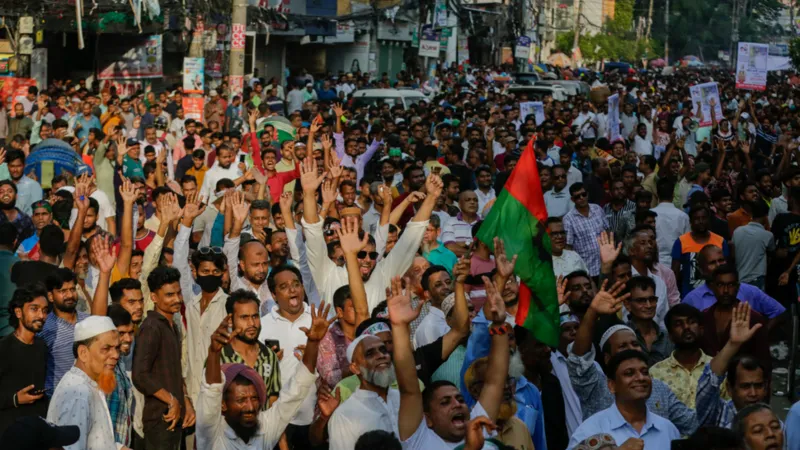
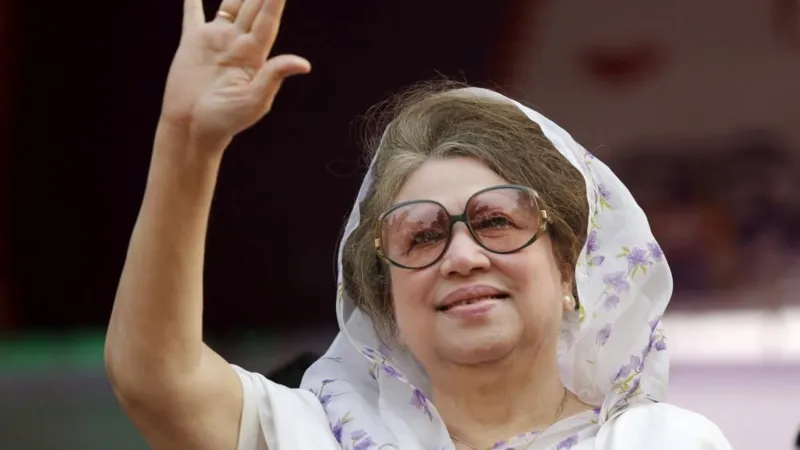
With its main rival absent, many speculate the BNP will have a comfortable lead in the election – and if the party wins, Rahman, 58, is expected to be the next prime minister. His mother, former PM Khaleda Zia, who is 80, is ill and unlikely to take an active part in the campaign.
However, Jamaat-e-Islami, the country's largest Islamist party, has seemingly gained some ground over the last year. Its student wing won majorities in two public university student union elections for the first time, energising the party.
Rahman thinks the results of the student union won't have an implication for the general election. Their proportion of votes in previous elections was much smaller compared to the two major parties.
Jamaat-e-Islami is now in talks with some other Islamist political parties to form an alliance, but Rahman says he is not worried about this prospect.
"The BNP faced competition in the election before. There is nothing to be worried about," he said.
In the early 2000s, the BNP and Jamaat formed a coalition government, but have recently pursued independent paths.
Meanwhile, a new party led by student leaders of the uprising, the National Citizen's Party (NCP), failed to gain much support in the student union elections. For a youth-led party, losing on their home turf has raised questions about their prospects in the national election.
Relations with Bangladesh's largest neighbour, India, have been tense since Hasina found shelter in Delhi.
Bangladeshi courts have issued a warrant for her arrest, and Bangladesh has sought her extradition. India has yet to officially react.
The relationship with India is a sensitive issue in Bangladeshi politics. The country shares the vast majority of its land border with India. Political parties, including the BNP, have consistently criticised Delhi for its support for the Awami League, including the three controversial elections held during its rule.
"If they [India] want to displease Bangladeshi people by sheltering a dictator, then we have nothing to do about it," said Rahman.
A central issue in the election is likely to be the promise of democratic reform and freedom of speech. The Awami League government was widely criticised for suppressing dissent, including a court order that banned the media from publishing speeches by Tarique Rahman.
He told the BBC he would ensure such restrictions are not repeated if he comes to power.
The interim government is attempting to build a consensus among political parties on a set of reforms, but progress has been slow. For many Bangladeshis, particularly the young people who led last year's uprising, ensuring basic freedoms will be a key test for the country's next government.
Latest Stories
-
Government has improved sanitation in one-and-a-half years — Salaga South MP
4 hours -
Nkwanta North Assembly to appear before Parliament over DACF sanitation spending
4 hours -
Mourinho prints out ‘red card’ incidents after Real lose derby
4 hours -
Atletico beat 10-man Real in feisty Madrid derby
4 hours -
Twelve Tribes of Israel Ghana to mark 40 years with anniversary celebration
5 hours -
GPL 2026/27: Hearts held by Bechem as Kotoko, Samartex share spoils
5 hours -
My Story (Kwaku Antwi-Boasiako)
5 hours -
We expect growth rate to re-accelerate in second-half of 2026 – IC Insights
5 hours -
The ungodliness and unrighteousness underlying the National Cathedral mess!
6 hours -
T-bills auction: Government fails to achieve target; yield on 91-day-bill remains unchanged
6 hours -
It’s Ghana’s shame to denigrate Nkrumah when the whole world honours him as African of the Century – Asiedu Nketiah
6 hours -
No other nationalist can compare to Nkrumah – Asiedu Nketiah
6 hours -
Collateral Registry: Foreign banks accounted for GH¢19.9bn of secured credit in quarter 2, 2026
6 hours -
This government should expect scrutiny – Asiedu Nketiah
6 hours -
Two-year-old girl dies in domestic fire at Cantonments
7 hours