

Audio By Carbonatix
President John Mahama and his promised reforms under a new-look NDC government are in full swing.
Nearly a year in government, it is time for accountability and an economic plan for 2026 to consolidate gains made after takeoff.
Ghanaians will be expecting a switch into a higher gear with high hopes of social relief, economic development and growth that will be felt by all and sundry.
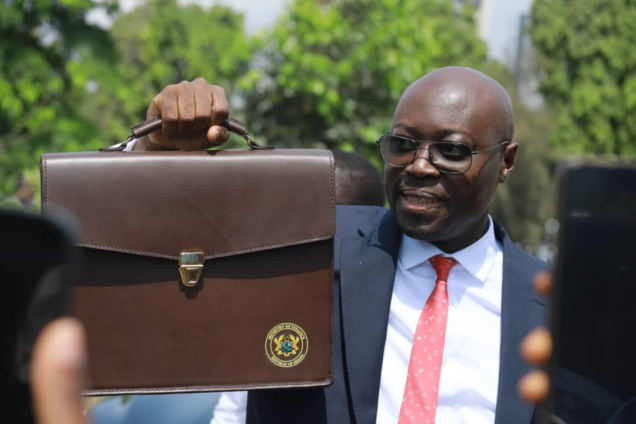
Finance Minister Dr Cassiel Ato Forson is all set for the upcoming presentation of the 2026 Budget Statement and Economic Policy, which sets the fiscal path for the government’s initiatives.
Given the ongoing implementation of the IMF Extended Credit Facility (ECF) programme, the budget must rigidly align with fiscal consolidation targets while attempting to restore growth and address socio-economic hardship.
The 2026 Budget must strategically navigate the complexities of debt sustainability, macroeconomic stability, and growth.
The finance minister will face Ghanaians on Thursday, November 13 and here are seven crucial areas that should be tackled:
1. Finalizing and Sustaining Debt Restructuring Goals
The central pillar of the economic recovery is the successful conclusion of the debt exchange process, both domestic (which is largely complete) and external (Eurobonds and official bilateral creditors).
The 2026 Budget must solidify the primary fiscal surplus target (e.g., aiming for 1.5% of GDP or higher, as per S&P's referenced reports).
This will demonstrate the government's commitment to paying its way and preventing future debt crises.
The 2026 Budget must detail the debt service schedule and expenditure control measures that guarantee compliance with the IMF-defined debt sustainability trajectory, aiming to bring public debt down to the programmed level.
2. Revenue Mobilization Strategy
To reduce reliance on borrowing, the budget must present a robust and sustainable revenue strategy that moves beyond simply increasing existing tax rates.
Dr Ato Forson should be busy ensuring a broadening of the tax base, ensuring compliance in the large informal sector, and enhancing the efficiency of the Ghana Revenue Authority (GRA) to plug loopholes and rake in more revenue.
The 2026 budget should introduce clear legislative and administrative measures for implementing the electronic invoicing system and leveraging the Ghana Card for tax compliance, targeting sectors with historically low tax footprints. This is essential to achieve the domestic revenue-to-GDP ratio necessary for programme success.
3. Strict Expenditure Rationalisation and Arrears Clearance
Fiscal consolidation is impossible without effective control over spending sprees, particularly concerning non-discretionary liabilities and transfers to State-Owned Enterprises (SOEs).
The budget should focus on implementing the Energy Sector Recovery Programme (ESRP) to clear legacy debts and end perennial transfers to loss-making SOEs.
The budget must impose strict expenditure limits across all Ministries, Departments, and Agencies (MDAs), backed by strong cash management controls to prevent the accumulation of new expenditure arrears.
4. Inflation and Cedi Stability
While monetary policy is the domain of the Bank of Ghana (BoG), the budget must complement these efforts to sustain the recently achieved single-digit inflation of 8%, an over four-year low achieved in October 2025.
The budget must aim at maintaining fiscal dominance (where central bank financing of the deficit is eliminated) and aligning government borrowing requirements with the BoG’s inflation target.
The budget must detail strategies to boost foreign currency reserves further through formalised gold and cocoa trade mechanisms and ensure stable, transparent financial flows.
5. Growth, Value Addition, and Value Chain Development
The budget must pivot from austerity to growth by targeting investment in productive, job-creating sectors.
The country must utilize public funds and private sector incentives to support value-addition in primary commodities, particularly gold and cocoa, which account for over 60% of goods exports.
Dedicated allocations must be made for the Ghana Gold Board and incentives for local processing and manufacturing to enhance foreign exchange earnings and reduce import dependency.
The budget must leverage the African Continental Free Trade Area (AfCFTA) by prioritising the development of export-ready industries.
6. Protecting the Vulnerable and Enhancing Social Safety Nets
Fiscal consolidation often disproportionately affects the poor. The budget must ensure that austerity measures do not exacerbate poverty.
Protection is needed and, where possible, enhanced budgetary allocations for targeted social intervention programmes such as the Livelihood Empowerment Against Poverty (LEAP) and school feeding programmes.
Dr Ato Forson must ensure the introduction of measures to offset the impact of high taxation or utility tariff adjustments on low-income earners, potentially through subsidised social services.
7. Sustained Institutional and Governance Reforms
Finally, the budget must address the underlying institutional weaknesses that contributed to the economic crisis.
The government must strengthen public financial management (PFM) systems, particularly at the district level, and fight corruption to safeguard public funds.
Budgetary support must improve for law enforcement institutions and the judiciary to ensure that the rule of law is applied to the letter and that public trust is rebuilt.
Latest Stories
-
$600m tomato imports undermining Ghana’s economy — Chamber of Agribusiness
15 minutes -
Rainstorm wreaks havoc: Faulty transformers, feeder failures leave parts of 3 regions without power
23 minutes -
CUTS International calls for urgent competition law amid sachet water price hikes
1 hour -
‘I never did this advert’, AI clones hijack Ghanaian identities for profit
1 hour -
25-year-old woman battles trauma after surviving deadly Nkwanta attack
2 hours -
Vice President honoured at Tortsogbeza as South Tongu leaders highlight development needs
2 hours -
Kwahu Business Forum 2026: Corporate citizenship, sustaining African businesses take centre stage with KGL as the case study
3 hours -
Trump seeks $152m to reopen notorious Alcatraz prison
5 hours -
Ex-Chelsea player Oscar retires with heart issue
5 hours -
CA Foundation drives constitutional literacy in Kpone Katamanso municipality
5 hours -
GPRTU to hold talks with Transport Ministry over rising fuel costs
6 hours -
CUTS International urges gov’t to halt sachet water price hike pending cost review
6 hours -
Chief Justice: Efficient Judiciary essential to reducing business costs
6 hours -
Bayern grabs 99th-minute winner to cap superb fightback
6 hours -
Ahmed Ibrahim urges Ghanaians to reflect Easter values in nation-building
6 hours