

Audio By Carbonatix
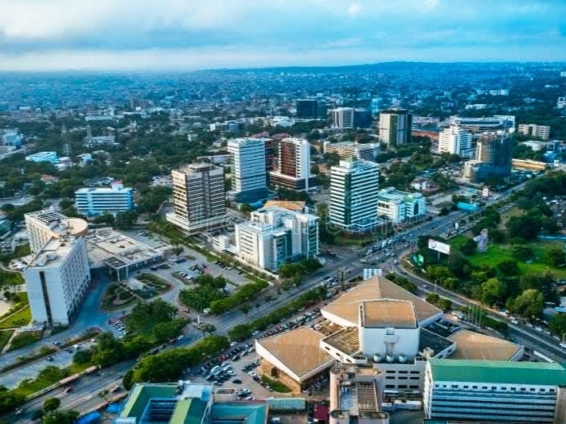
Accra has been ranked the eighth most expensive city in Africa in 2026, highlighting the persistent cost-of-living pressures facing Ghana despite ongoing macroeconomic stabilisation efforts.
New data from Numbeo’s 2026 Cost of Living Index places the capital 8th out of 22 major African cities, with a cost of living index of 36.6, positioning it ahead of several North and East African capitals.
Although Accra does not top the continental list, it sits firmly within the upper tier, reflecting elevated household expenses relative to average income levels.
Globally, Accra remains far below major cities in Europe, North America and parts of Asia, but within emerging and frontier markets, it continues to be a costly city for residents earning local wages.
Abidjan leads the African ranking with a cost of living index of 45.2, followed by Addis Ababa at 42.6. South Africa’s major cities, including Pretoria, Johannesburg and Cape Town, also dominate the higher end of the table.
Accra’s position ahead of cities such as Nairobi, Tunis and Cairo underscores the structural cost challenges confronting urban households in Ghana.
A breakdown of the components reveals the main sources of pressure. Accra’s groceries index of 42.4 is among the highest in Africa, surpassing many larger economies and pointing to persistent food inflation, supply chain constraints and currency pass-through effects.
Restaurant prices are likewise elevated, with a restaurant price index of 39.1, comparable to Abidjan and Johannesburg.
Rent costs, however, remain relatively moderate. Accra’s rent index stands at 11.4, lower than cities such as Kigali, Addis Ababa and Cape Town.
This suggests that housing is not the primary driver of the city’s overall expense levels. Instead, everyday consumption and food-related costs are placing a heavier burden on households.
One of the most striking indicators is Accra’s purchasing power index of 12.7, among the weakest on the continent.
This means incomes in Ghana’s capital buy significantly less than in peer cities. In contrast, purchasing power indices in South Africa exceed 100.
The gap explains why cost pressures are felt more acutely in Ghana, even as headline inflation shows signs of easing.
Within West Africa, Accra ranks as the second most expensive city, behind only Abidjan. While Abidjan’s higher costs reflect stronger domestic demand and industrial activity, Accra’s position is more closely linked to currency depreciation, high import dependence and lingering inflationary effects following Ghana’s recent debt crisis.
Other West African capitals fall much lower on the index, reinforcing Accra’s status as one of the region’s costliest urban centres.
For businesses, this has implications for wage negotiations, operating costs and consumer purchasing power. For policymakers, it sharpens the focus on food supply chains, transport costs and productivity-enhancing reforms.
Across the continent, the Numbeo data reveal wide variations. Cities such as Cairo, Alexandria and Giza sit at the lower end of the cost spectrum, partly due to subsidised food and energy.
Southern African cities, while more expensive, are cushioned by higher purchasing power.
For Ghana in 2026, Accra’s ranking presents a mixed picture. The capital is not among the world’s most expensive, but within Africa and particularly within West Africa, it remains a high-cost city with limited income buffers.
As economic recovery continues, lowering the cost of essentials and boosting real incomes will be critical to translating macroeconomic gains into improved living standards.
Latest Stories
-
Power restoration fault suspected in Kumasi Central Market fire
4 hours -
The 7-foot giant of Ngleshie Amanfro: Seven-foot Ghanaian Ephraim Saawa dreams of joining the national basketball team
5 hours -
Government promises support for Kumasi Central Market fire victims
5 hours -
Vibes The Movie: Big Ghun’s Ghanaian film earns five nominations at 2026 REFFA
5 hours -
MamaCare CEO warns unresolved conflicts among health workers could undermine maternal and neonatal care
6 hours -
Health professionals urged to translate medical knowledge into practice to save mothers
6 hours -
Conflicts among care providers linked to maternal, neonatal deaths – Expert
7 hours -
GIS marks 10th TIME conference, champions improved teaching practices
7 hours -
BRICS Or Balance? What Ghana’s bid really means
8 hours -
GPRTU wants full TRAFFITECH-GH implementation to start in 2027
8 hours -
How 10-mile walks for basic education birthed a 50-year legal career for Justice Korbieh
8 hours -
Mahama announces plans to import electric wheelchairs for PWDs
8 hours -
KGL U17 Colts 2026: Western beat Prempeh Elite Academy to set up final final with Greater Accra Region
9 hours -
Late Solanke strike salvages 10-man Spurs draw at Man United
9 hours -
Gender Ministry to monitor welfare of Nana Akua Addo’s children amid domestic violence case
9 hours