

Audio By Carbonatix
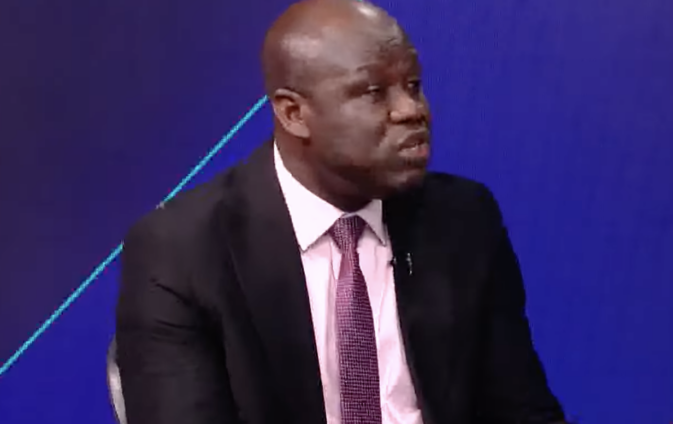
Mark Badu-Aboagye, the CEO of Ghana National Chamber of Commerce and Industry (GNCCI), has criticised Ghana’s banking sector for what he describes as an unfair approach to startup financing.
He accuses some banks of waiting until businesses have already struggled and grown before offering support.
Speaking on Joy News’ PM Express Business Edition on Thursday, Mr Badu-Aboagye said the banking community must stop treating the business community as inherently risky, especially when entrepreneurs present projects that are capable of generating profit and revenue.
“The banking community should not look at the business community as a more risky institution,” he said.
He explained that when a project is bankable and can generate enough returns to repay the facility, banks should be willing to support it, rather than hesitate simply because the business is young.
“So if you have any bankable project, and they look at it and they see that is a project that will make the necessary profit, getting the necessary revenue for you to be able to pay them, I think they will do that,” he said.
However, he argued that the real problem is that many banks “sit back more, especially with startups,” because startups are widely perceived as risky ventures.
“I mean, startups are perceived as risky businesses, so anybody who is investing in a startup will think twice,” he noted.
Mr Badu-Aboagye said this mindset has become a consistent pattern in engagements between the GNCCI and banks, and it is holding back enterprise growth and job creation.
“That is one thing we have observed when we are dealing with our banks,” he said.
He accused some banks of adopting a wait-and-see posture, only stepping in when businesses are already stable and less in need of early-stage support.
“They want you to struggle and grow and then come down. They will come to you to come and give you money,” he said.
But the GNCCI CEO questioned the logic behind that approach, stressing that businesses cannot grow without the initial financing required to scale.
“But who should give the money to the startup to go before you come?” he asked.
Mr Badu-Aboagye said while caution is understandable, banks must also recognise opportunity and support promising businesses early enough.
“So for some of them that we see the prospect, I think we should help them,” he said.
He also noted that in other jurisdictions, startups do not rely solely on commercial banks for survival, as alternative financing channels help them mature before seeking larger bank facilities.
“So in other organisations, there are other forms of financing for these startups, NGO, investors, people helping them, and then when they are able to stand on their feet, then they can go in for these facilities,” he said.
Beyond the startup challenge, Mr Badu-Aboagye also discussed how some businesses are responding to current market conditions, particularly expectations around interest rates.
He said some companies are deliberately holding back from borrowing because they believe interest rates will decline.
“So even the businesses themselves, some are also monitoring what is happening in the market. Some are very sure that the interest rate will come down,” he said.
According to him, the decision to delay borrowing is especially common among businesses that do not urgently require capital.
“So they are also monitoring to see what will happen. So if your business does not need money immediately, then you sit back and see,” he explained.
But he cautioned that businesses facing urgent operational needs cannot afford to wait for better conditions and must pursue financing options when necessary.
“But if there’s something you cannot do… and then you need to obviously get the resources. You have to move on and get it,” he said.
His comments come as businesses continue to struggle with credit costs and limited access to financing, particularly for new and growing enterprises.
Latest Stories
-
Oil hits over 1-week low on hopes of boost to diplomacy in Iran war
20 minutes -
They take GH¢100, sometimes GH¢200 – Okada riders allege police extortion in Accra
29 minutes -
NACOC: We’ve found no presidential escort among suspects in €225m France cocaine case
38 minutes -
Don’t turn students away over trunks and chop boxes – GES
50 minutes -
Italian Apple store employees strike on iPhone 18 Pro launch day
60 minutes -
Apple’s Tim Cook sees Australia’s social media curbs as ‘world-leading’, PM says
1 hour -
Amazon raises minimum hourly pay by $1 to $20 for US operations workers
1 hour -
Insurance cost has largely remained stable – NPA boss on transport fare pressure
2 hours -
Multiple unions threaten strikes at Barrick’s flagship Mali gold mine, documents show
2 hours -
Infantino invited to African summit as he faces challenge to FIFA leadership
2 hours -
NPA boss flags ‘recalcitrant’ transport operators raising fares arbitrarily
2 hours -
GPRTU fare hike put on ice after talks with government – NPA boss reveals
3 hours -
I’m greatly worried – NPA boss on threat of higher transport fares
3 hours -
We are largely import-dependent – NPA boss on Ghana’s fuel vulnerability
3 hours -
Ghana’s fuel market is built for turbulence – NPA’s Edudzi Tamakloe explains why
4 hours