

Audio By Carbonatix
Financing challenges remain the biggest setback to Ghana’s efforts to expand microgrids and minigrids to underserved communities, the Minister of Energy and Green Transition, John Abdulai Jinapor, has said.
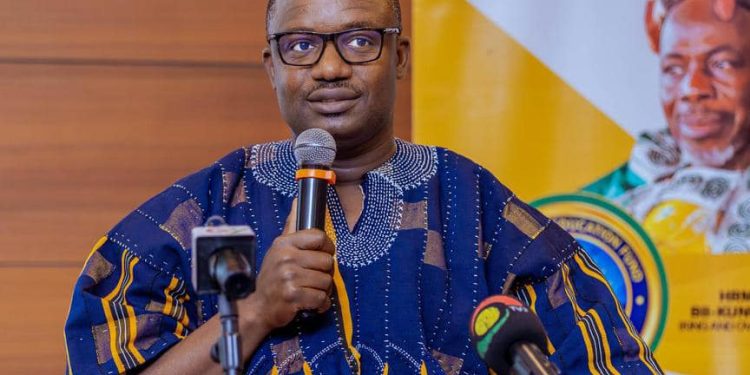
Speaking at the National Forum on Microgrids and Minigrids for Off-Grid Electrification in Accra, in a speech delivered on his behalf, the Minister noted that high upfront costs and perceived investment risks continue to discourage private sector participation.
“Financing remains a hurdle — high costs and risks deter private players,” he stated.
Mr Jinapor explained that while Ghana is committed to achieving universal electricity access, limited funding for decentralised energy systems threatens to slow progress, especially in remote and hard-to-reach areas.
“Ghana is addressing this hurdle with stable policies, regulations, de-risking mechanisms, capacity building and market support, while prioritising affordability and inclusion,” he added.
The forum, chaired by former Power Minister Kwabena Donkor, brought together government officials, regulators, development partners, private companies, traditional leaders and civil society groups to discuss practical ways of accelerating off-grid electrification.
Participants examined policy, regulatory and financing frameworks needed to scale up microgrid and minigrid deployment as part of Ghana’s broader energy transition agenda.
According to the Energy Ministry, Ghana’s electricity access rate currently stands at 89.03 per cent. However, about 3.5 million people — mainly in island, lakeside and rural communities — still lack reliable power supply.
Mr Jinapor said extending the national grid to such areas is often slow and expensive, making decentralised systems a more viable option.
“This demands a rethink of how we plan, deliver and use energy,” he said, describing microgrids and minigrids as “vital pillars” of the country’s energy future.
He noted that systems powered by solar, biomass and battery storage can provide reliable electricity closer to communities, reduce carbon emissions and stimulate local economic activity.
“Electricity that ignores livelihoods, industry and services fails to transform,” he stressed, adding that energy parks must support agro-processing, cold storage, irrigation, healthcare, education and small-scale manufacturing.
The forum also reviewed progress under initiatives such as Africa Energy Parks and the Scaling-Up Renewable Energy Programme, which support solar mini-grids and home systems in off-grid areas.
Mr Donkor observed that despite steady expansion of the national grid, between 10 and 15 per cent of Ghanaians still lack access to modern energy services, particularly in rural communities.
Also speaking at the event, Paulina Różycka, Team Leader for Infrastructure and Sustainable Development at the Delegation of the European Union to Ghana, said microgrids and minigrids are no longer optional.
“They are a necessity for reaching remote communities,” she said.
She cited the Africa Energy Parks project in Jang in the Savannah Region, which provides electricity to more than 500 households while supporting productive activities and climate resilience.
The forum is expected to produce key recommendations, secure stakeholder backing for the Africa Energy Parks model and strengthen cooperation between government, industry and development partners.
Organisers say the outcomes will feed into Ghana’s long-term electrification strategy, as the country seeks to close the remaining access gap and support inclusive economic growth through renewable energy.
Latest Stories
-
Woman injures three people in third Poland school knife attack in a week
1 minute -
Ghana should join BRICS as partner, not member – NPP Bono East Regional Secretary
2 minutes -
Ghana High Commission warns nationals in South Africa over protests in Johannesburg, Durban
2 minutes -
Mahama praises Roads Minister for keeping Big Push contractors on their toes
8 minutes -
World Cup Visa Scandal: ‘My client has not collected money for visas’ – Ampofo Ankrah’s lawyer
19 minutes -
US immigration officials defend ICE agents who shot man in same car as child
29 minutes -
Commentator Katie Zacharia picked as new White House press secretary
32 minutes -
Drone strike by Sudan paramilitary kills 41 near Ethiopian border, rights group says
39 minutes -
King warns malicious online actors are evolving tactics
46 minutes -
Several injured as Saudi capital airport reportedly hit again
48 minutes -
Christa Pike discharged from hospital and returned to prison, her lawyers say
50 minutes -
Ghana’s BRICS move requires clear strategy to manage risks – Godfred Bokpin
3 hours -
Pay teachers realistic income – Duncan Amoah to gov’t
3 hours -
Bechem to become chicken capital of Ghana – Mahama projects
3 hours -
Mentapulse Africa’s Health and Labour Summit calls for better working conditions to retain skilled professionals
3 hours