

Audio By Carbonatix
Each year, the world observes International Women’s Day to celebrate women's achievements and renew commitments to gender equality. This year’s theme, “Rights. Justice. Action. For ALL Women and Girls,” calls on governments, institutions, communities and individuals to move beyond promises and ensure that every woman and girl in all their diversity fully enjoys her rights, experiences fair justice and sees concrete action that improves her daily life.
The theme challenges us to ask critical questions. Are the rights of women and girls with disabilities being actively protected?
Is justice accessible to a deaf woman who experiences abuse but cannot communicate at a police station due to the absence of sign language interpretation?
Are women with disabilities given leadership opportunities?
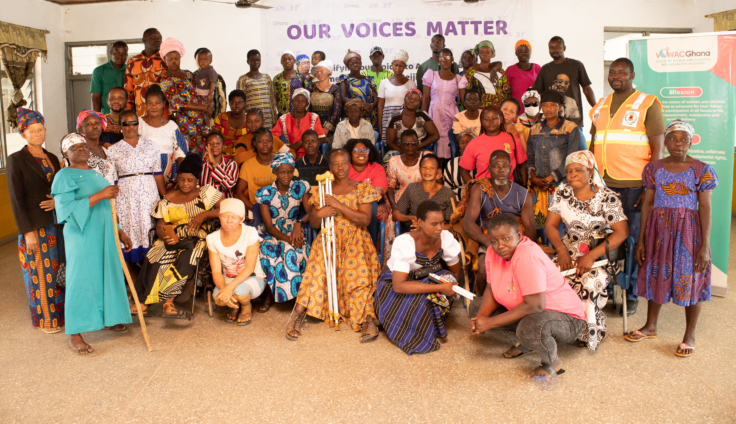
In Ghana, women with disabilities represent approximately 8.8 against6.7 males (GSS 2021). While progress has been made in advancing gender equality, many women and girls with disabilities continue to face multiple and intersecting forms of discrimination. They encounter barriers in reproductive health services, employment, social protection, leadership, civic participation and access to justice. Too often, they remain invisible in mainstream gender discussions- they are not consulted on policies and their needs for reasonable accommodations and gender-responsive services are not addressed.
Although the 1992 Constitution of Ghana guarantees equality and freedom from discrimination, sub-legislation such as the Persons with Disability Act 2006 (Act 715) does not make provisions that specifically address the rights and protection of women and girls with disabilities. Ghana is also a signatory to international frameworks such as the United Nations Convention on the Rights of Persons with Disabilities and the Convention on the Elimination of All Forms of Discrimination Against Women. Additionally, the country has made commitments at the Global Disability Summit to promote the rights of women and girls with disabilities. However, the lived realities of many women and girls with disabilities reveal persistent gaps between policy commitments and implementation.
Physical inaccessibility, communication barriers, unemployment, limited social protection, stigma, poverty and gender-based violence continue to limit their full participation in society.
Government must therefore take deliberate steps to domesticate international inclusive frameworks by strengthening existing gender and disability laws and policies, including the Persons with Disability Act 2006 (Act 715), to ensure that they are both gender-responsive and disability-inclusive. There is also an urgent need to prioritise the inclusive implementation of policies. The Affirmative Action (Gender Equity) Act 2024 (Act 1121) should incorporate a clear monitoring framework with measurable targets and indicators specifically addressing the inclusion of women with disabilities.
Policies must intentionally incorporate disability perspectives, with inclusive employment policies and targeted interventions that address the persistent unemployment of women with disabilities. Budget allocations must reflect real commitments to accessibility, assistive technologies, reasonable accommodation and gender-responsive services.
Furthermore, national and administrative data systems must be disaggregated to ensure that women and girls with disabilities are visible in national development planning and decision-making. The justice delivery system must also be more responsive. Law enforcement officers at the Domestic Violence and Victim Support Unit (DOVVSU) and healthcare providers require specialised training to respond effectively to the specific vulnerabilities faced by women and girls with disabilities, particularly in cases of sexual and gender-based violence. Court processes and reporting mechanisms must be accessible to everyone, regardless of physical, sensory or intellectual impairments.
Private sector employers must adopt inclusive hiring practices and provide reasonable accommodations in the workplace. Financial institutions should comply with financial inclusion directives and other measures that ensure women with disabilities can access financial products and services.
Communities and families equally carry a responsibility. Harmful stereotypes and cultural misconceptions continue to undermine the dignity, autonomy and potential of women and girls with disabilities.
This year’s celebration of International Women’s Day is a reminder that the structures needed to ensure women and girls with disabilities are not left behind must be strengthened and sustained. Their voices, experiences and expertise are essential in shaping policies and programmes that advance gender equality and support the achievement of the Sustainable Development Goals.
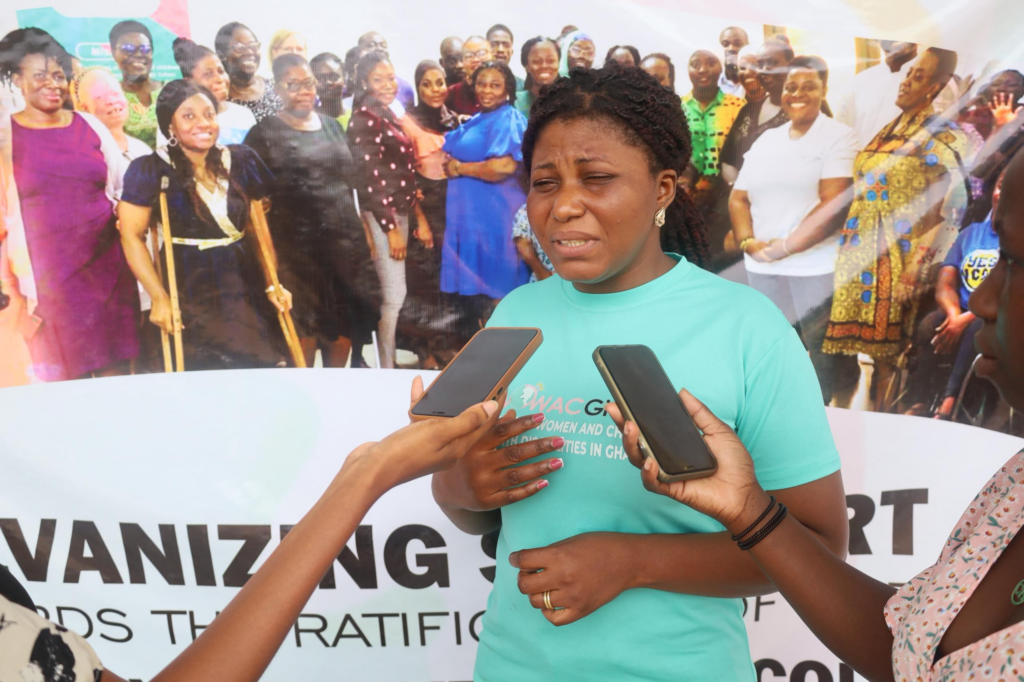
Voices of Women and Children with Disabilities in Ghana (VOWACGhana)
Voices of Women and Children with Disabilities in Ghana calls on all stakeholders, government, civil society, development partners, the United Nations, the private sector and community leaders to translate commitments into tangible and measurable outcomes.
We must invest in accessibility, strengthen protection systems and amplify the leadership of women with disabilities. Above all, we must ensure that justice systems respond with dignity and fairness, so that inclusive and sustainable development truly leaves no one behind.
Juliana Afia Mahmood
Executive Director
Voices of Women and Children with Disabilities in Ghana (VOWACGhana)
Latest Stories
-
Legal vacation does not halt urgent court cases – Chief Justice
13 minutes -
Keta residents react with mixed feelings to fresh fuel price hike
24 minutes -
Managing Director on GH¢150,000 bail over five dud cheques
35 minutes -
BOSTenergies reports strong 2025 performance, pays first-ever dividend to government
59 minutes -
Carlos Queiroz reappointed as Black Stars head coach
1 hour -
Gov’t targets TVET transformation with US$300m World Bank facility
1 hour -
Flying into Ghana with more than 2 phones may face commercial import charges – GRA
2 hours -
Education Ministry warns private schools against use of unapproved textbooks
2 hours -
Travelers with multiple new devices returning to Ghana to pay additional charges – Customs Commissioner
2 hours -
John Boadu: A lifetime of party service, experience and grassroots leadership
2 hours -
Ghana to host 16th African Economic Summit as Friends of Africa brings Global Investment Dialogue to Accra
2 hours -
“We have stabilised the present; now we must secure the future” — Deputy Finance Minister
2 hours -
Broadcast journalist and laboratory scientist Emmanuel Samani declares GAMLS General Secretary bid
2 hours -
Oppong Nkrumah questions Chief Justice’s ‘unprecedented’ tour of state-owned institutions
2 hours -
Online fraud accounts for 47% of Ghana’s cyber incidents – CSA
2 hours