

Audio By Carbonatix
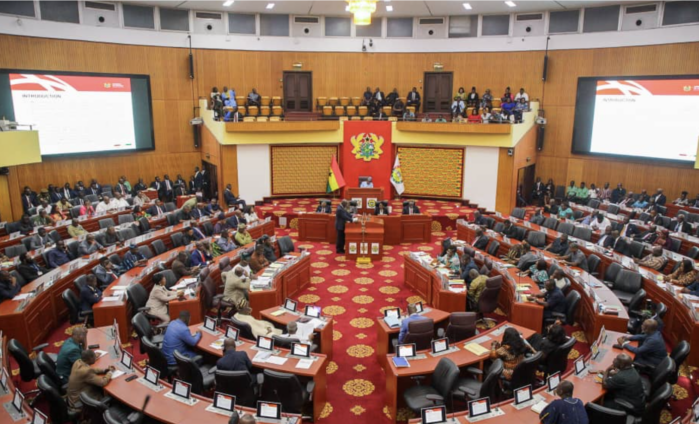
Parliament has passed the Education Regulatory Bodies Amendment Bill, 2026 (Act 1023), introducing significant reforms to Ghana’s tertiary education sector.
The new law makes it mandatory for all existing tertiary institutions affiliated with mentoring universities to secure a Charter within six years.
This marks a departure from the previous requirement, where private institutions had to wait for ten years under mentorship before applying for autonomy.
The Bill was first presented to Parliament on Wednesday, February 4, 2026, by Dr Clement Abas Apaak, the Deputy Minister of Education and Member of Parliament for Builsa South.
He laid the Bill on behalf of the Minister of Education, Haruna Iddrisu, in accordance with Article 106 (4) and (5) of the 1992 Constitution.
Following its first reading, the Bill was referred to the Committee on Education for consideration and report, in line with Order 165 of the Standing Orders of Parliament.
Presenting the Committee’s report, Chairman of the Education Committee, Mr.Peter Kwasi Nortsu-Kotoe, expressed appreciation to the Minister for Education, Haruna Iddrisu, Deputy Minister Dr. Clement Apaak, officials of the Ministry of Education, the Office of the Attorney-General, the Ghana Tertiary Education Commission (GTEC), and the Private Universities Founders Association (PUFA) for their contributions.
He said the Committee relied on several key documents during its deliberations, including the 1992 Constitution of Ghana, the Standing Orders of Parliament, the Education Act, 2008 (Act 778), the Education Regulatory Bodies Act, 2020 (Act 1023), and the State Lands Act, 1962 (Act 125).
Over the past three decades, Ghana’s tertiary education landscape has witnessed remarkable growth, particularly through the establishment of private institutions.
These institutions have expanded access to higher education, contributed to human capital development, and introduced innovative academic programmes.
Before the passage of the Education Regulatory Bodies Act, 2020, institutions seeking Charters were required to operate under mentorship for at least ten years.
This system was designed to ensure quality assurance, academic stability, and proper governance before institutions attained autonomy.
However, Act 1023 now requires affiliated institutions to secure Charters within six years.
While this reform aims to accelerate institutional independence, it has raised concerns among private universities about the feasibility of meeting the new deadline.
The Ghana Tertiary Education Commission requires institutions to demonstrate substantial financial reserves and proof of physical infrastructure before granting Charters.
Smaller and mission-driven institutions fear they may struggle to meet these requirements within the stipulated timeframe.
Many private institutions are already burdened by affiliation fees paid to mentoring universities.
The additional financial obligations associated with the Chartering process present an even greater challenge.
Stakeholders have therefore called for further dialogue and possible support mechanisms to ensure that private tertiary institutions are not disadvantaged by the new law, while still maintaining the quality and integrity of Ghana’s higher education system.
Latest Stories
-
Ghana music industry needs collective public-private investment – UK High Commissioner
32 minutes -
“We don’t have the mindset of sabotage” – NPP on MMDCE election proposal
48 minutes -
From Kumasi to the world: Mirakilouz Beatz’s rise in music production
50 minutes -
Low pay making it harder for universities to attract PhD holders – UTAG-UG
50 minutes -
Julius Emunah parts ways with Hearts of Oak as Managing Director
1 hour -
Weija Dam flooding will persist without political will to relocate residents – NADMO
1 hour -
UMB, 3TREES launch paint outlets across constituencies ahead of Ghana’s 70th anniversary
1 hour -
CSSPS: Education Ministry orders action against alleged payment demands in Ashanti Region
1 hour -
SSNIT honours 16 stakeholders at 2025 Awards
1 hour -
Naa Shika Adu presents Vernacular of Play: An art exhibition inspired by sport, identity and social impact
1 hour -
Ghana wastes up to 50% of fruits and vegetables annually – Agrofresh
2 hours -
CSSPS deploys more personnel to ease delays at resolution centres
2 hours -
Poor transport and storage systems contribute to post-harvest losses in Ghana – Mathias Yabe
2 hours -
Partisan MMDCE elections could stifle development – NDC
3 hours -
TUC urges Mahama to keep constitutional reform discussions open
3 hours