

Audio By Carbonatix
Ghana has called on the international community to move beyond mere reflection and toward active justice for the victims of the Transatlantic Slave Trade.
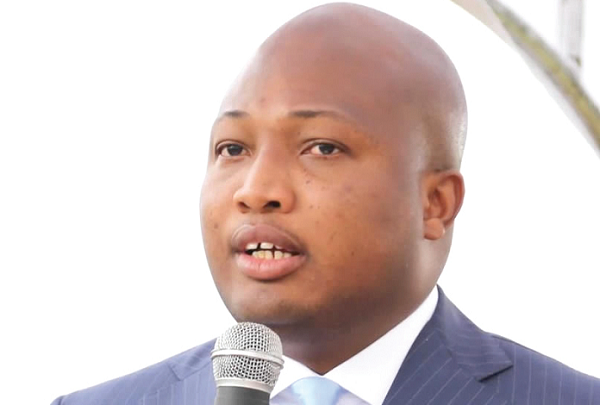
Addressing a high-level reparatory justice forum at the United Nations General Assembly on Tuesday, 24th March 2026, the Minister for Foreign Affairs, Samuel Okudzeto Ablakwa, argued that the world owes more than a backward glance to the millions of Africans whose humanity was systematically erased.
The minister's address was the centrepiece of Ghana’s participation in the International Day of Remembrance of the Victims of Slavery and the Transatlantic Slave Trade. Speaking to a global audience of diplomats and human rights advocates, Mr. Ablakwa emphasised that true honouring of the deceased requires a modern-day commitment to systemic change.
“Remembrance carries responsibility. Honouring victims of this tragedy requires more than recalling the past. It calls on us to recognise the humanity that was denied to them,” the minister declared.
He further urged the Assembly to use historical education as a tool for contemporary justice: “Deepening our understanding of this history and strengthening our commitment to building a world where dignity, equality and justice are upheld for all people.”
President Mahama leads the charge
The Ghanaian delegation was led by President John Dramani Mahama, whose presence at the event signals a renewed diplomatic push for reparatory justice. The President has long been an advocate for a formal global acknowledgement that the trafficking of enslaved Africans and racialised chattel enslavement constitute the "gravest crime against humanity".
The 2026 observance is particularly significant as Ghana continues to position itself as a global hub for the African Diaspora, following the success of its "Beyond the Return" initiative. By championing reparatory justice on the UN stage, the administration seeks to bridge the gap between historical trauma and modern economic and social equity.
The event in New York serves as a platform for African nations and their Caribbean allies to harmonise their demands for reparations. Delegates at the forum discussed various frameworks for justice, ranging from formal apologies and debt relief to direct investments in health and education infrastructure in regions still reeling from the ancestral brain drain and economic plunder of the slave trade.
The Ghanaian delegation maintained that the world cannot claim to value human rights today without fully accounting for the era when those rights were most brutally denied.
Latest Stories
-
GNFS contains fire outbreak at Teshie Lekma Road near Lekma Hospital
4 hours -
Samia Nkrumah rejects the narrative that Ghanaians were happy after Nkrumah’s overthrow
5 hours -
A Mother’s pain: Tribute by Ivan Baidoo’s mother
5 hours -
‘Forgive us for staying away’ — Samia Nkrumah leads family back to Nkroful, pledges to preserve Nkrumah’s legacy
6 hours -
Ernest Nuamah scores twice as Lyon beat Rennes
6 hours -
‘My dear Ivan’ – A father’s tribute to a son tragically killed
6 hours -
GNPC Explorco advances Voltaian Basin drilling preparations with 13.5km access road
6 hours -
Cabinet approves facility manager for Borteyman Sports Complex – Kofi Adams
7 hours -
Sanitation is improving; critics may be ‘living in another world’ – Salaga South MP replies Bekwai MP
7 hours -
Government must do more to tackle sanitation crisis – Bekwai MP
7 hours -
World Cleanup Day: GFF begins sanitation education in local communities
7 hours -
EU Ambassador, IGP discuss stronger cooperation on policing and security
7 hours -
Africa Nations Volleyball Championship: Ghana set up quarterfinal clash with Cameroon after beating Chad
7 hours -
Meet Dr Benjamin Appiah Osei — Ghana’s three-time tourism awards winner
8 hours -
UEFA & CONCACAF demand Fifa pays $10m to all 211 members
8 hours