

Audio By Carbonatix
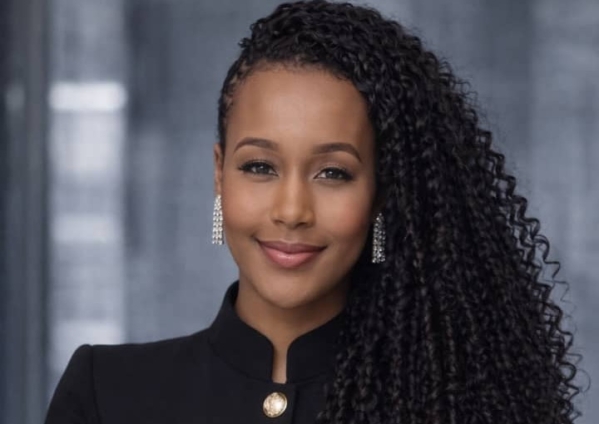
Following the historic passage of the UN resolution designating the Transatlantic Slave Trade as the "gravest crime against humanity", legal analyst and Founding Partner of Clinton Consultancy, Amanda Clinton, has provided a comprehensive look at the legal hurdles and monumental shifts ahead.
While the resolution, led by Ghana, has ignited hopes for compensation reaching into the trillions of dollars, Ms. Clinton cautions that the path from a General Assembly vote to actual financial restitution is fraught with legal complexity.
Slavery vs. The Holocaust
A central point of contention in the reparations debate is the argument from nations like the US and UK that slavery was legal under international law at the time. Ms. Clinton dismissed this as a definitive defence, drawing a direct parallel to the Holocaust.
"If Holocaust victims faced the Holocaust when it was legal in Germany at the time and have received billions of dollars, does the US argument stand that because slavery was legal, reparations shouldn't happen?" she questioned in reaction on March 28.
She noted that Holocaust reparations, negotiated since 1952, established a clear case of state responsibility for a defined crime. However, she highlighted a key distinction: "The Holocaust reparations were possible because they targeted identifiable victims and are still ongoing since survivors are alive."
The "Proximity" Problem
For legal practitioners like Ms. Clinton, the 400-year gap between the crime and the present day presents a "proximity" challenge that Western powers are already using to distance themselves from liability.
"Legally, proximity might be a difficult thing to prove," she admitted. "In contrast to the Holocaust, slavery and colonialism span centuries, involve multiple countries, and affect entire populations across generations, making liability and beneficiary harder to define."
Despite these hurdles, she argued that modern science could bridge the gap. She suggested that DNA testing and ancestral tracing, citing the Creoles in Sierra Leone as an example, could establish the "identifiable victims" that sceptics claim no longer exist.
A Frontline Victory
While acknowledging that UN General Assembly resolutions are not legally binding and face "kickback" from major powers who fear the trillion-dollar price tag, Ms. Clinton maintained that the resolution is far from symbolic.
"I certainly don't think that this is a fringe resolution. It is very much a frontline resolution because we're talking about hundreds of years of devastation," she said. She likened the current moment to the start of the Civil Rights or Women’s Liberation movements: "It started with one match, one light. Once you start that fire, it really can carry on."
The Ghana Factor and Future Scrutiny
As the nation that charged and led this monumental decision, Ghana finds itself in a position of global leadership on reparatory justice. However, Ms. Clinton warned that this move invites intense international scrutiny.
She questioned whether the eventual funds, should they materialise, would "trickle down to the people" or remain with governments.
"It is a big day that this resolution was passed... but as Ghana leads the way, analysts will be looking at where this leads in the next 12 months. It is a hotbed for inviting perhaps too much attention."
Regardless of the immediate financial outcome, the legal expert concluded that the day remains "monumental" for the profound, public identification that "something went very wrong a couple of hundred years ago".
Latest Stories
-
UK deepens reliance on Musk’s SpaceX, spending nearly $40 million on satellite services
15 seconds -
Anti-corruption fight going nowhere without institutional independence – Kissi Agyebeng
4 minutes -
Minority demands documents to account for GH¢49.7m South Africa evacuation cost
4 minutes -
Iceland to propose whaling ban, leaving Norway and Japan isolated
11 minutes -
‘Significant casualties’ after fire on cargo ship in eastern China
17 minutes -
Ghana must build a national reading culture to drive knowledge economy—Educationist
17 minutes -
When fifty-five thousand children fail, who else has failed ?
18 minutes -
Russian drone incursion delays Zelensky flight
19 minutes -
MMDAs must take responsibility for sanitation – Mahama Ayariga
21 minutes -
Not all hypertension medicines cause erectile dysfunction – Kwame Sarpong Asiedu
22 minutes -
Kofi Tonto accuses NDC government of failing to deliver promised education reset
28 minutes -
Ghana must actively screen healthy people for hypertension and chronic disease -CDD
29 minutes -
Nkoranza 24-hour economy market project 5% complete as minister threatens contract termination
30 minutes -
Ghanaians urged to check blood pressure regularly to detect hypertension early
31 minutes -
Assin Fosu family races to save abducted 30-year-old after ransom demand rises to GH¢49,500
32 minutes