

Audio By Carbonatix
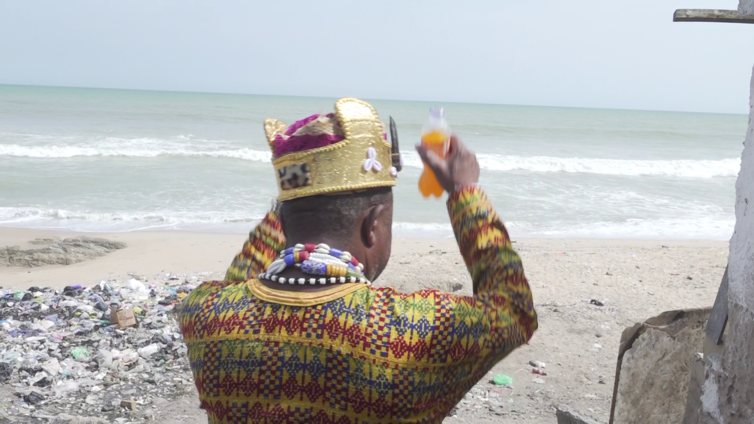
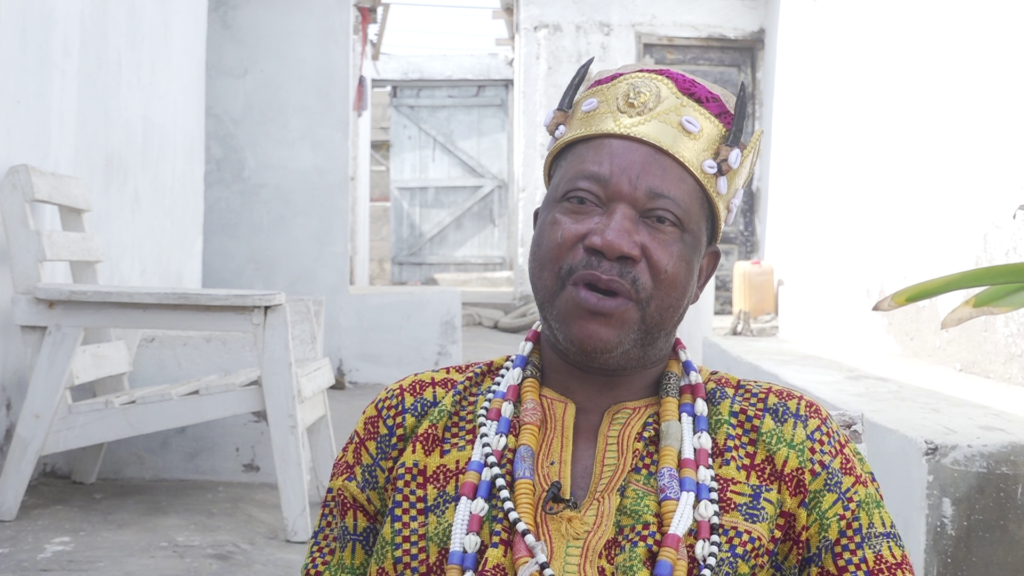
For more than three decades, a traditional priest at Labadi has performed rituals at a shrine he built with his own hands, convinced that the land and the gods he serves would stand the test of time. Today, the sea is steadily closing in, threatening to wash away both the shrine and the spiritual heritage it represents.
Togbe Akpasso says when he first arrived at the site more than 30 years ago, the sea was far away and the land was covered in bush. The area, he recalls, was largely unoccupied and used by residents as an open space. Over the years, he cleared the land, developed the shrine and performed rituals for the community. Now, he says, the sea is moving closer every month.
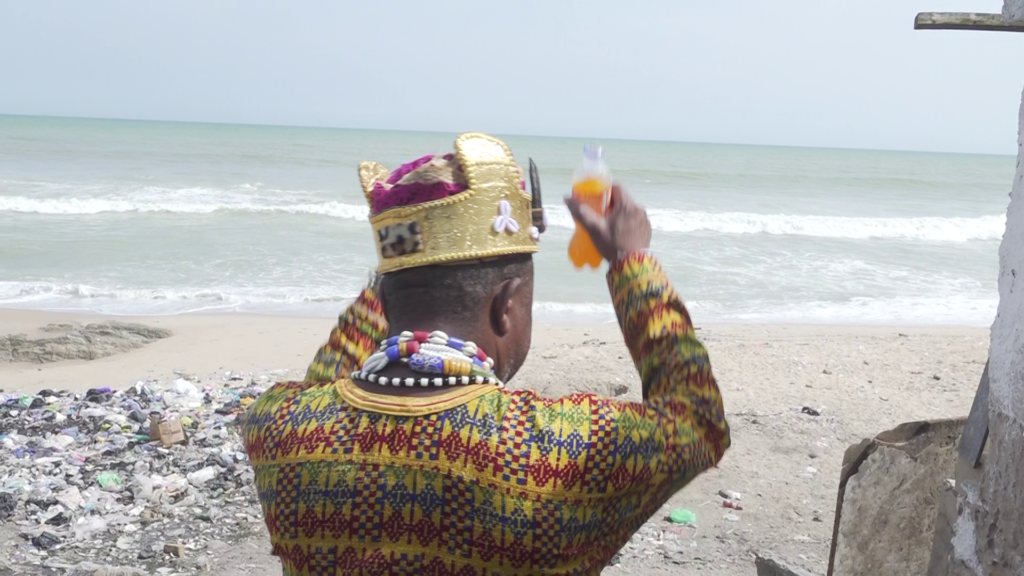
“I was the only person who faced the sea when I came here,” he explains. “But now we are all seeing that the sea is coming. Sometimes it goes back, sometimes it comes again. But it is eating into the land,” he stated.
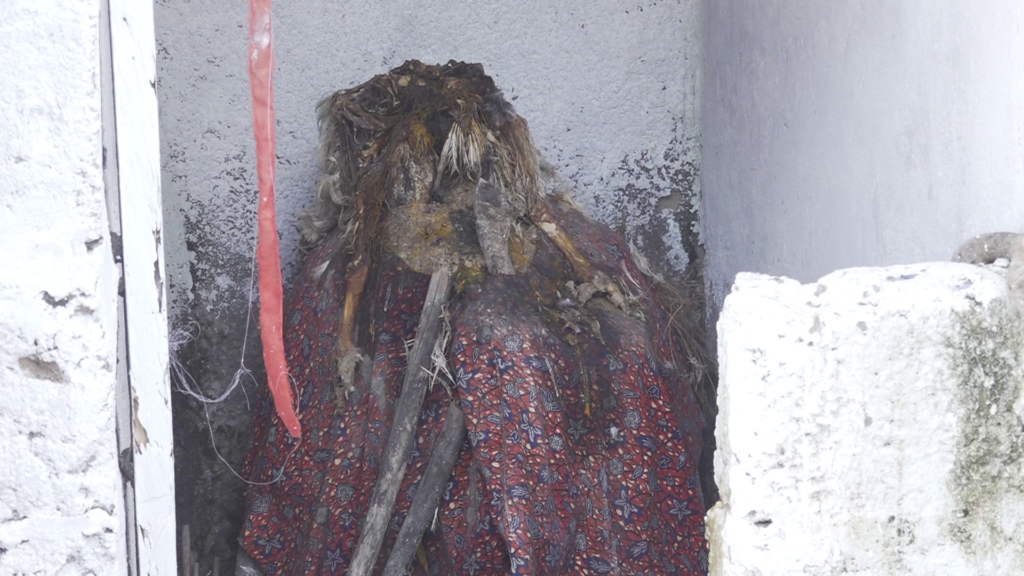
For Togbe Akpasso, the danger is not just about property. The shrine he has protected for more than 30 years houses the gods he serves. It is both a spiritual centre and a cultural landmark for the community.
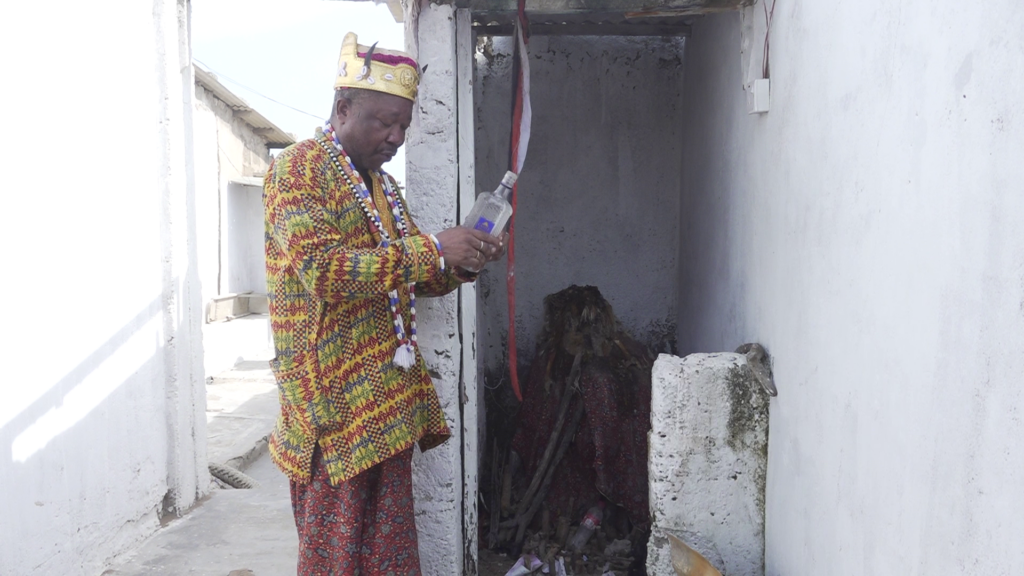
He believes the sea itself is a spirit that must be respected and says traditional ceremonies have always helped protect the land. But the current situation, he admits, is beyond what rituals alone can stop.
“This is where our gods are also. Without government help, we cannot do anything. They only need to help us with big stones to push the sea back,” he said.
His fear is shared by many residents living along the coast. While he says he would leave if he believed the sea was about to destroy the shrine, he insists the loss would go beyond him. It would mean the disappearance of a sacred place that has served the community for decades.
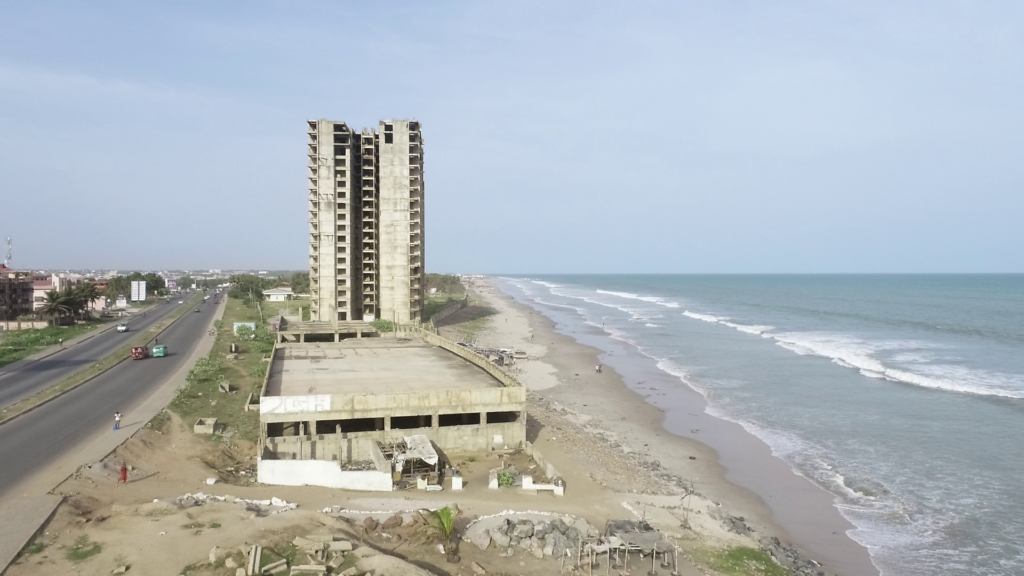
What is happening in Labadi is not an isolated case. Communities across Accra’s coastline - from Osu and La to Teshie and Nungua - are facing the same threat as the sea continues to reclaim land.
Homes have already collapsed in several coastal communities and in some areas residents say high tides now reach places that were once several metres inland. For fisherfolk, the impact goes beyond losing property. Rougher seas and unpredictable tides mean fewer fishing days, lower incomes, and growing hardship for families.
Africa’s Special Envoy on Climate Change, Dr Samuel Dotse, says the situation along Ghana’s coastline is worsening rapidly, and communities in Accra are becoming increasingly vulnerable.
According to him, much of Ghana’s 555-kilometre coastline lies at very low elevation, meaning even small rises in sea level or stronger waves can cause serious damage. He warns that communities in Nungua, Teshie, La and Osu are already experiencing the impact of climate change through the loss of homes, buildings and even schools.
“These citizens are being subjected to the impact of climate change. They have lost their properties, they have lost their buildings, even some schools were lost during the high tides,” he indicated.
Beyond the physical destruction, the erosion is slowly erasing history and identity. Shrines like the one protected by Togbe Akpasso are not just religious spaces; they are part of the cultural fabric of coastal communities. Their loss represents a deeper cultural displacement that cannot easily be replaced.

Fishermen and traders are also feeling the impact. When tides are too rough, fishermen cannot go to sea. According to Dr. Dotse, this means families lose income immediately, affecting their ability to pay school fees, buy food or seek medical care.
“What it means is that if you cannot go to sea that day, you have to go hungry. It becomes a serious survival issue for families along the coast,” he explains.

Experts say the destruction seen in Labadi and other coastal communities if urgent steps are not taken. They warn that without long-term coastal protection, stronger planning regulations and nature-based solutions, more communities could face the same fate.
Latest Stories
-
Arrest of Techiman nurse is purely political persecution – ‘Ghana Jollof’
9 minutes -
Isak nets winner as Liverpool edge Bournemouth
42 minutes -
I dare gov’t of Ghana to extradite me; they can never do it – ‘Ghana Jollof’ speaks
44 minutes -
Semenyo scores twice as Manchester City beat Sunderland 5-3 in eight-goal thriller
54 minutes -
Parliament calls for government-private sector collaboration to improve waste management
56 minutes -
Volta Region described as cleanest so far in Parliament’s nationwide sanitation monitoring
1 hour -
Parliament urges MMDAs to enforce sanitation bylaws to curb indiscriminate waste disposal
1 hour -
Mohammed Kudus drops out of Ghana squad for AFCON 2027 qualifiers against Côte d’Ivoire and Gambia
2 hours -
Africa World Airlines unveils first Embraer E190 as part of 10-aircraft fleet expansion
3 hours -
Civilian hospitalised after alleged machete attack by prison officers, inmates
3 hours -
Toobu rejects calls to recall Parliament over 3.9-tonne cocaine shipment
4 hours -
Residents in 5 Northern Regions warned of approaching rainstorm
4 hours -
Constituency Games still a work in progress – Sports Minister
4 hours -
Team Ghana set for historic Karting Africa Showrun in Angola
4 hours -
52-year-old South African arrested with suspected heroin after arriving from Accra
4 hours