

Audio By Carbonatix
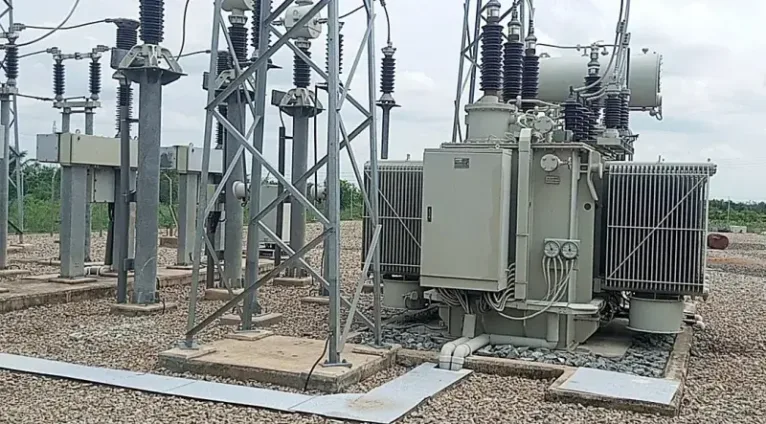
The government says it will install about 3,000 transformers nationwide as part of a major intervention to fix distribution challenges linked to recent power outages, according to the Ministry of Energy and Green Transition.
Head of Communications at the Ministry, Richmond Rockson, disclosed this during an interview on Joy FM’s Super Morning Show, saying the programme forms a central pillar of ongoing efforts to stabilise electricity supply across the country.
“The government has provided the needed resources,” he said, adding that installation works have already begun in several parts of the country.
Mr Rockson explained that the initiative aims to address long-standing weaknesses in Ghana’s electricity distribution network, which has increasingly struggled to keep pace with rising demand in urban and fast-growing communities.
He said 30 new transformers are currently being installed in Tamale this week alone, while 11 power station transformers are being replaced in the Greater Accra Region. He also noted that more than 2,500 distribution transformers are being deployed across the country as part of the broader rollout.
According to him, the national grid operator, Netco, recently requested over 400 transformers, out of which 100 were supplied immediately, with the rest expected to follow shortly.
Mr Rockson said the challenges facing the distribution network are not new, but reflect years of underinvestment in that segment of the power value chain.
“The crisis has been decades in the making,” he said, noting that policy focus in previous years has largely been on generation and transmission rather than distribution infrastructure.
He cited a substation at Lasibi in Accra, which he said has been in operation for about 22 years without a major upgrade, despite significant population and commercial growth in the area.
The Ministry says the transformer rollout is being implemented in four phases — starting with a three-month emergency response phase, followed by a three-to-six-month phase, a six-to-twelve-month phase, and a longer-term 18-month infrastructure upgrade phase.
The full programme is expected to require at least GH₵4 billion in investment, as the government seeks to reduce outages and improve stability across the national grid.
Latest Stories
-
Wealth Over Water: How Galamsey Is Threatening Ghana’s Water Security
14 minutes -
LA 2028: Black Queens pumped up for second leg of Mauritius tie
22 minutes -
LA 2028: Black Queens hold final training session ahead of second leg against Mauritius
56 minutes -
Standards are not Seasonal: What the EC appointments teach both sides
1 hour -
King Mohammed VI urges private sector to create youth jobs and spread benefits of growth
1 hour -
KGL U17 Colts 2026: Greater Accra win title after penalties win over Western Region
1 hour -
UK Investment Roadshow opens in London to advance UK-Ghana growth partnership
1 hour -
Assemblies of God requires pastors to resign before entering partisan politics – Rev. Wengam
2 hours -
Ghana targets 20% annual reduction in maternal deaths – Health Minister
2 hours -
Cyber attacks in Africa grow faster than global rate, report finds
2 hours -
Ghana signs UAE deal to create 5,000 overseas jobs
2 hours -
One Million Coders Programme targets 100,000 digital jobs in two years – Sam George
2 hours -
John Jinapor, Italian Ambassador explore opportunities for energy sector investment
2 hours -
NHIA seeks legal reforms to support Free Primary Healthcare
2 hours -
Beatrice Annan defends Afi Agbenyo’s EC appointment, cites record of gender advocacy
2 hours