

Audio By Carbonatix
Diaspora investors in the United States have urged the government to provide structured, secure and profitable investment vehicles to drive a shift from remittances to investments.
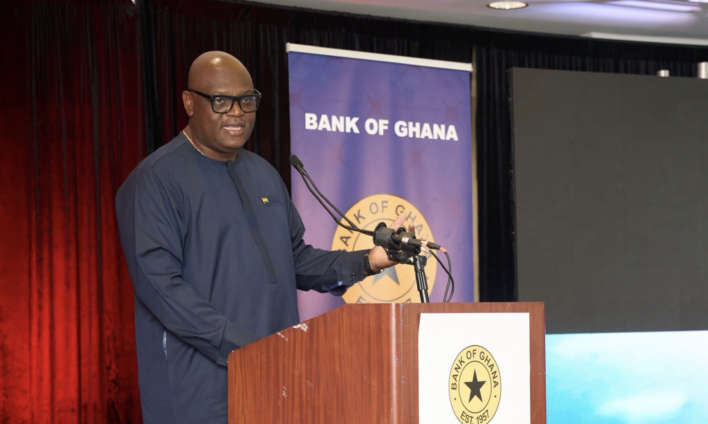
They made the call at the Bank of Ghana’s maiden Remit2Invest roundtable in Virginia, held on the sidelines of the 2026 IMF/World Bank Group Spring Meetings.
Participants noted that while Ghana’s improving macroeconomic indicators, including a stronger cedi and declining inflation, had boosted investor confidence, gaps in governance frameworks and trust remained key constraints.
They expressed readiness to invest, citing availability of capital, but stressed the need for robust systems to ensure capital protection, transparency and high productivity.
However, they identified trust deficits in cross-border investments, failed projects, land acquisition challenges, and regulatory complexities as major barriers requiring urgent institutional reforms.
Dr Paul Ametepei, Executive Director of Inspired Options Incorporated, said there was the need to move from informal remittance channels to a structured and regulated investment ecosystem.
He said verified investment vehicles and transparent partnerships would help replace uncertainty with confidence and promote sustainable growth.
“By aligning diaspora capital with well-structured local opportunities, Ghana can unlock a cycle of reinvestment that significantly reduces the country’s dependence on foreign aid and commercial loans,” he said.
Dr Ametepei also called for strategies to leverage diaspora expertise to identify market gaps, particularly in agro-processing and services, to create jobs.
Dr Ayim Akyea-Djamson of Metropolitan Cardiovascular Consultants, LLC, said the financial sector must evolve beyond transfer services to support investment-driven remittances.
He advocated collective investment vehicles such as diaspora-targeted pension funds and venture capital pools to enable participation in Ghana’s industrial growth.
“The diaspora is our most reliable partner in development, but we must stop asking them for help and start offering them value. By creating an approved financing net, we provide the safety and transparency necessary to turn every remittance into a brick in the foundation of our national economy,” he said.
Professor Charles Appeadu of the University of Cincinnati underscored the importance of financial literacy and tailored investment products to meet the diverse risk appetites of diaspora investors.
“We must move beyond the emotional appeal of patriotism and provide the diaspora with rigorous, professionally managed investment vehicles. The goal is to ensure that when a Ghanaian abroad sends money home, they are not just supporting a relative but are acquiring a verified asset that grows with the national economy,” he stated.
Dr Johnson Pandit Asiama, Governor of the Bank of Ghana, acknowledged the concerns and assured investors of Government’s commitment to addressing the challenges.
He said efforts were underway to integrate diaspora capital into the national development agenda, including exploring diaspora bonds and strengthening regulatory frameworks for financial technology and cross-border payments.
Dr Asiama also advocated the adoption of blockchain technology and decentralised finance to improve transparency, reduce costs, and enhance efficiency in remittance flows.
Mr Simon Madjie, Chief Executive Officer of the Ghana Investment Promotion Centre, said the Centre was introducing reforms to improve investor experience.
He said digital portals were being developed to enable diaspora investors to register businesses and track investment processes, while sector-specific profiles would link them to verified opportunities.
“These solutions focus on building a confident investment environment where the diaspora can commit their resources to structured projects that are both legally protected and aligned with the national development strategy,” he assured.
Latest Stories
-
Fernandes hat-trick helps Man Utd recover to beat Ipswich
3 minutes -
Former Agriculture Minister Ibrahim Adam reportedly dead
3 minutes -
“A giant leap forward”: Nasa launches powerful new space telescope to explore mysteries of the Universe
8 minutes -
Eight killed and others missing after ferry capsizes off northern Cyprus
13 minutes -
Education Ministry reschedules 2026/27 CSSPS results to September 4
26 minutes -
Trump says US will refill Strategic Petroleum Reserve using Venezuelan oil
33 minutes -
ASWAJ reaffirms Sheikh Mohammad Kamil as First National Deputy Imam, urges constitutional compliance
37 minutes -
10 arrested in illegal mining operations at Kpali
1 hour -
“Styrofoam ban is first phase of single-use plastics crackdown” – EPA
1 hour -
US Treasury’s Bessent faces G20 diplomacy test amid tariffs, Iran war, bond turmoil
1 hour -
One dead, several injured as fire ravages parts of Abotaose Market
1 hour -
Accra ranks among world’s top 20 cities for nightlife in 2026
3 hours -
Police arrest two suspects over murder of Yidani chief and son
3 hours -
How Albert Bondah, Fredima, Socrate Safo, Counselor Lutterodt engineered Dan Kwaku Yeboah’s comedy show
3 hours -
Yidani chief’s murder: Police arrest two suspects following intelligence tip-off
3 hours