

Audio By Carbonatix
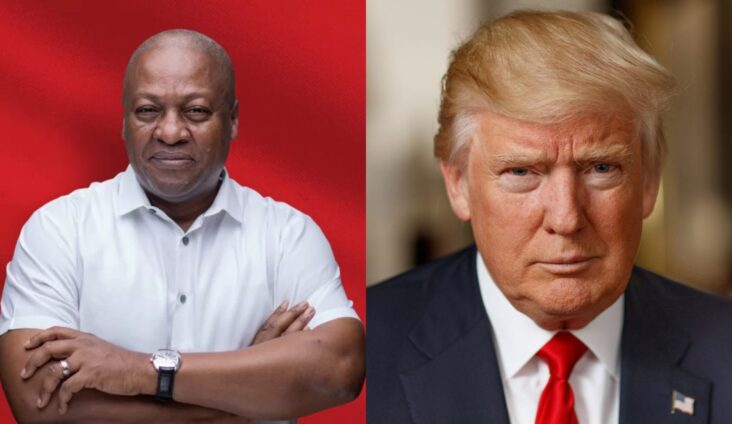
Fresh details are beginning to emerge about why Ghana took the bold step to reject a $109 million health aid package from the Trump administration, shedding light on concerns over sovereignty, data protection, legal control and the long-term implications of the proposed deal.
At the centre of the issue is the “America First Global Health Strategy,” an initiative introduced under US President Donald Trump.
The policy is designed to encourage lower-income countries to take greater responsibility for tackling diseases such as HIV/AIDS, malaria, tuberculosis and polio, with a gradual shift from aid dependence to self-reliance.
A Deal Ghana Was Pressured to Sign
According to multiple sources familiar with the negotiations, the process began in November 2025 when the US chargé d’affaires presented Ghana’s Ministry of Health with a Memorandum of Understanding (MoU) and requested that it be signed within one week.
Sources say the document was drafted unilaterally by the US, without input from Ghanaian authorities. When officials raised concerns and requested a fresh, jointly negotiated process, the US side declined and continued to press for immediate signature.
The chargé d’affaires is said to have insisted he had “instructions from the top,” while also referencing that several other countries had already signed similar agreements.
Despite sustained pressure, described by insiders as at times unusually forceful, Ghanaian officials resisted and sought amendments.
The Data Clause That Triggered Alarm
One of the most controversial provisions is related to the handling of citizens’ health data.
Under the proposed agreement, Ghana would have been required to share health records with the United States for a period of 25 years, even though the aid programme itself was designed to last only five years.
More significantly, the agreement granted the US broad discretion over how that data could be used, including the possibility of sharing it with American pharmaceutical companies for research, product development and other commercial purposes.
Officials who reviewed the document say this raised serious ethical, legal and national security concerns.
Pharmaceutical Control and Regulatory Bypass
Another major sticking point was the potential impact on Ghana’s pharmaceutical regulatory system.
The MoU included provisions that would allow drugs approved by the U.S. Food and Drug Administration to enter the Ghanaian market without undergoing the country’s standard approval processes.
This would effectively sideline the Ghana Food and Drugs Authority, which under Ghanaian law is required to independently assess and certify all medicines before they are distributed locally.
Health officials viewed this as a direct threat to Ghana’s regulatory autonomy and patient safety standards.
A Legal Framework Outside Ghana’s Control
The agreement also stipulated that it would be governed by US law, another provision that raised red flags.
For Ghanaian authorities, accepting such terms would mean that any disputes arising from the agreement could be interpreted and resolved under a foreign legal system, limiting Ghana’s control over enforcement and interpretation.
Financial Terms That Raised Questions
Beyond sovereignty and legal concerns, the financial structure of the deal also came under scrutiny.
While the US pledged $109 million over five years, Ghana was required to commit $70 million in counterpart funding over the same period.
Crucially, the US contribution was subject to the availability of funds and approval by Congress. Ghana’s obligation, however, was binding, with failure to meet its commitment potentially triggering termination of the agreement.
Officials say this created an uneven arrangement, placing more certainty and risk on Ghana’s side.
From Negotiation to Rejection
Faced with these concerns, the Ministry of Health declined to proceed and escalated the matter to Cabinet.
The Attorney-General reviewed the agreement and advised against signing it. Cabinet subsequently approved a full rejection of the aid package.
A Pattern Emerging Elsewhere
Ghana’s experience reflects a broader trend.
As of this week, the US State Department has signed 32 agreements under the “America First Global Health Strategy,” representing a combined $20.6 billion in funding, $12.8 billion from the US and $7.8 billion from recipient countries.
However, similar concerns are beginning to surface elsewhere. Reports indicate that negotiations have been disrupted in countries such as Zimbabwe, while Kenya’s agreement has also faced scrutiny and legal challenges from civil society groups.
A Calculated Decision
For Ghana, officials insist the decision was not about rejecting support for critical health programmes, but about the terms attached to that support.
In weighing the immediate financial benefits against long-term implications for sovereignty, data protection and regulatory control, authorities concluded that the risks were too significant.
Latest Stories
-
Internet banking transactions hit GH¢383.82bn in 2025
8 minutes -
Total value of payment transactions increased to GH¢9.45trn in 2025, but cheque transactions fall
17 minutes -
Nigeria’s economy expands by 4.4% in Q2, lifted by oil and non-oil sectors
58 minutes -
UN committee says countries must consider reparations for slave trade
1 hour -
Oil prices rise as latest fighting resurrects Middle East supply disruption risks
1 hour -
Kenya airport staff strike delays thousands of passengers
1 hour -
OSP Act lacked checks to rein in Special Prosecutor, Kpebu says
2 hours -
Public trust crisis around Special Prosecutor is fueling attacks on OSP – Kpebu
2 hours -
South African airline defends low-altitude aerial stunt over packed stadium
2 hours -
Special Prosecutor needs adult supervision – Martin Kpebu
2 hours -
Africa’s food systems must be judged by what farmers earn – AGRA
3 hours -
Raphinha & Lamine Yamal score twice as Barcelona beat Rayo Vallecano
4 hours -
Everton agree £40m fee for Monaco striker Balogun
4 hours -
Mudryk to Spurs as Chelsea’s Sanchez heads to Como
4 hours -
Saka scores agaian as Arsenal beat Aston Villa
4 hours