

Audio By Carbonatix
Meta is under pressure to explain why it cancelled a major contract with a company it was using to train AI, shortly after some of its Kenya-based workers alleged they had to view graphic content captured by Meta smart glasses.
In February, workers at the company, Sama, told two Swedish newspapers they had witnessed glasses users going to the toilet and having sex.
Less than two months later, Meta ended its contract with Sama, which Sama said would result in 1,108 workers being made redundant.
Meta says it's because Sama did not meet its standards, a criticism Sama rejects. A Kenyan workers' organisation alleges Meta's decision was caused by the staff speaking out.
Meta has not addressed that allegation but told BBC News in a statement it had "decided to end our work with Sama because they don't meet our standards".
Sama has defended its work.
"Sama has consistently met the operational, security and quality standards required across our client engagements, including with Meta," it said in a statement.
"At no point were we notified of any failure to meet those standards, and we stand firmly behind the quality and integrity of our work."
'Naked bodies'
In late February, Swedish newspapers Svenska Dagbladet (SvD) and Göteborgs-Posten (GP) published an investigation that included accounts from unnamed workers who had been asked to review videos filmed by Meta's glasses.
"We see everything - from living rooms to naked bodies," one worker reportedly said.
At the time of the publication, Meta admitted that subcontracted workers might sometimes review content filmed on its smart glasses when people shared it with Meta AI.
It said this was to improve the customer experience and was a common practice among other companies.
However, the revelations have prompted regulators to act.
Shortly after the Swedish investigation, the UK data watchdog, the Information Commissioner's Office (ICO), wrote to Meta about what it called a "concerning" report.
The Office of the Data Protection Commissioner in Kenya also announced it was commencing an investigation into privacy concerns raised by the glasses.
In a statement in response to news of the redundancies, a Meta spokesperson told the BBC, "Last month, we paused our work with Sama while we looked into these claims.
"We take them seriously. Photos and videos are private to users. Humans review AI content to improve product performance, for which we get clear user consent."
'Standards of secrecy'
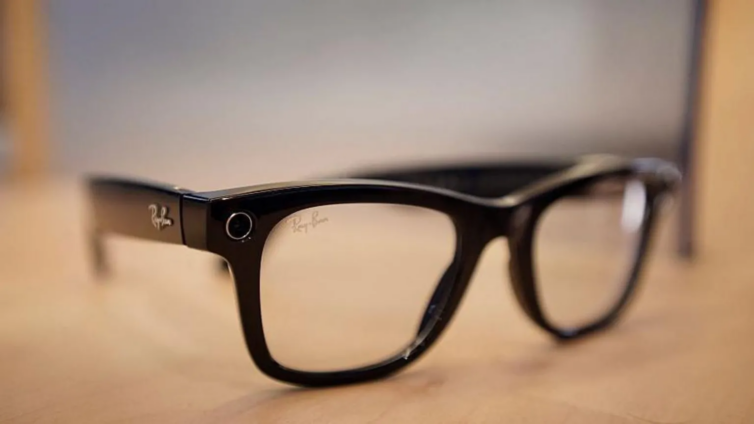
In September, Meta unveiled a range of AI-powered glasses in partnership with brands Ray-Ban and Oakley.
Features can include translating text, or responding to questions about what the user is looking at - particularly useful for those who are blind or partially sighted.
However, as the devices have grown in popularity, so too have concerns about their misuse.
The workers the Swedish newspapers spoke to were data annotators, teaching Meta's AI to interpret images by manually labelling content.
The workers said they also reviewed transcripts of interactions with the AI to check it had answered questions adequately.
In one instance, a worker told the newspapers that a man's glasses were left recording in a bedroom where they later filmed a woman, apparently the man's wife, undressing.
Meta's glasses have a light in the corner of the frames that is turned on when the built-in camera is recording.
But misuse of the glasses has also been linked to non-consensual recording of women in Kenya.
Sama, a US-headquartered outsourcing business, which began as a non-profit organisation with the aim of increasing employment through the provision of tech jobs, is now an "ethical" B-corp.
But this is not the first time a contract with Meta has soured.
An earlier deal to moderate Facebook posts attracted criticism, alongside legal action by former employees - some of whom described being exposed to graphic, traumatising content.
Sama later said it regretted taking the work.
Naftali Wambalo of the Africa Tech Workers Movement, who is a petitioner in the continuing legal action around that case, told the BBC he had also spoken with workers involved in the smart glasses contract.
Wambalo believed the reason Meta ended the work was that it didn't want workers speaking out about human workers sometimes reviewing content captured by the smart glasses.
"What I think are the standards they are talking about here are standards of secrecy," he told BBC News.
The BBC has asked Meta to respond to this point.
The tech giant has previously said that users were made aware of the possibility of human review in its terms of service.
Mercy Mutemi, a lawyer representing the petitioners and also the executive director of the campaign group the Oversight Lab, said Meta's statement should serve as a warning to the Kenyan government.
"We've been told that this is our entry route into the AI ecosystem," she told the BBC. "This is a very flimsy foundation to build your entire industry on."
Latest Stories
-
DVLA to expand mobile services to underserved communities in Ghana’s Eastern Corridor of the Northern Region
4 minutes -
GUTA urges GPHA to act swiftly to end Tema Port congestion to avert rising business costs
4 minutes -
Port congestion could undermine 24-hour economy policy – GUTA
5 minutes -
NSA opens three-day window to resolve national service biodata mismatches
15 minutes -
Abu Jinapor highlights increased gold exports after Domestic Gold Purchase Programme
19 minutes -
NPP UK branch calls for independent audit into gold purchasing operations and parliamentary probe
52 minutes -
Zanetor Agyeman-Rawlings pledges decisive action on climate change, galamsey and environmental degradation
57 minutes -
Bawumia was brainchild behind Domestic Gold Purchase Programme – Samuel Jinapor
58 minutes -
Fuel prices set to go up from September 1, Petrol to sell at GHC 16.69 and Diesel, GHC 17.90 – COMAC
1 hour -
Our World Our People withdrawn due to curriculum duplication, not politics – Adutwum’s spokesperson
1 hour -
GANRAP is essentially a rebranding of Domestic Gold Purchase Programme – Abu Jinapor
1 hour -
I am tired of being in opposition, my goal is to win in 2028 – Boakye Agyarko
1 hour -
Ghana’s road maintenance funding gap deepens as only 37% of needs met – World Bank
1 hour -
Roland Europe Group appoints Opoku Sanaa as Head of Sales, Middle East & Africa
1 hour -
Sammyflex TV’s Roland Amartey girds up for 2026 Ghana Music Awards UK coverage
2 hours