

Audio By Carbonatix
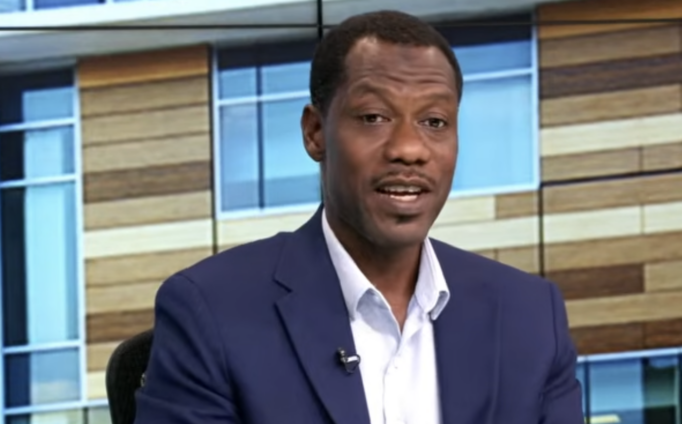
Neurosurgeon Hadi Mohammed Abdallah says the death of 29-year-old engineer Charles Amissah will not lead to meaningful reforms in Ghana’s healthcare system because the country has developed what he describes as a “culture of scapegoats.”
Speaking on PM Express on Wednesday, Dr Abdallah said he was saddened but not surprised by the findings of a government committee, which concluded that Charles Amissah died from medical neglect after being turned away by three major hospitals in Accra.
“To be honest, I wasn’t surprised. I was also sad, and I was alarmed that after so many years, because about seven to eight years ago, we had a similar incident involving an elderly person,” he said.
According to him, Ghana repeatedly reacts emotionally to national tragedies but fails to fix the underlying systems that cause them.
“A lot of things were said around that time. And I remember telling my colleagues that it’s not going to change anything, because for us as a country, whenever we run into a monumental catastrophe, we tend to be very emotional about it, and we always look for a scapegoat,” he stated.
Dr Abdallah argued that authorities often focus on blaming individuals rather than on reforming institutions.
“Managers of that sector would always find a scapegoat. So in fact, I am not surprised with what has happened, because we are a country that is not ready to learn,” he stressed.
He contrasted Ghana’s response to crises with that in other countries, where major incidents trigger policy and legal reforms.
“In certain countries, when events like this happen, be it in healthcare or in education, it leads to significant changes in terms of policy, even the law,” he noted.
“But for us, it’s always trying to find fault, and the fault is always personalised. We don’t look at how to solve the problem.”
Dr Abdallah drew parallels between the Charles Amissah case and the May 9 Stadium Disaster, arguing that Ghana has a history of blaming individuals while ignoring systemic failures.
“I tried to juxtapose this with the May 9 disaster,” he said.
“I lost friends and colleagues in the university, and I quite remember when it happened, there was hue and cry about the police officers, how unprofessional they were.”
According to him, the focus at the time shifted entirely to punishing officers rather than examining institutional weaknesses.
“Nobody looked at the system that trained them and what was there for them to control the crowd at the time,” he stated.
He said the officers eventually became scapegoats after a committee was established.
“At the end of it, the police officers were scapegoats. We sent them to court. Eventually, they could not establish a case against them,” he added.
Latest Stories
-
Daily Insight for CEOs: The CEO’s role in building leadership capability
2 minutes -
AG to introduce Legal Practitioners Standard Board Bill in Parliament
11 minutes -
AG proposes Bar Welfare Fund to provide social protection for lawyers
16 minutes -
No conditions attached: Rethinking Ghana’s duty of care for citizens in crisis abroad
17 minutes -
GES opens applications for non-teaching staff promotion; here’s who qualifies
31 minutes -
What Is Wrong With Us: We fly halfway around the world to admire discipline, then fly home to tolerate chaos
33 minutes -
Discipline must not become abuse in raising children – ARK Foundation
40 minutes -
Photos: Culture, technology and cuisine take centre stage at Russia’s youth festival
41 minutes -
‘Who approved Laboma structures?’ – Victoria Bright calls for review of permitting system
47 minutes -
“The Darkest Chapter”: Latif Abubakar’s 21st production brings President Mahama’s UN reckoning to the National Theatre stage
51 minutes -
Teacher, three others investigated over alleged kidnapping of suspected MoMo fraudster in Kumasi
52 minutes -
Afenyo-Markin mourns Bernice Offei, describes her songs as ‘sermons set to music’
52 minutes -
Don’t just learn AI tools, use them to improve productivity – ALX Enterprise
59 minutes -
Free rabies vaccination campaign targets 25,000 dogs and cats nationwide
1 hour -
Ghana needs a system to track child protection funding to where risks are highest – ARK Foundation
1 hour