

Audio By Carbonatix
The 27th edition of the Telecel Ghana Music Awards did not simply begin. It arrived at the Grand Arena with the confidence of a landlord collecting rent. Loud. Flashy. Dramatic. Completely Ghanaian.
Somewhere between the fifth standing ovation and the seventeenth “First of all, I thank God,” the night became exactly what everyone expected: beautiful chaos.
Held at the Grand Arena of the Accra International Conference Centre, TGMA 27 delivered glamour, tension, music, fashion and enough glitter to temporarily blind a drone camera. The red carpet theme, “A Touch of Glitter,” was clearly interpreted as “wear everything that reflects light.”
Some celebrities looked royal. Others looked like disco balls fighting inflation.
Still, Ghanaian entertainment knows how to put on a show.
The Red Carpet Was Fashion Hunger Games
Every TGMA carpet has three categories of guests: the stylish, the adventurous and the people whose stylists should face prison time.
This year had sequins, velvet, feathers, metallic suits and sunglasses worn at midnight for reasons known only to ancestors. The women arrived dressed like expensive trophies. Some of the men looked ready to either perform or arrest cybercrime suspects.
Social media immediately clocked in for overtime. TikTok and X critics worked harder than election analysts. One outfit was described as “a chandelier fighting for custody of its crystals.” Another celebrity allegedly looked like “WiFi wrapped in kente.” Ghanaian netizens remain undefeated.
Still, the carpet worked because it entertained. It had personality. It had risk. Nobody came to play safe. Even when some outfits missed the mark, at least they missed confidently.
And honestly, confidence is half the outfit.
The Show Came With Energy and Refused to Sleep
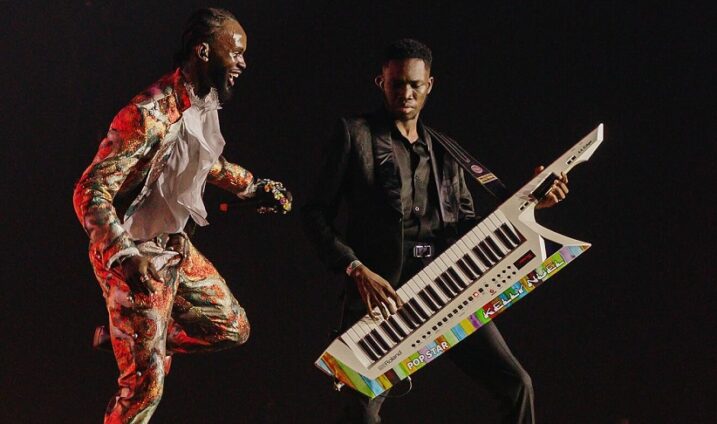
From the opening performances, the night announced itself with authority. Samini, Wendy Shay, Medikal, Black Sherif and Lasmid kept the energy alive throughout.
The standout moments came from Enam and gospel heavyweights Piesie Esther and Diana Hamilton, who suddenly reminded viewers what clear sound quality feels like. R2Bees delivered a mashup that deserves museum protection.
Then came the Daddy Lumba tribute, one of the emotional peaks of the evening. Ofori Amponsah may not have started strongly, but the performance recovered beautifully as more artistes joined in and rescued both pitch and key. Nostalgia floated through the auditorium like church incense. Some guests sang every lyric with cocky confidence. Others looked emotionally ambushed by memories from 2007.
The younger acts also proved Ghana’s music industry is evolving fast. Production quality improved noticeably this year. Lighting transitions were cleaner, stage movement sharper and camera work far more polished.
But somebody must explain why award shows believe sleep is optional.
TGMA and the Ministry of Dawn Closing
At this point, TGMA is less an awards show and more a national endurance test.
The programme was long. Extremely long. Nine-hours-and-your-phone-is-on-5%-long.
At some point, viewers stopped asking, “Who is winning?” and started asking, “Will sunrise join us before Best New Artiste?”
Award shows everywhere struggle with timing, but TGMA treats time like a motivational quote. Some speeches wandered like trotro mates looking for change. Certain transitions aged visibly in real time.
By the final awards, some viewers had spiritually relocated to their beds.
This is no longer criticism. It is national data.
The organisers deserve credit for the scale and ambition of the production, but future editions need tighter scheduling, fewer delays and quicker transitions. An award show should feel exciting, not like unpaid overtime.
Black Sherif Entered as a Nominee and Left as Property Owner
The night’s biggest winner was Black Sherif, who continues to prove his dominance is not temporary.
He picked up five awards, including Artiste of the Year. He also won Album/EP of the Year for Iron Boy, Best Hiphop Song, Best Afropop Song and Songwriter of the Year.
At just 24, Black Sherif is building the kind of TGMA legacy many artistes spend decades chasing. His storytelling, consistency and emotional connection with fans continue to separate him from the pack.
Medikal also had an excellent night, taking home four major awards including Most Popular Song of the Year for “Shoulder,” Best Hiplife Song and Collaboration of the Year. He was the true “MVP”.
Kofi Kinaata continued his annual tradition of reminding everyone he owns a permanent seat in Ghana’s music scene, winning Best Highlife Song and Highlife Artiste of the Year.
The women held their ground impressively too. Moliy’s global hit “Shake It To The Max Remix” earned two awards, including International Collaboration of the Year. Wendy Shay won Best Afrobeats/Afropop Artiste, Diana Hamilton secured Gospel Artiste of the Year, while Piesie Esther took home Best Traditional Gospel Song. Lali X Lola won Music for Good.
Not every decision landed smoothly though. Black Sherif’s“Where Dem Boys” winning Best Hiphop Song raised eyebrows when many felt O’Kenneth’s “Balanciaga” had stronger momentum. Record of the Year going to KwabenaKwabena also surprised some listeners who believed Samini’s“Chaana” had a stronger case. Strongman’s Best Rap Performance win sparked similar debates.
But then again, no Ghanaian award scheme is complete without at least three WhatsApp arguments, one conspiracy theory and a pinch of favoritism and bias.
Daddy Lumba Finally Received His Flowers
One of the night’s most touching moments came when Daddy Lumba received the Lifetime Achievement Award.
And honestly, if anyone deserves that honour, it is Daddy Lumba.
The man’s catalogue alone could emotionally damage an entire generation. Across decades, he has delivered heartbreak anthems, motivational classics and songs that mysteriously force uncles to gyrate at funerals.
His influence on Ghanaian music is impossible to deny.
The tribute performance reminded everyone why his music refuses to age. Daddy Lumba songs do not retire. They simply renew their passports and continue travelling through generations.
The Good, the Bad and the Glittery
Overall, TGMA 27 delivered entertainment in bulk. The production quality improved. The performances were memorable. Most winners reflected public sentiment. The atmosphere felt grand.
But there is room for growth.
The timing issue must be fixed. No award show should require viewers to prepare breakfast before the final category.
Acceptance speeches may also need gentle supervision. Passion is beautiful, but some speeches started in Accra and needed “sayx” business days to reach Konongo.
The organisers should continue investing in stage innovation and streaming quality because Ghanaian music increasingly has global attention.
And the red carpet interviews need more structure. Sometimes they felt like relatives meeting unexpectedly at a wedding reception.
Still, despite its flaws, TGMA remains Ghana’s biggest music night for a reason. It captures the industry’s heartbeat, celebrates talent and creates unforgettable moments. Every year, it also gifts Ghanaians enough online arguments to survive until the next edition.
TGMA 27 was loud, emotional, stylish, dramatic and hilariously exhausting.
In other words, it was perfectly Ghanaian.
Latest Stories
-
Brutality against journalists is a No-No: Ghana must protect the fourth estate
11 minutes -
Daily Insight for CEOs: Creating a high-performance culture
14 minutes -
UCC signs $500m MoU for 28,000-bed student accommodation facility
19 minutes -
Denmark, Ghana must deepen green industrial partnership
19 minutes -
Prospectus charges defeat purpose of Free SHS – Adutwum’s spokesperson
22 minutes -
Huge challenges remain in tackling teenage pregnancy along coast – Gender Minister
22 minutes -
NPP demands apology or dismissal of Haruna Iddrisu over Chinese, Arabic language policy dispute
22 minutes -
GBA demands reasonable bail conditions, protection for arrested social media commentators
24 minutes -
Gov’t to take over child marriage bill to speed up passage – Gender Minister
25 minutes -
Why healthcare innovation needs more than startup enthusiasm
28 minutes -
GTP pays homage to Asantehemaa Nana Yaa Akyaa II
31 minutes -
Kanayo Dambu declares bid for Northern Region NDC Youth Organiser
35 minutes -
Sammi Awuku welcomes Kojo Brace into NPP, says he will make a ‘fine politician’
37 minutes -
Ghana, we need to talk: Who will feed us tomorrow?
43 minutes -
Fameye marks birthday with orphans at Village of Hope
58 minutes