

Audio By Carbonatix
Technical Advisor at the Ministry of Finance, Dr Theo Acheampong, says Ghana's successful completion of its Extended Credit Facility (ECF) programme with the International Monetary Fund (IMF) is a significant national achievement.
Government on Friday, May 15, 2026, officially announced the completion of the IMF-supported bailout programme, declaring it the end of the country’s financial bailout relationship with the global lender.
In a statement issued by Presidential Spokesperson and Minister for Government Communications, Felix Kwakye Ofosu, the government said the successful conclusion of the programme represented the restoration of macroeconomic stability and debt sustainability ahead of schedule.
According to the statement, the administration of President John Dramani Mahama took decisive measures in 2025 to restore the IMF programme after it had reportedly gone off track at the end of 2024.
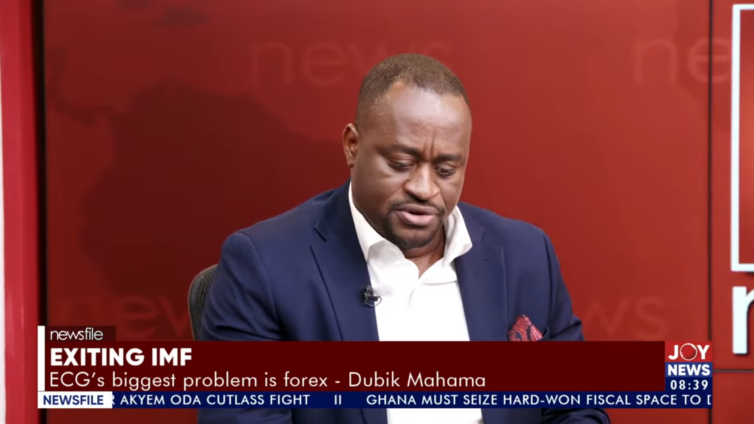
Appearing on Newsfile on Saturday, Dr Theo Acheampong said there was “a lot to celebrate” considering the severe economic hardship Ghana had endured over the past few years.
Dr Acheampong described the economic challenges faced by Ghana over the last two to three years as among the harshest since the structural adjustment era of the 1980s.
“There is a lot to celebrate if you look at where we had come from — a very, very difficult position in the last two or three years,” he said.
He explained that research and economic assessments conducted recently showed the scale of the country’s crisis rivalled, and perhaps exceeded, the hardships experienced during the IMF-led structural adjustment reforms of the mid-1980s.
“In fact, I was doing some work last night, some research, and the last two or three years have been among the most painful we have had since the 1980 structural adjustment days. The scale is even bigger than what we did in the mid-80s,” he noted.
Ghana’s recent economic crisis was marked by soaring inflation, rising debt levels, currency depreciation, fiscal instability and widespread liquidity challenges that affected both government operations and private sector activity.
The difficulties eventually forced the country to seek IMF support under the ECF arrangement aimed at restoring economic stability and rebuilding investor confidence.
Dr Acheampong argued that although external shocks often trigger economic downturns, Ghana’s recurring dependence on IMF assistance has largely been worsened by weak domestic economic management and limited fiscal resilience.
Reflecting on Ghana’s history with IMF programmes dating back to 1965, he said a recurring pattern had emerged.
“If you look at all the programmes from 1965 to the last one, two major recurring things stand out,” he stated.
“The first is that you do have external shocks that may happen, but underpinning that is the internal resilience.”
According to him, poor economic management frequently leaves the country vulnerable even before global economic disruptions occur.
“You would see that often because we have mismanaged things, it gets to the point that when the shock happens, you are already on the floor,” he explained.
“So there is no immunity, there is nothing that you are able to actually respond to.”
Beyond the macroeconomic indicators, Dr Acheampong highlighted the severe human consequences of the crisis, recalling how ordinary citizens suffered as government payment delays intensified during the height of the fiscal difficulties.
He referenced incidents in which frustrated individuals reportedly gathered at the Ministry of Finance demanding the release of funds owed to them.
“This is where we are actually coming from — to the point that in the last three years we actually at one point had people picketing at the Ministry of Finance begging for their monies to be released to them,” he recounted.
The economist also shared deeply personal accounts of families affected by delayed payments and financial hardship.
“I know people whose older parents even died because they were waiting for monies to be made available to them, and those monies did not come,” he revealed.
Latest Stories
-
Samia Nkrumah rejects the narrative that Ghanaians were happy after Nkrumah’s overthrow
17 minutes -
A Mother’s pain: Tribute by Ivan Baidoo’s mother
29 minutes -
‘Forgive us for staying away’ — Samia Nkrumah leads family back to Nkroful, pledges to preserve Nkrumah’s legacy
40 minutes -
Ernest Nuamah scores twice as Lyon beat Rennes
45 minutes -
‘My dear Ivan’ – A father’s tribute to a son tragically killed
48 minutes -
GNPC Explorco advances Voltaian Basin drilling preparations with 13.5km access road
54 minutes -
Minority calls for dedicated sanitation fund to improve waste management in Ghana
1 hour -
Cabinet approves facility manager for Borteyman Sports Complex – Kofi Adams
2 hours -
Sanitation is improving; critics may be ‘living in another world’ – Salaga South MP replies Bekwai MP
2 hours -
Government must do more to tackle sanitation crisis – Bekwai MP
2 hours -
World Cleanup Day: GFF begins sanitation education in local communities
2 hours -
EU Ambassador, IGP discuss stronger cooperation on policing and security
2 hours -
Africa Nations Volleyball Championship: Ghana set up quarterfinal clash with Cameroon after beating Chad
3 hours -
Meet Dr Benjamin Appiah Osei — Ghana’s three-time tourism awards winner
3 hours -
UEFA & CONCACAF demand Fifa pays $10m to all 211 members
3 hours