

Audio By Carbonatix
The International Monetary Fund (IMF) has defended the Bank of Ghana’s aggressive monetary tightening measures despite the central bank recording a staggering GH¢15.6 billion loss in 2025.
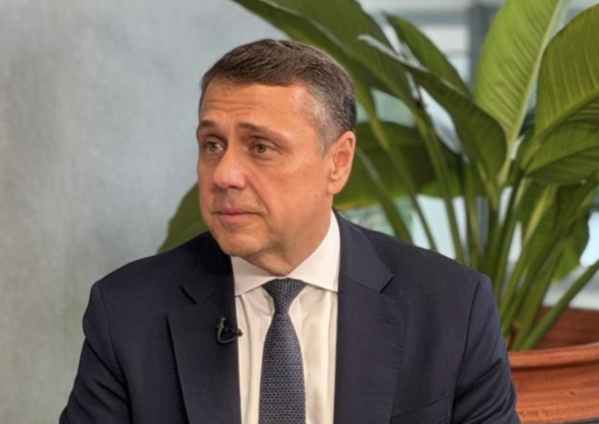
Speaking on PM Express Business Edition on Thursday, IMF Mission Chief Dr Ruben Atoyan rejected suggestions that the central bank overreached in its effort to restore macroeconomic stability.
“So, first, I would disagree with this view that the Bank of Ghana was too aggressive,” Dr Atoyan said.
“I think it was very prudent, and the achievement is, I think, manifested in the outcomes, and I think people on the ground actually recognise that.”
His comments come after the Bank of Ghana’s audited 2025 financial statements revealed a widening of the operational loss to GH¢15.6 billion, up from GH¢9.49 billion in 2024.
The accounts also showed the central bank’s negative equity position deepening sharply to GH¢93.82 billion from GH¢58.62 billion.
The deterioration has largely been linked to the cost of sterilisation and liquidity management operations undertaken to contain inflation, stabilise the cedi and restore confidence in the economy after years of severe macroeconomic instability.
Responding to concerns about whether the IMF was worried about the scale of the losses, Dr Atoyan insisted that the financial cost reflected the unavoidable realities of fighting inflation in a high-interest-rate environment.
“There is a cost of doing monetary policy, and this is something that people need to understand,” he stated.
According to him, the recently published 2025 financial statements of the central bank transparently captured the burden associated with implementing tight monetary policy during a period of elevated inflation and interest rates.
“You know that the Bank of Ghana 2025 financial statement was just published, and it transparently presents the cost of doing business with high inflation and high interest rates,” he explained.
“Absorbing liquidity from the market is costly, and that’s what we see as reflected in the statement.”
Dr Atoyan acknowledged that the operations generated significant financial pressure for the central bank, but maintained that the measures were necessary to restore economic stability.
“Yes, so it did generate some costs for the Bank of Ghana, but it was a necessary cost for the stabilisation going forward,” he said.
The IMF has consistently backed Ghana’s monetary tightening programme as part of broader reforms under the country’s economic recovery programme.
The central bank’s actions over the past two years have included aggressive interest rate hikes, liquidity absorption measures and tighter market interventions aimed at slowing inflation and rebuilding confidence in the local currency.
Latest Stories
-
Nkrumah’s vision for African dignity remains relevant – P.L.O. Lumumba
9 minutes -
Court jails mason 4 years for GH¢44,800 fraud
11 minutes -
Ghana, Norway seek closer trade and security ties after UNGA talks
18 minutes -
AG responds to $235m Teshie desalination award, says tribunal rejected $402m claim
20 minutes -
Chiefs can help stop galamsey where government enforcement struggles – KNUST Professor
23 minutes -
Mahama’s rekindling Ghana’s Pan-African role echoing Nkrumah’s vision – P.L.O. Lumumba
23 minutes -
Gov’t already in advanced talks to buy Teshie desalination plant to avert $235m payout
26 minutes -
Tema-Kpone road had no valid contract or approved scope of work – Roads Minister
36 minutes -
You pay for electricity, water but not roads – Roads Minister chides Tema companies
38 minutes -
Political independence earned under Nkrumah is being eroded – P.L.O Lumumba
40 minutes -
Oro Oil CEO urges decentralised use of $500m World Bank oil palm fund
40 minutes -
Busuama MA Basic School in crisis: 120 KG pupils stranded as teacher deficit bites
50 minutes -
Churches are not exempt from paying music royalties – GHAMRO CEO
51 minutes -
Gender Ministry expresses condolences over death of child in Cantonments fire
52 minutes -
Nkrumah foresaw Africa’s vulnerability without unity – P.L.O. Lumumba
55 minutes