

Audio By Carbonatix
The International Monetary Fund (IMF) says Ghana is close to completing its banking sector clean-up.
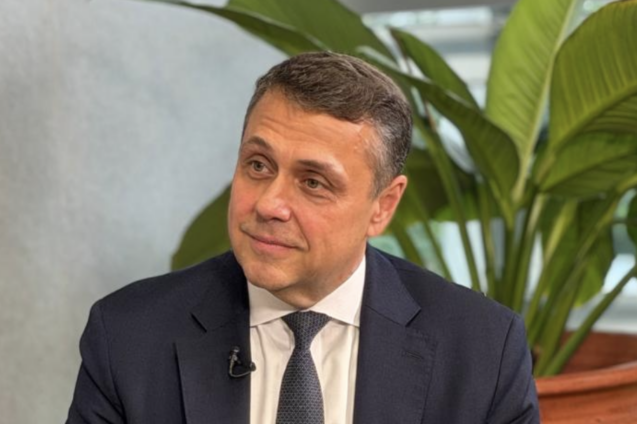
IMF Mission Chief, Dr Ruben Atoyan, expressed confidence that only a few banks remain to be fully stabilised as financial sector reforms near conclusion.
Speaking on PM Express Business Edition on Thursday, he said the country’s banking reforms have largely succeeded in restoring capital adequacy across the system.
“Well, you didn’t name the bank, so I’m not sure what exactly you’re talking about,” he said when asked about concerns over potential government action on a specific financial institution.
He explained that the broader context of Ghana’s financial sector reforms must be understood in relation to the impact of the Domestic Debt Exchange Programme, which weakened bank balance sheets and left several institutions undercapitalised.
“But I think let’s step back and look at what was an important objective for the financial sector reforms, the impact of domestic debt restructuring resulted in significant destruction of capital for the domestic banking system,” he said.
According to him, the authorities responded with a recapitalisation drive that has restored most banks to the required prudential standards.
“So many banks were undercapitalised. What the authorities have done has been quite successful during the program, bringing banks back to the full capital adequacy in line with prudential requirements,” he said.
He added that the process has nearly been completed across the sector, with only a small number of institutions still undergoing resolution or recapitalisation measures.
“That has been achieved almost for all the banks, for a couple of banks remaining,” he noted.
Dr Atoyan expressed confidence that Ghana’s financial sector reforms would be fully concluded by the end of the IMF-supported programme.
“We do expect that by the end of the program, the banking sector will be robust,” he stated.
Ghana’s banking sector has undergone significant restructuring in recent years following the sovereign debt crisis and the domestic debt exchange, which exposed weaknesses in several institutions and prompted regulatory interventions to restore stability.
The IMF says the reforms have strengthened the system’s resilience and positioned it for a more stable post-programme phase.
Latest Stories
-
AFCON 2027Q: ‘Semenyo’s leg is swollen’ – Kurt Okraku
37 seconds -
E.P. Church honours former GOIL CEO, Togbe Adza Nye IV for his philanthropy
41 seconds -
EducationUSA College Fair 2026 to offer Ghanaian students first-hand guide to U.S university admissions
12 minutes -
PBL welcomes new UCC Vice Chancellor, strengthening lasting partnership
20 minutes -
Global pressures weigh on cedi as US dollar strengthens – BoG
21 minutes -
BoG flags external-sector pressures ahead of MPC decision
30 minutes -
EducationUSA urges students to look beyond academic scholarships
35 minutes -
White House to roll out the red carpet for historic Xi Jinping visit
41 minutes -
Reports of violence against women in Gaza surge, UN agency finds
42 minutes -
Banks should mobilise $10bn for medium and large-scale farming – Kojo Akoto Boateng
43 minutes -
Trump administration accuses banned media outlets of ‘falsehoods’ ahead of court hearing
1 hour -
US and Iran hold first talks since June after Trump’s ‘annihilation’ threat at UN
1 hour -
More than 170,000 respiratory cases recorded in haze-choked Indonesia
1 hour -
UK to review Chagos Islands deal over lack of US support, Streeting tells BBC
1 hour -
BoG weighs on rising inflation risks as inflation climbs to 5%
1 hour