

Audio By Carbonatix
The International Monetary Fund (IMF) has cautioned that specialised deposit-taking institutions (SDIs) could emerge as a new source of vulnerability in Ghana’s financial system if regulatory and supervisory gaps are not urgently addressed.
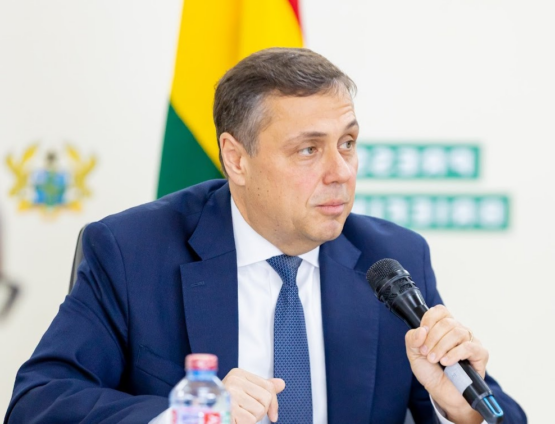
Speaking on PM Express Business Edition on Thursday, IMF Mission Chief Dr Ruben Atoyan said while Ghana’s banking sector has improved significantly under the Extended Credit Facility programme, key risks remain unresolved.
“Absolutely, the reforms need to be completed, that’s how we see that,” he stated.
The comments come as Ghana continues its banking sector reforms initiated after the financial clean-up exercise, with an emphasis on strengthening capital buffers, improving supervision, and reducing exposure to risky loans, particularly in state-linked financial institutions.
According to him, the overall strength of the banking sector has improved “drastically” during the IMF-supported programme, but unfinished reforms continue to expose the system to risk.
“Overall, the strength of the banking sector has been improved drastically during the ECF arrangement,” he said.
Dr Atoyan, however, warned that non-performing loans remain a major concern, particularly within state-owned banks.
“Where we do see risk, that NPLs are still fairly high, especially among the state-owned banks, and this needs to be addressed going forward,” he noted.
He stressed that rising non-performing loan ratios require stronger supervisory action from regulators to prevent further stress in the financial system.
“This is something that we would like to be addressed by stronger supervisory action,” he said.
While acknowledging that some level of loan default is normal in banking systems, he said the upward trend in NPL ratios is what raises concern.
“While it’s okay for some of the loans being defaulted, when you see the ratios going up, this is a non-performing loans ratio going up,” he explained.
Dr Atoyan also pointed to broader structural risks in parts of the financial sector, especially within SDIs, which he said require urgent attention.
“Another sector, which needs to be addressed going forward, is specialised deposit-taking institutions (SDI), and this is a sector where the future challenges need to be addressed,” he warned.
He added that the IMF is working closely with Ghanaian authorities to strengthen oversight and ensure that remaining weaknesses in the financial system are resolved.
Latest Stories
-
Busuama MA Basic School in crisis: 120 KG pupils stranded as teacher deficit bites
6 minutes -
Churches are not exempt from paying music royalties – GHAMRO CEO
7 minutes -
Gender Ministry expresses condolences over death of child in Cantonments fire
7 minutes -
Nkrumah foresaw Africa’s vulnerability without unity – P.L.O. Lumumba
11 minutes -
Alhaji Faisal Abdullah Masud installed as Tema’s first Sariki Zongo
15 minutes -
Mahama’s UN address to mark 25th by a Ghanaian president
15 minutes -
AFCON 2027Q: J.E. Sarpong slams sidelining of GPL players in Black Stars call-up
16 minutes -
GRA’s ITAS and other digital platforms set to strengthen tax compliance
17 minutes -
How school support is helping parents in Ejura Sekyedumasi prepare children for senior high school
21 minutes -
Government to resume Dome–Kitase road works, targets completion by 2028
24 minutes -
‘Ghana Jollof’ Case: High Court adjourns Salomey Baffoe’s bail application hearing to Sept. 24
25 minutes -
Asafo Market baby theft: Police search for suspect after granting her bail; family wants answers
28 minutes -
AGN Chair outlines Africa’s strategic climate roadmap at CAHOSCC meeting ahead of COP31
31 minutes -
Kenyasi civilian attack: Family demands justice a week after alleged machete attack by prison officers, inmates
34 minutes -
Advance ruling to give importers certainty before goods arrive – GRA
42 minutes