

Audio By Carbonatix
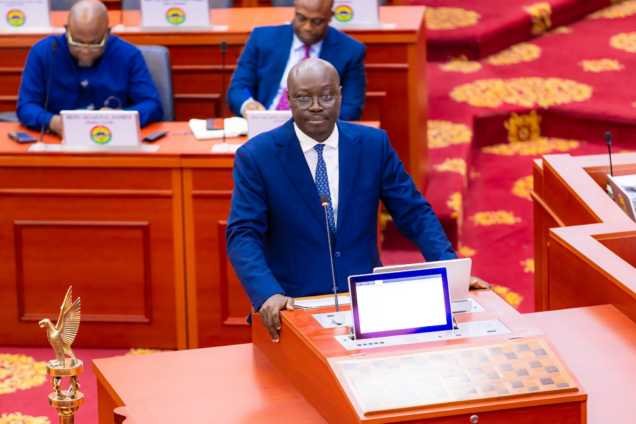
Finance Minister Dr Cassiel Ato Forson has told Parliament that Ghana is experiencing a decisive shift in its economic trajectory, moving from crisis management to what he described as macroeconomic stability and renewed confidence in the country’s future.
Speaking on the floor of the House on Thursday, May 28, Dr Forson said the development forms part of President John Dramani Mahama’s “Reset Agenda” and represents a transition from dependence on external financial assistance to a more stable, reform-oriented economic framework.
He said the current phase of recovery underscores improved fiscal discipline and restored confidence in Ghana’s economic management, following years of economic stress.
A major focus of the minister’s address was the economic downturn of 2022, which he said provided important context for understanding the present reforms.
Dr Forson stated that Ghana entered a period of severe macroeconomic instability at the time, characterised by mounting debt pressures, fiscal imbalances and external financing constraints.
He said these challenges ultimately led to Ghana seeking support from the International Monetary Fund International Monetary Fund in July 2022.
He noted that the crisis period was marked by sharp currency depreciation, rising inflation, declining investor confidence, and strained foreign reserves, culminating in the country losing access to international capital markets.
The minister also referenced multiple sovereign credit rating downgrades issued in 2022 by agencies including Moody’s, S&P Global Ratings and Fitch Ratings, which he said reflected the severity of Ghana’s economic challenges at the time.
He further pointed to heightened borrowing costs and the widening of Eurobond spreads, which significantly restricted the government’s access to external financing.
Dr Forson told Parliament that the crisis also affected key sectors of the economy, including export financing and banking operations.
He said some institutions were unable to secure syndicated loans, while parts of the banking sector struggled to obtain external credit lines or confirm letters of credit from international partners.
He referenced the Domestic Debt Exchange Programme (DDEP), introduced in December 2022, as part of efforts to address liquidity constraints in the domestic debt market. He also highlighted Ghana’s request for debt restructuring under the G20 Common Framework, alongside a suspension of external debt servicing obligations.
According to the minister, these measures had wide-ranging effects across the financial system, impacting the central bank, commercial banks, pension funds, insurance companies and individual investors, including retirees.
Dr Forson stressed that ordinary Ghanaians bore the greatest burden of the crisis, citing widespread economic hardship across households and businesses.
He pointed to rapid depreciation of the cedi, inflation exceeding 50 per cent, and significant erosion of incomes and savings as key consequences.
He also highlighted high interest rates, which he said constrained private sector activity and limited access to credit.
The minister further cited the introduction of taxes such as the Electronic Transfer Levy (E-Levy), Betting Tax, COVID-19 Levy and Emissions Tax during the period, arguing that these added to financial pressures on households and businesses.
He said the combined effect of these conditions included job losses, weakened investor confidence, business closures, and rising poverty levels.
Dr Forson framed the crisis as a cautionary example of the consequences of fiscal and economic mismanagement, emphasising the importance of maintaining discipline in public finances.
He said the government’s current approach is focused on consolidating stability and preventing a recurrence of the conditions that led to the 2022 downturn.
The minister added that Ghana’s economic direction is now centred on restoring resilience, strengthening institutions, and sustaining long-term growth through reform and prudent management.
Latest Stories
-
Consumer, business sentiments positive – BoG
24 seconds -
There’ll be no GHS500 Cedi note as part of Heritage Series issuance – BoG
18 minutes -
Heritage Series Cedi notes to modernise cedi while preserving national identity – BoG
32 minutes -
Ghana’s business environment at ‘Inflection Point’ as private Sector takes greater lead — Vish Ashiagbor
38 minutes -
At least 2 new airlines could join domestic aviation market by 2027 – GCAA Director General
47 minutes -
What if Ghana’s next tourism boom begins with Ghanaians?
1 hour -
Energy Commission to monitor EV charging stations
1 hour -
Invest with confidence, Ghana’s golden era is beginning – Finance Minister
1 hour -
Do Ghana to launch The Great Ghana Day Out on World Tourism Day
1 hour -
Clean up our politics before politics cleans us up
2 hours -
2025 was a turning point, says Abradu-Otoo as NAFCO posts record GH¢91.7m profit
2 hours -
Today’s front pages: Friday, September 25, 2026
3 hours -
‘FA President has four clubs; what do you think he would do?’ – Nana Baffour Awuah fires back
3 hours -
Kurt Okraku doesn’t like criticism, but Ghana football is beyond him – Nana Baffour Awuah
3 hours -
Ghana’s Liquidity Paradox: Why capital is not reaching productive businesses
3 hours